 Dost Pakistan Journeys Tours and safaris in the North & South Pakistsn
“`html
Pakistan’s Digital Clampdown: Imran Khan’s Sister Summoned Over ‘Inflammatory’ Content
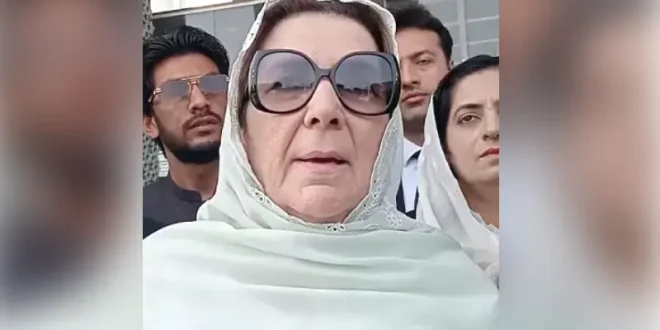
In a significant development that underscores the escalating political tensions and the growing assertiveness of digital policing in Pakistan, Noreen Niazi, sister of former Prime Minister Imran Khan, has been summoned by the National Cyber Crime Investigation Agency (NCCIA). The summons, issued on July 18 for an appearance on July 20, cites allegations of disseminating “false, offensive and inflammatory social media content” aimed at defaming state institutions and spreading “fake narratives.”
The News: A High-Profile Summons
The NCCIA notice, while not specifying the exact content, follows the widespread sharing of a clip online where Noreen Niazi made controversial claims regarding the brief military conflict between Pakistan and India in 2019. In the interview, she alleged that the conflict was “orchestrated” to bolster the image of Pakistan’s military, suggesting a collaboration with Indian Prime Minister Narendra Modi. Furthermore, Niazi reportedly linked this alleged “drama” to efforts to gain international recognition for Israel from Pakistan, and even drew a connection to then-US President Donald Trump’s praise for Pakistani leadership.
The notice from the NCCIA, an agency operating under the Federal Investigation Agency (FIA), explicitly warned of penal action under Section 174 of the Pakistan Penal Code for non-compliance. This indicates the seriousness with which these allegations are being pursued, placing immense pressure on Niazi to comply or face legal consequences.
Background: A Tapestry of Political and Geopolitical Tensions
This summons arrives amidst a highly charged political atmosphere in Pakistan. Imran Khan, a charismatic and populist leader, was controversially ousted from power in April 2022 and has since faced numerous legal challenges, including a recent conviction and ongoing incarceration. His political party, Pakistan Tehreek-e-Insaf (PTI), has consistently alleged a concerted crackdown by the state, often accusing powerful “state institutions” – a common euphemism for the military establishment – of political engineering and targeting its members.
Noreen Niazi’s remarks touch upon extremely sensitive national security issues, specifically referencing the 2019 aerial skirmishes between Pakistan and India. This conflict erupted in the wake of the Pulwama attack, leading to Indian airstrikes in Balakot and subsequent retaliatory actions by Pakistan, including the downing of an Indian aircraft and the capture of pilot Abhinandan Varthaman. The events were widely reported and intensely nationalistic in both countries. Accusations of “orchestration” or alleging collusion with an adversarial nation like India are particularly grave in Pakistan’s context, where the military holds significant institutional authority and is revered by a large segment of the population.
The NCCIA, tasked with combating cybercrime, has increasingly been used to address online dissent and what the government deems as misinformation or defamation against state entities. Its mandate covers a wide array of digital offenses, including those that touch upon national security and public order, often leading to debates about freedom of speech versus state control in the digital realm. The agency’s actions are often viewed through a political lens, especially when involving individuals connected to opposition figures.
Impact on Pakistan: Freedom, Trust, and Polarization
The summoning of Noreen Niazi carries significant implications for Pakistan’s already fragile democratic space and its citizens’ digital rights:
- Chilling Effect on Dissent: Such actions are widely seen as an attempt to silence critical voices, particularly those associated with the opposition. It risks creating a “chilling effect,” where individuals self-censor for fear of legal repercussions, thus shrinking the space for legitimate political discourse and criticism.
- Erosion of Public Trust: The repeated use of state agencies, especially cybercrime units, against political opponents or their families, further erodes public trust in these institutions. It fuels narratives of political victimization and politicization of law enforcement, deepening societal divisions.
- Exacerbated Polarization: Pakistan is currently experiencing unprecedented levels of political polarization. Incidents like this intensify the fault lines between supporters of Imran Khan and those aligned with the state establishment, making national consensus on critical issues increasingly difficult.
- International Scrutiny: Actions perceived as suppressing freedom of speech and political opposition invariably attract international scrutiny from human rights organizations and foreign governments, potentially impacting Pakistan’s image and diplomatic relations.
- Defining “Fake Narratives”: The broad and often vague charge of spreading “fake narratives” raises questions about objective standards and due process. Who determines what constitutes a “fake narrative” or “defamation” when the subject matter involves historical events and political commentary? This ambiguity can be exploited to target inconvenient truths or legitimate criticisms, especially in an environment lacking robust independent oversight.
Analysis: The Digital Battleground and Political Vendetta
Noreen Niazi’s summons is more than just a legal procedure; it is a potent symbol of the ongoing power struggle in Pakistan, heavily played out in the digital sphere. The timing, amid Imran Khan’s incarceration and the PTI’s continued popularity despite crackdowns, suggests a strategy to target the former prime minister’s close associates and family members, perhaps to further isolate him or to deter his supporters from engaging in public commentary.
The core of the accusation—disseminating claims about the 2019 India-Pakistan conflict being “orchestrated”—is particularly explosive. While such claims might be dismissed as conspiracy theories by some, their prosecution under cybercrime laws raises fundamental questions about the distinction between misinformation and political speech, however provocative. In a democracy, robust debate, even on sensitive issues, is crucial. The state’s response appears to prioritize protecting institutional image over fostering an environment where uncomfortable questions can be asked, even if those questions are based on speculative or unfounded assertions.
The incident highlights the double-edged sword of digital communication. While social media platforms empower individuals to voice opinions and disseminate information rapidly, they also become battlegrounds for competing narratives, disinformation, and state control. The NCCIA’s actions demonstrate a clear intent by the state to regulate this digital space, particularly when content challenges official narratives or perceived national interests. Such regulation, when applied selectively or without transparent criteria, can easily morph into censorship.
Ultimately, this case is a litmus test for freedom of expression in Pakistan. While states have a legitimate interest in countering genuine threats like incitement to violence or malicious disinformation, using broad cybercrime laws to target political commentary, however outlandish, risks stifling dissent and further entrenching authoritarian tendencies. For Pakistan, navigating this complex landscape will be critical for its democratic future and its standing in the global community.
“`
