Dost Pakistan Journeys Tours and safaris in the North & South Pakistsn
Related Articles



“`html
Afghanistan-Pakistan Transit Trade Collapse: A Geopolitical and Economic Reshuffle
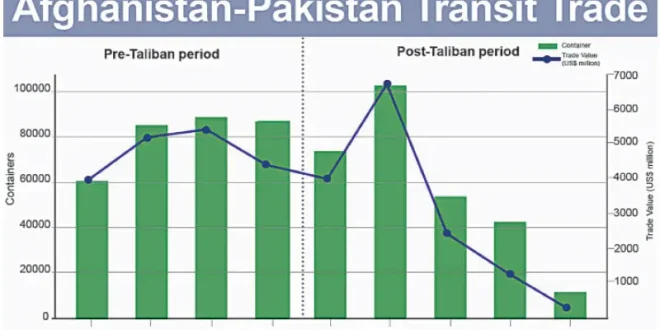
The long-standing economic lifeline connecting landlocked Afghanistan to the global sea trade, primarily through Pakistan, has reached an unprecedented low. Recent data reveals a dramatic reduction in transit trade between the two neighbors, plummeting to just 11,592 containers valued at $367 million in the fiscal year 2026. This stark figure represents a catastrophic drop from nearly 89,000 containers worth $5 billion observed just before the Taliban’s return to power in 2021.
While Pakistan’s decision to close its border in October 2025 citing security concerns undoubtedly exacerbated the situation, a closer examination of trade flows suggests a more profound, strategic reorientation by Afghanistan. This shift, driven by Kabul’s deliberate policy to diversify its trade routes and reduce dependency on Pakistan, marks a significant geopolitical and economic turning point for the region.
The News: A Historic Low and Strategic Pivot
The latest figures underscore a complete reversal of fortunes for the Afghanistan-Pakistan transit trade corridor. Beyond the precipitous fall in overall container traffic, the “reverse transit” – a crucial mechanism enabling Afghan exports to reach third countries, particularly India via Wagah and Karachi – has almost entirely collapsed, dwindling from $454 million in FY25 to a mere $7 million in FY26. This effectively brings a decades-old export route to a standstill, signaling profound implications for Afghan producers, especially in the agricultural and mining sectors.
Initially, the drastic decline might seem a direct consequence of Pakistan’s stringent border restrictions. However, detailed trade data reveals that the momentum had already begun to wane significantly before October 2025. Following an initial post-Taliban recovery that saw transit volumes peak at 102,886 containers and $6.7 billion in FY23, a steady decline commenced, with numbers falling to 54,114 containers in FY24 and 42,959 containers ($1.36 billion) in FY25. This pre-closure slump indicates that the Afghan Taliban had already initiated a strategic diversification of its trade channels, actively pursuing alternatives to Pakistan’s ports.
Background: Decades of Interdependence and Shifting Tides
For decades, Pakistan served as Afghanistan’s primary conduit for international trade. The Afghanistan-Pakistan Transit Trade Agreement (APTTA), though often strained by political tensions, facilitated the movement of goods, making Pakistan’s Karachi ports the most economically viable gateway for Afghan imports and exports. This reliance persisted even through periods of strained diplomatic relations, such as during the democratically elected government of former President Ashraf Ghani, primarily because it ensured lower transport costs and mitigated inflationary pressures within Afghanistan’s import-dependent economy.
The historical context reveals that transit traffic through Pakistan had steadily expanded, from approximately 60,500 containers in FY17 to nearly 89,000 in FY21, immediately preceding the Taliban’s takeover. The stability of this route, despite political friction, underscored its fundamental economic importance. However, the Taliban’s return to power in 2021 introduced a new dynamic. While there was an initial surge in trade in FY23, potentially a backlog clearing or initial adjustments, the subsequent and consistent decline leading up to Pakistan’s border closure points to a deliberate policy shift by Kabul. The Taliban government has actively sought to reduce its economic vulnerability by expanding commercial ties with Central Asian neighbors and, most significantly, by leveraging Iranian trade routes.
Impact on Pakistan: Economic Leverage Lost and Local Livelihoods Affected
The collapse of transit trade carries significant ramifications for Pakistan. Economically, Pakistan stands to lose substantial revenue from transit fees, customs duties, and the myriad services associated with cross-border commerce. This includes charges for port handling, warehousing, and transportation, which contribute directly to the national exchequer.
Beyond government revenue, the impact ripples through the Pakistani economy, particularly affecting thousands of individuals whose livelihoods are intricately linked to the transit trade. Truck drivers, loaders, customs clearing agents, warehouse operators, and various semi-skilled laborers on both sides of the border face reduced employment opportunities and diminished household incomes. The bustling trade corridors, once teeming with activity, are now significantly quieter, reflecting a downturn in economic vibrancy and a loss of traditional economic leverage Pakistan once held over Afghanistan.
From a strategic standpoint, the diversion of Afghan trade away from Pakistani ports reduces Islamabad’s influence in the region. Historically, controlling Afghanistan’s access to the sea provided Pakistan with a degree of geopolitical leverage, which is now significantly diminished as Kabul cultivates alternative partners and infrastructure.
Analysis: A New Geopolitical Landscape and Costly Diversions
The dramatic decline in Afghanistan-Pakistan transit trade is not merely an economic setback; it signifies a profound geopolitical realignment in Central and South Asia. The Afghan Taliban’s strategic pivot away from Pakistan, driven by a desire for greater economic sovereignty and reduced dependence on a historically complex neighbor, has reshaped regional trade dynamics. Their pursuit of expanded trade through Iran and strengthened links with Central Asian states like Uzbekistan and Turkmenistan reflects a broader vision for Afghanistan’s integration into an alternative regional economic framework.
However, this strategic shift has come at a considerable economic cost for Afghanistan, as highlighted by the World Bank’s Afghanistan Economic Monitor 2026. While Afghanistan’s overall imports did rise by 15% to $13.2 billion in FY25, Iran emerged as the dominant source, accounting for 31.3% of imports and 48.6% when direct and transit corridors are combined. This growing reliance on Iranian routes, while offering diversification, has introduced new challenges.
Longer and often more expensive supply chains have led to increased import costs, directly contributing to inflationary pressures on essential goods such as rice, vegetable ghee, and pharmaceuticals. These higher costs are ultimately borne by Afghan consumers and businesses, further straining an economy already grappling with humanitarian crises and international isolation. The World Bank also notes that the diversion has weakened Afghanistan’s external trade by disrupting traditional routes, increasing logistics costs, and resulting in lower revenue collection and falling exports, particularly for agricultural products and coal.
The burden of these economic disruptions falls disproportionately on eastern and southern Afghanistan, particularly Pakhtun communities that have historically relied heavily on Pakistani goods and cross-border commerce for their livelihoods. The reduced commercial activity translates directly into fewer employment opportunities and lower household incomes, exacerbating socio-economic challenges.
In conclusion, the collapse of transit trade between Afghanistan and Pakistan is a complex interplay of security concerns, strategic recalculations, and economic realities. While Pakistan’s border closures accelerated the decline, the underlying trend points to a deliberate, albeit costly, repositioning by the Afghan Taliban to forge new economic lifelines. This not only redefines bilateral relations but also establishes a new geopolitical landscape, where Iran and Central Asian nations gain increased economic influence, and Afghanistan navigates a more diversified, yet economically challenging, path to global markets.
Originally analyzed based on reports published in Dawn, July 19th, 2026.
“`