Dost Pakistan Journeys Tours and safaris in the North & South Pakistsn
Related Articles
Pakistan’s Clerics Unite: A Landmark Step Towards Religious Harmony and Countering Extremism
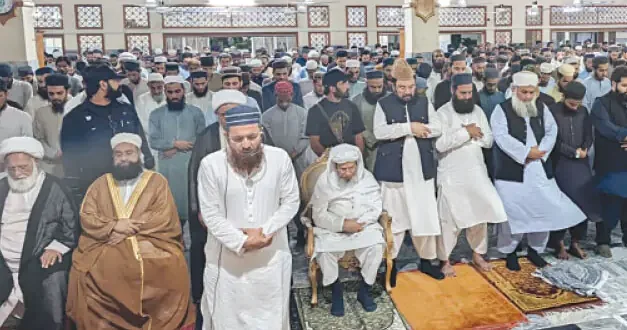
In a powerful display of unity, religious scholars from Pakistan’s four major Islamic schools of thought recently gathered for joint prayers at Jamiatur Rasheed in Karachi. This unprecedented event, where Shia, Barelvi, Deobandi, and Ahle Hadith clerics stood together behind a single imam, has been hailed as a significant milestone in the nation’s ongoing struggle against sectarianism and extremism. More than a symbolic gesture, this act reflects a concerted effort by both religious leadership and state-backed initiatives to foster national cohesion and redefine the narrative of Islamic identity in Pakistan.
The News: A Beacon of Interfaith Solidarity
The core of this significant development lies in the collective Maghrib prayers offered by leading clerics at Jamiatur Rasheed, a seminary historically perceived as holding hardline views. This congregation was spearheaded by Hafiz Muhammad Tahir Ashrafi, who serves as the Chairman of the Pakistan Ulema Council and the Prime Minister’s Coordinator for the National Paigham-i-Aman Committee (NPAC).
- Unified Prayer: Clerics from all four mainstream Islamic sects—Shia, Barelvi, Deobandi, and Ahle Hadith—participated in collective prayers.
- Symbolic Venue: The event took place at Jamiatur Rasheed, a Karachi seminary whose historical reputation lends profound significance to the act of reconciliation within its walls.
- Leadership Endorsement: The initiative was led by prominent religious figures and explicitly linked to the state-backed National Paigham-i-Aman Committee (NPAC), emphasizing its official and widely supported nature.
- Stated Goal: To eradicate inter-sect strife, promote tolerance, and counter the pervasive threats of extremism, terrorism, and sectarian violence in Pakistan.
- Broader Context: This event is positioned as a key achievement of the NPAC, which also includes leaders from non-Muslim communities and senior government officials, and operates under the larger National Committee on Narrative Building (NCNB) to implement the Revised National Action Plan 2021.
Hafiz Ashrafi underscored that such an assembly was “one of the first of its kind in Pakistan’s history,” sending a clear message that despite perceived differences, there is no inherent discord among Pakistanis, only divisions fueled by “miscreants” and a few misguided religious leaders.
Background: Roots of Division and the Path to Unity
To fully appreciate the gravity of this joint prayer, it’s crucial to understand the historical context of sectarianism in Pakistan. For decades, the nation has grappled with internal divisions, often exacerbated by a complex interplay of ideological differences, geopolitical influences, and political instrumentalization. Sectarian violence, particularly between Sunni and Shia communities, has claimed countless lives and undermined the social fabric, leading to a climate of mistrust and radicalization.
Recognizing the dire need to counter this destructive trajectory, the Pakistani state, in collaboration with its religious scholars, launched the Paigham-i-Pakistan (Message of Pakistan) initiative in 2018. This fatwa (religious edict) and national narrative, developed by over 1,800 Islamic scholars, unequivocally condemns terrorism and extremism as un-Islamic. It calls for unity, tolerance, and interfaith harmony, providing a robust ideological counter-narrative to extremist ideologies.
The Revised National Action Plan (NAP) 2021 further solidifies the government’s commitment to eradicating terrorism and extremism. The National Committee on Narrative Building (NCNB) and its subcommittee, the NPAC, are key institutional mechanisms designed to operationalize Paigham-i-Pakistan and the NAP by fostering dialogue, building consensus, and disseminating a national narrative of peace through various media and communication channels. The very establishment of NPAC in September 2024, bringing together diverse religious and community leaders, signaled a top-down commitment to addressing these deep-seated issues.
The choice of Jamiatur Rasheed as the venue is particularly poignant. While details of its specific historical “hardline” associations are complex and evolve, the general perception often linked such seminaries to more rigid interpretations of Islamic law, making a joint prayer with clerics of all schools of thought a profound statement of ideological softening and a collective embrace of a more inclusive vision of Islam.
Impact on Pakistan: A Ripple of Hope?
The joint prayer by such diverse religious leaders holds immense potential for positive impact across Pakistan, both domestically and internationally.
Potential Positive Outcomes:
- Reduced Sectarian Tensions: The most direct impact could be a tangible reduction in inter-sect animosity and violence. When spiritual leaders demonstrate unity, it sets a powerful example for their followers and can de-escalate grassroots tensions.
- Strengthened National Cohesion: By promoting an inclusive Islamic identity that transcends sectarian lines, this move bolsters national unity, a critical element for any diverse nation. It reinforces the idea that all Muslims in Pakistan are part of a larger, unified whole.
- Empowered Counter-Narrative: This event directly supports the objectives of Paigham-i-Pakistan, validating its message through the actions of revered clerics. It weakens the ideological appeal of extremist groups who exploit sectarian divisions.
- Improved International Image: Pakistan has often faced international scrutiny regarding its challenges with extremism and sectarianism. Such visible demonstrations of religious harmony can help improve the nation’s global perception.
- Promotion of Moderate Voices: It elevates and empowers moderate religious scholars and institutions, showcasing them as leaders capable of fostering peace and reconciliation, rather than division.
- Trickle-Down Effect: The leadership’s example has the potential to inspire similar initiatives at local and community levels, fostering dialogue and cooperation amongst different sects in everyday life.
Challenges and Considerations:
While the symbolism is powerful, sustaining this momentum requires continuous effort. Challenges remain:
- Depth vs. Symbolism: Ensuring that this unity goes beyond mere symbolism to address the root causes of sectarianism, including ideological differences, socio-economic grievances, and external influences.
- Resistance from Hardliners: Elements that thrive on division may resist or actively undermine these reconciliation efforts, requiring vigilance and consistent counter-messaging.
- Sustained Political Will: The long-term success of initiatives like NPAC depends heavily on consistent governmental support and resource allocation, irrespective of political changes.
- Education and Awareness: Integrating messages of tolerance and unity into religious education and public discourse is crucial for lasting change.
Analysis: Beyond the Prayer Mat
The joint prayer at Jamiatur Rasheed transcends a mere religious ritual; it is a profound political and social statement. It signifies a collective acknowledgment by a significant portion of Pakistan’s religious establishment that sectarian divisions are a national detriment, threatening the very foundations of the state and society. The participation of a seminary once perceived as hardline is particularly noteworthy, suggesting a growing internal shift within conservative religious circles towards inclusivity and a pragmatic understanding of national imperatives.
This initiative also highlights the evolving role of the state in orchestrating religious discourse. Through bodies like NPAC and NCNB, the government is actively shaping a national narrative that prioritizes unity and counters extremism. This top-down approach, when genuinely embraced by influential religious leaders, can be incredibly effective in setting a new standard for religious harmony. Hafiz Ashrafi’s vision of “Muslims offering prayers together, just as they do in the Two Holy Mosques, standing behind one imam” encapsulates an idealized Islamic unity that resonates deeply and provides a powerful, aspirational goal for the nation.
The committee’s broader mandate, which includes visiting non-Muslim places of worship, further underscores a commitment to interfaith dialogue and overall national cohesion. This holistic approach signals that the challenge is not just intra-Muslim sectarianism but a broader intolerance that fuels extremism in all its forms.
In essence, this event is a crucial indicator of a strategic pivot within Pakistan towards leveraging religious authority as a force for peace. It represents a hope that the nation can move beyond the shadow of sectarian violence and build a future where religious diversity is a source of strength, not conflict. While the road ahead will undoubtedly present challenges, this collective prayer stands as a powerful testament to the potential for reconciliation and the enduring aspiration for a unified, tolerant Pakistan.