 Dost Pakistan Journeys Tours and safaris in the North & South Pakistsn
Israel’s Gaza Expansion: A Deepening Humanitarian Catastrophe Amidst Ceasefire Concerns
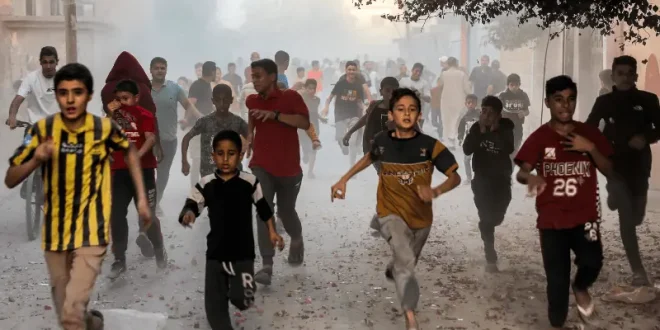
The United Nations has issued a grave warning regarding Israel’s stated intention to expand its control over the Gaza Strip, raising alarm bells over a projected escalation of human suffering, particularly among children. This move, announced by Israeli Prime Minister Benjamin Netanyahu, involves extending military control from an estimated 60 percent to 70 percent of the Palestinian territory, a decision that appears to disregard the terms of a previously established fragile ceasefire.
What’s Happening on the Ground?
Prime Minister Netanyahu recently disclosed that Israeli forces, which had controlled approximately 50 percent of Gaza under an earlier ceasefire arrangement, had since advanced to encompass 60 percent. His latest directive instructs the military to further consolidate control, aiming for 70 percent of the Strip. This territorial expansion has immediately drawn criticism, with the Palestinian foreign ministry denouncing it as a “serious violation” of the ceasefire’s foundational principles.
The UN children’s agency, UNICEF, has been at the forefront of highlighting the dire consequences of such an expansion. Already, the densely populated enclave, under an Israeli blockade since 2007, has seen its inhabitants squeezed into roughly 40 percent of its original space. This extreme overcrowding, compounded by the ongoing conflict that began in October 2023, has pushed the humanitarian situation to a breaking point. Reports from UNICEF paint a harrowing picture of rampant disease, unsanitary conditions, and a rapidly deteriorating health crisis affecting thousands of children.
Context: A Blockade, Conflict, and Crumbling Infrastructure
Gaza’s current crisis is not an isolated event but the culmination of years of blockade and cycles of conflict. Even before the large-scale Israeli assault commenced in late 2023 following the October 7 attacks, the Strip was one of the most densely populated areas globally, struggling with inadequate infrastructure and limited resources. The Israeli blockade has significantly restricted the entry of goods, including essential aid and construction materials, stifling economic development and the ability to rebuild after previous conflicts. This control over entry points and aid flow has been a contentious issue, directly impacting the availability of food, water, and medical supplies.
The current phase of the conflict, ignited by the October 7 attacks that resulted in 1,221 Israeli deaths, has led to a devastating humanitarian toll in Gaza. According to the territory’s health ministry, over 72,800 people have been killed since the start of the assault, with daily violence continuing to claim lives. The ongoing hostilities and displacement have exacerbated an already precarious situation, forcing families into overcrowded shelters where basic hygiene is non-existent and disease spreads unchecked.
Why This Matters: A Deepening Humanitarian Crisis
The expansion of Israeli control has profound implications, primarily for the already suffering civilian population. UNICEF spokesman Salim Oweis, speaking from Gaza, described a landscape of “broken buildings, rubble and mounting solid waste,” with no space left for proper sanitation. The health ramifications are stark: children are increasingly presenting with respiratory infections, acute watery diarrhoea, and a majority of households report skin diseases. The presence of fleas, lice, scabies, and alarmingly, rats biting young children and babies, underscores the collapse of public health and living standards.
The healthcare system in Gaza has been decimated, with not a single fully functioning hospital remaining. This makes the rising incidence of illnesses even more catastrophic, as increasing numbers of children require hospitalisation in a system utterly incapable of meeting their needs. Further territorial seizure threatens to cut off humanitarian agencies like UNICEF from vital service points and hard-to-reach communities, directly impeding their ability to deliver aid and exacerbating the suffering.
Beyond the immediate humanitarian toll, this move signals a further erosion of international agreements and the potential for prolonged instability. A ceasefire, meant to provide a measure of relief and a pathway to de-escalation, is rendered fragile when core terms are challenged by unilateral expansion.
Wider Implications and Regional Concerns
While the immediate impact is felt most acutely in Gaza, Israel’s expanded control carries significant wider implications. For countries like Pakistan, which has consistently voiced strong support for the Palestinian cause, such developments reinforce a sense of frustration and indignation. This move is likely to intensify calls from Islamabad and other Muslim-majority nations for greater international intervention, accountability, and the protection of Palestinian rights. It strengthens the narrative of an ongoing humanitarian crisis requiring urgent global attention and could lead to renewed diplomatic efforts at the United Nations and other international forums to pressure for a lasting ceasefire and a just resolution.
Public opinion in these regions, already highly sensitized to the plight of Palestinians, will likely be further galvanized, potentially leading to increased protests and demands for their governments to take a stronger stance. The breakdown of ceasefires and the expansion of control deepen regional instability and complicate efforts towards broader peace and normalization in the Middle East.
Analysis: The Cycle of Control and Catastrophe
Israel’s declared intention to expand its control over Gaza can be viewed through several lenses. Strategically, it may aim to establish a more extensive security buffer or to control key areas deemed critical for Israeli security. However, this objective appears to come at an immense humanitarian cost and in direct contravention of existing, albeit fragile, agreements.
The UN’s warning underscores a critical point: the humanitarian crisis in Gaza is not an unfortunate byproduct of conflict, but a direct consequence of policies and actions, including territorial control, blockades, and the destruction of infrastructure. The statistics on disease, lack of sanitation, and the collapse of healthcare are not mere numbers; they represent the daily reality for hundreds of thousands, especially children, whose lives are being irrevocably scarred.
The international community faces a profound challenge. The repeated warnings from humanitarian organizations highlight a moral imperative to act beyond condemnations. The effectiveness of international law and humanitarian principles is severely tested when territorial expansion proceeds despite explicit warnings of deepening suffering. The question remains: how will the world respond to prevent a full-blown catastrophe and ensure accountability for actions that undermine peace and human dignity in Gaza?
Ultimately, the plan to seize more of Gaza isn’t just a political or military maneuver; it’s a decision with immediate, devastating, and long-term humanitarian consequences that will further entrench the cycle of suffering for generations of Palestinians.
