 Dost Pakistan Journeys Tours and safaris in the North & South Pakistsn
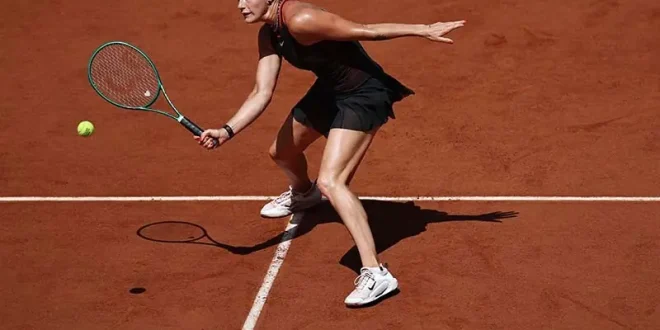
French Open Heats Up: Sabalenka-Osaka Blockbuster Looms as New Stars Emerge on Clay
As the French Open 2026 enters its pivotal second week, the clay courts of Roland Garros are serving up a blend of high-stakes drama, unexpected upsets, and the promise of a thrilling conclusion. The women’s singles draw is set for a blockbuster fourth-round clash between two Grand Slam giants, Aryna Sabalenka and Naomi Osaka, while the men’s side has been blown wide open, guaranteeing a fresh Grand Slam champion.
Roland Garros Round-Up: High-Stakes Battles and Unexpected Turns
The spotlight is firmly on the women’s singles, where top seed and reigning Australian Open champion Aryna Sabalenka is poised for a mouth-watering last-16 encounter with four-time Grand Slam winner Naomi Osaka. Sabalenka, known for her powerful game, dispatched Daria Kasatkina in a commanding 6-0, 7-5 victory, showcasing resilience to recover from an early deficit in the second set amidst the Parisian heatwave.
Osaka, on her journey back to the sport’s elite, earned her place with a gritty 7-6 (7/5), 6-7 (3/7), 6-4 win over American prospect Iva Jovic. This marks Osaka’s deepest run ever at Roland Garros, a significant milestone for a player historically less comfortable on clay. The upcoming match against Sabalenka carries added weight; while Sabalenka has won their two most recent encounters this season, Osaka famously triumphed over the Belarusian at the 2018 US Open, a pivotal moment in her career.
Meanwhile, defending French Open champion Coco Gauff, the fourth seed, is also making her push for the second week, facing Austria’s Anastasia Potapova. Her performance will be closely watched as she aims to replicate last year’s heroics.
The men’s singles draw has provided the biggest shocks, with the early exits of top seed Jannik Sinner due to illness and 24-time major winner Novak Djokovic creating an unprecedented opportunity. This void has paved the way for emerging talents like Italian 10th seed Flavio Cobolli, who secured a dominant victory over Learner Tien. American world number 85 Zachary Svajda also made headlines, upsetting 25th seed Francisco Cerundolo to achieve his best-ever Grand Slam performance, reaching the second week of a major for the first time.
A contentious match also saw Ukrainian Oleksandra Oliynykova lose to Russian Diana Shnaider amidst accusations of the latter’s alleged ties to war-financing entities, highlighting the persistent geopolitical undertones affecting the global sports arena.
The Clay Court Crucible: Context Behind the Drama
The French Open, or Roland Garros, stands as one of the four Grand Slams, tennis’s most prestigious tournaments. Its unique red clay surface is notoriously challenging, slowing down the ball, producing higher bounces, and demanding exceptional athleticism, strategic depth, and relentless endurance. This surface often favors baseliners with heavy topspin and stamina, making transitions from hard courts particularly difficult for many players.
Aryna Sabalenka’s consistent dominance, especially her two Australian Open titles, underscores her status as a powerhouse. Her ability to adapt her aggressive game to clay, as shown in her swift first set against Kasatkina, highlights her evolution as a complete player. Naomi Osaka’s journey, by contrast, is a compelling narrative of a champion finding her footing again after periods away from the sport. Her previous Grand Slam success came on hard courts, making her current run at Roland Garros, a tournament where she historically struggled to advance past the early rounds, a testament to her renewed focus and improved clay-court prowess.
On the men’s side, the departures of Jannik Sinner and Novak Djokovic are seismic events. Sinner, a rising star and recent Grand Slam winner, and Djokovic, arguably the greatest male player of all time, were widely tipped as favorites. Their absence creates a vacuum, stripping away the established hierarchy and injecting an unparalleled level of unpredictability into the remainder of the tournament. This “wide open” draw is a rare occurrence in modern tennis, setting the stage for potentially career-defining breakthroughs for players who might otherwise be overshadowed.
Beyond the Baseline: Why These Matches Resonate
The impending Sabalenka-Osaka clash is more than just a fourth-round match; it’s a battle of eras and narratives. It pits Sabalenka’s current ascendance against Osaka’s powerful comeback, offering a glimpse into the future of women’s tennis while celebrating a storied past. For Sabalenka, it’s an opportunity to solidify her reign. For Osaka, it’s a chance to prove her return to elite form is complete and that her game, once specialized, can conquer the red clay. Such encounters elevate the entire tournament, drawing significant global viewership and discussion.
The men’s draw, devoid of its two top contenders, is a thrilling prospect for fans and players alike. The possibility of a new Grand Slam champion is electrifying. It means every match, every point, carries immense weight for players like Cobolli and Svajda, who are deep into uncharted territory. This environment fosters unexpected heroes and captivating underdog stories, making for compelling television and inspiring aspiring athletes worldwide. It also highlights the extreme physical and mental demands of Grand Slam tennis, where even the most dominant players can fall victim to illness or unforeseen challenges.
Beyond the athletic feats, the ongoing dialogue surrounding the Ukrainian-Russian conflict, as seen in the Oliynykova-Shnaider match, underscores how global events inevitably intertwine with the world of sports, adding another layer of complexity and discussion to the tournament.
Global Game, Local Echoes: French Open’s Relevance in Pakistan
While cricket remains Pakistan’s dominant sporting passion, Grand Slam tennis tournaments like the French Open hold a significant, albeit niche, following. Sports enthusiasts in Pakistan keenly follow major global events, with strong viewership for high-profile matches featuring international stars. The presence of globally recognized figures like Naomi Osaka, with her compelling personal story and powerful game, or the fierce competitiveness of Aryna Sabalenka, captivates audiences far beyond their home countries.
The drama of the “wide open” men’s draw and the prospect of a new Grand Slam champion also resonates, offering compelling storylines that transcend cultural boundaries. Pakistani sports channels and digital platforms ensure broad access to the tournament, allowing fans to engage with the unfolding events, discuss player performances, and follow their favorite athletes. Although direct participation from Pakistani players at this elite level is currently limited, the inspiration drawn from these international sporting spectacles can still fuel local aspirations and foster interest in tennis among younger generations, encouraging participation and development at a grassroots level. The discussions generated online and in media outlets about the resilience, strategy, and mental toughness displayed by players contribute to a broader appreciation for sports excellence within the country.
The Road Ahead: Predicting the Clay Court Gauntlet
The second week of the French Open promises to be a captivating spectacle. In the women’s draw, the Sabalenka-Osaka match is arguably the most anticipated contest. Sabalenka’s current form and aggressive baseline game give her an edge, especially on a surface that now complements her power. However, Osaka’s major championship experience and newfound comfort on clay cannot be underestimated. Her mental fortitude, demonstrated in her three-set victory, will be crucial. The winner of this clash will be a strong contender to challenge Coco Gauff, should the American continue her steady progress.
The men’s side is a veritable lottery. Without Sinner and Djokovic, the field is ripe for a dark horse or a player consistently on the cusp to finally break through. Flavio Cobolli, with his home crowd advantage and solid clay-court game, has a golden opportunity to make a deep run. Zachary Svajda’s upset victory shows his potential, but consistency over multiple five-set matches will be his ultimate test. Other contenders, like Felix Auger-Aliassime, must now seize this rare chance. The pressure to perform in such an open field can be immense, potentially leading to more unpredictable results. The psychological aspect of knowing a Grand Slam title is genuinely within reach for a broader pool of players will undoubtedly fuel intense competition.
As the Parisian heatwave subsides, the intensity on court is only set to rise. With established champions battling to maintain their status and a new generation vying for glory, Roland Garros 2026 is shaping up to be one of the most memorable in recent history. Fans worldwide eagerly await to see who will conquer the clay and lift the coveted trophies.
