Dost Pakistan Journeys Tours and safaris in the North & South Pakistsn
Related Articles

“`html
Pakistan’s Rule of Law Tested: Imran Khan’s Hospital Transfer Sparks Contempt of Court Row
The News: A Disputed Medical Transfer and Legal Challenge
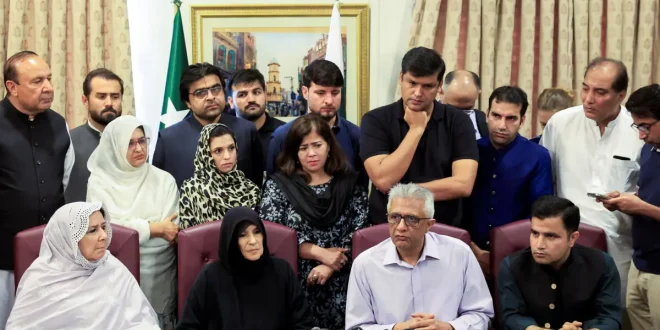
A recent directive by Pakistan’s Supreme Court to transfer former Prime Minister Imran Khan, currently incarcerated, to the private Shifa International Hospital for medical examination has ignited a fresh political and legal firestorm. Despite the explicit court order, Khan was instead taken to the government-run Pakistan Institute of Medical Sciences (PIMS) before being returned to Adiala Jail. This deviation has prompted strong accusations of “contempt of court” from Khan’s Pakistan Tehreek-e-Insaf (PTI) party and a broader opposition alliance, Tehreek Tahafuz Ayeen-i-Pakistan (TTAP), who have announced their intention to formally approach the apex court.
The events unfolded amidst confusion and conflicting accounts. Khan’s sister, Uzma Khan, and his personal physician, Dr. Faisal Sultan, detailed a night of uncertainty where they were reportedly separated and taken to different hospitals (Uzma to PIMS, Dr. Sultan to Shifa) while awaiting Khan. Uzma Khan described a dimly lit examination at PIMS, where doctors seemed unfamiliar with Khan’s existing eye condition (right central retinal vein occlusion – CRVO) and its prescribed treatment. During this brief interaction, Imran Khan allegedly spoke of enduring “cruelty,” “mental torture” in solitary confinement, and a lack of access to basic amenities like reading material or television for months, drawing parallels to the fate of former Egyptian President Mohamed Morsi.
In contrast, Information Minister Attaullah Tarar asserted that Khan was taken to PIMS, declared “medically fit” by doctors, and subsequently returned to Adiala Jail. This claim is vehemently rejected by the PTI, which views the entire episode as a “superficial exercise” designed to mislead the court and the nation, accusing the government of theatricals and deception rather than genuine compliance with judicial orders.
Background: A Nation’s High-Stakes Political Chess Match
This incident is not an isolated event but rather a critical juncture in Pakistan’s deeply polarized political landscape. Imran Khan, a charismatic figure and former cricket star, remains a hugely popular leader despite his incarceration following his ousting from power in April 2022. He faces a multitude of legal cases, which his supporters and party claim are politically motivated attempts to sideline him from national politics. His health, therefore, is not merely a personal matter but a potent symbol in the ongoing narrative of alleged political victimization.
Khan has been held in Adiala Jail for an extended period, where his party has repeatedly raised concerns about his living conditions and access to adequate medical care. His previously diagnosed eye ailment, CRVO, has necessitated multiple visits to PIMS in the past. The Supreme Court’s specific order for transfer to Shifa International Hospital—a private, more independent facility—underscored a perceived need for medical assessment free from potential government influence, especially given the existing mistrust.
The Pakistani judiciary, particularly the Supreme Court, often serves as a crucial arbiter in political disputes and a perceived protector of constitutional rights. Its orders are expected to be binding on all state institutions. However, the current government, a coalition formed after contentious elections, has been at loggerheads with Khan and the PTI, leading to heightened political tensions. The formation of the grand opposition alliance, TTAP, further underscores the consolidation of political forces against the incumbent administration, making every interaction involving Imran Khan a high-stakes affair with significant implications for the country’s delicate stability.
Impact on Pakistan: Eroding Trust and Heightened Tensions
The implications of this alleged defiance of a Supreme Court order are far-reaching for Pakistan:
- Undermining the Rule of Law and Judicial Authority: At its core, this episode strikes a blow against the principle of rule of law. If clear directives from the highest court can be openly disregarded by the executive, it erodes the judiciary’s authority and public trust in its ability to uphold justice. This creates a dangerous precedent, weakening the institutional framework of the state.
- Deepening Political Polarization: The incident will undoubtedly intensify the already severe political polarization in the country. The PTI and opposition will leverage this as further evidence of government high-handedness and disrespect for constitutional norms, fueling their planned protests and “long march.” This narrative will likely resonate with Khan’s dedicated base, potentially leading to increased public unrest.
- Human Rights Concerns: Imran Khan’s allegations of “cruelty,” “mental torture,” and prolonged solitary confinement raise serious human rights questions about the treatment of prisoners, particularly high-profile political figures. These claims, if substantiated, could attract international scrutiny and further tarnish Pakistan’s human rights record.
- Public Distrust and Disinformation: The conflicting accounts from the government and the opposition regarding Khan’s health and the hospital visit create a vacuum of truth, which can easily be filled by misinformation and speculation. The Supreme Court’s own directive to avoid using Khan’s health for political purposes seems to have been ironically overlooked by the circumstances themselves.
- Electoral and Stability Implications: As Pakistan navigates its complex political landscape, potentially moving towards future elections, such incidents heighten instability. The perception of injustice surrounding a major political leader can undermine the legitimacy of political processes and foster an environment of grievance that can be exploited by various factions.
Analysis: A Test of Institutional Resilience
The decision to divert Imran Khan to PIMS instead of Shifa International Hospital, despite a specific Supreme Court order, can be interpreted through several lenses. It might be viewed as a calculated move by the government to assert executive authority over judicial directives, signalling a reluctance to cede control over a high-profile political prisoner, even in matters of health. The choice of a government hospital (PIMS) over a private one (Shifa) inherently invites suspicion of state influence over medical assessments, especially when the incarcerated leader is a political adversary.
Imran Khan’s claims of “cruelty” and “mental torture” are more than just personal grievances; they are powerful political statements designed to rally public sympathy and reinforce the narrative of his political victimization. By linking his situation to that of Mohamed Morsi, Khan strategically positions himself as a figure suffering at the hands of an oppressive state, a narrative that resonates deeply with his loyal followers.
The PTI and the broader opposition’s swift move to file a contempt of court petition is a tactical response. While legally serious, it also serves as a potent political tool to challenge the government’s legitimacy and highlight its perceived disregard for legal norms. It places the Supreme Court in a crucial position: its response will be a litmus test for its institutional resilience and its ability to enforce its own mandates against executive actions. A robust response could reaffirm judicial independence, while a perceived weak one could further undermine its standing.
Ultimately, this incident transcends a mere hospital visit. It’s a microcosm of the intense power struggle unfolding in Pakistan, with the judiciary caught in the crossfire. The lack of transparency and the conflicting narratives only exacerbate the crisis, making it imperative for authorities to ensure full compliance with court orders and uphold the highest standards of human rights. How the Supreme Court addresses this alleged contempt will not only determine the immediate fate of Imran Khan’s medical care but will also significantly shape the trajectory of Pakistan’s institutional balance and political stability in the coming months.
“`