Dost Pakistan Journeys Tours and safaris in the North & South Pakistsn
Related Articles
CDF Munir, Syrian Foreign Minister Discuss Defence, Security Cooperation: A Strategic Re-engagement
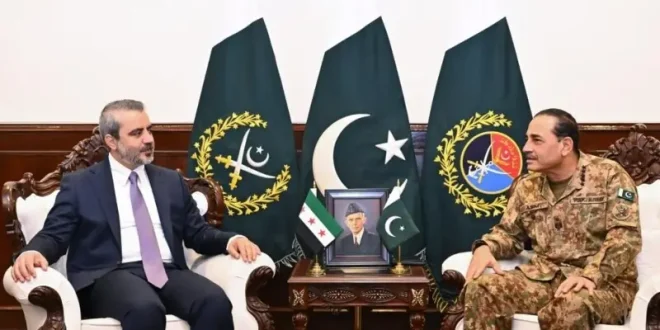
In a significant development signaling renewed diplomatic focus and strategic alignment, Pakistan’s Chief of Army Staff (COAS) and Chief of Defence Forces (CDF), Field Marshal Asim Munir, recently hosted Syrian Foreign Minister Asaad Hassan Al-Shaibani at the General Headquarters (GHQ) in Rawalpindi. This high-level meeting, coming after an extended period of subdued bilateral engagement, highlights a pragmatic push by both nations to bolster defence and security cooperation, alongside broader economic and political ties.
The News: A Diplomatic Re-engagement
The core of the recent discussions between CDF Munir and Syrian FM Al-Shaibani revolved around strengthening bilateral relations, with a particular emphasis on defence and security cooperation. The military’s media wing, Inter-Services Public Relations (ISPR), reported that key agenda points included matters of mutual interest, the evolving regional security landscape, and exploring avenues for enhanced collaboration in defence and security sectors.
CDF Munir underscored Pakistan’s deep-rooted fraternal ties with Syria, articulating Pakistan’s vision for global peace and regional stability. He stressed the imperative of collective efforts and cooperation to effectively tackle shared security challenges. In return, the visiting dignitary acknowledged and praised the professional contributions of Pakistan’s armed forces in promoting regional peace and stability. Both sides unequivocally reiterated their commitment to fortifying bilateral bonds and expanding engagements across defence and security domains.
This meeting was part of a broader official visit by the Syrian Foreign Minister to Islamabad, extended at the invitation of Pakistan’s Deputy Prime Minister and Foreign Minister Ishaq Dar. During his stay, FM Al-Shaibani also met Prime Minister Shehbaz Sharif, where discussions transcended security to encompass politics, trade, investment, education, and human resource development. A notable proposal from the Syrian side was the establishment of a Pakistan-Syria Joint Business Council, aimed at fostering direct interactions between their respective business communities. This visit marks the first by a Syrian Foreign Minister to Pakistan since 2007, signifying a deliberate step towards normalization and revitalized partnership.
Background: Syria’s Re-emergence and Pakistan’s Outreach
To fully appreciate the significance of this meeting, it’s crucial to contextualize Syria’s recent trajectory and Pakistan’s consistent foreign policy objectives. For over a decade, Syria has grappled with a devastating civil war, leading to widespread international isolation, particularly from Western powers and many Arab states. However, recent years have seen a gradual shift, with Syria progressively re-engaging with the Arab League and other regional actors, signaling its slow but steady return to the diplomatic fold.
Pakistan, meanwhile, has historically maintained amicable relations with Syria, rooted in shared Islamic heritage and a commitment to stability in the Middle East. Pakistan’s foreign policy has consistently championed diversification of partnerships, strengthening ties with Muslim-majority nations, and promoting regional peace through dialogue and cooperation. While direct engagement with Damascus might have been constrained during the peak of the Syrian conflict, Pakistan’s principled stance on sovereignty and non-interference often meant maintaining channels where possible.
The high-level military-to-military interaction, specifically involving the Chief of Defence Forces, elevates this visit beyond mere diplomatic pleasantries. It signals a strategic intent to explore tangible avenues for cooperation, acknowledging Syria’s complex security environment and its ongoing reconstruction needs. This move aligns with Pakistan’s broader strategy of forging robust partnerships to address global and regional security challenges, including counter-terrorism and intelligence sharing.
Impact on Pakistan: Strategic, Economic, and Security Dimensions
This renewed engagement with Syria holds multifaceted implications for Pakistan, spanning diplomatic, economic, and security dimensions:
- Enhanced Diplomatic Standing: By engaging with Syria during its re-emergence, Pakistan reinforces its image as a pragmatic and independent actor on the global stage, willing to engage with all sovereign nations. It expands Pakistan’s diplomatic footprint in the Middle East, a region undergoing dynamic geopolitical shifts, positioning Islamabad as a key player in fostering regional dialogue and stability.
- Economic Opportunities: The discussions with Prime Minister Sharif and the proposal for a Joint Business Council underscore a clear intent to unlock economic potential. As Syria embarks on extensive reconstruction, Pakistan can identify new markets for its goods and services, particularly in infrastructure development, manufacturing, and agricultural sectors. Increased trade and investment could provide a welcome boost to Pakistan’s economy, while also fostering people-to-people connections.
- Security Cooperation Potential: The focus on defence and security cooperation is particularly significant. Syria possesses unique experiences in combating non-state actors and managing complex internal security challenges, insights that could prove valuable for Pakistan, which also grapples with various forms of extremism and terrorism. Potential areas could include intelligence sharing, military training, counter-terrorism strategies, and possibly defence equipment collaboration, strengthening both nations’ capabilities against common threats.
- Strengthening Regional Influence: This outreach can solidify Pakistan’s influence within the broader Muslim world. By contributing to Syria’s stability and reconstruction, Pakistan demonstrates its commitment to the welfare of Muslim nations and reinforces its role as a responsible stakeholder in regional security dynamics, without necessarily aligning with any specific bloc in the intricate Middle Eastern power plays.
Analysis: A Pragmatic Step Towards Diversified Partnerships
The timing of this visit is crucial. Syria’s gradual return from isolation, facilitated partly by Saudi Arabia’s diplomatic overtures and its re-admission to the Arab League, creates an opportune moment for nations like Pakistan to re-establish and deepen ties. This strategic move by Pakistan is indicative of a broader foreign policy objective to diversify its partnerships and reduce reliance on traditional allies, while also expanding its economic and security outreach.
Beyond the symbolic gesture of renewed friendship, the detailed discussions on defence and security suggest an intent for concrete, actionable cooperation. While the specifics remain undisclosed, the emphasis on “common security challenges” likely points to counter-terrorism efforts, border management, and perhaps sharing expertise in dealing with asymmetric threats. For Pakistan, engaging with a nation that has endured a protracted conflict and emerged with strengthened security apparatus, offers valuable lessons and potential for mutually beneficial security arrangements.
Geopolitically, Pakistan is navigating a delicate balance in the Middle East, maintaining robust ties with key players like Saudi Arabia, Iran, and Turkey. Engaging with Syria, which has strong alliances with Iran and Russia, demonstrates Pakistan’s diplomatic agility and its commitment to an independent foreign policy that prioritizes national interests and regional stability over bloc politics. This approach could enhance Pakistan’s standing as a bridge-builder in a historically fragmented region.
Looking ahead, while significant opportunities exist in trade, investment, and security cooperation, challenges remain. Syria’s economy is still reeling from years of conflict and sanctions, requiring careful navigation of international financial regulations. However, the impetus from both sides to translate long-standing fraternal ties into tangible collaboration suggests a robust, forward-looking strategic partnership. This visit marks a pivotal new chapter, and future developments, such as follow-up official visits, MOUs, and concrete project announcements, will be key indicators of the depth and scope of this revitalized bilateral relationship.