Dost Pakistan Journeys Tours and safaris in the North & South Pakistsn
Related Articles

“`html
Legal Showdown: PMML Serves Notice on Maryam Nawaz Amid Terrorism Allegations
Analyzing the escalating political and legal battle in Pakistan following serious accusations.
The News: A Political Party’s Demand for Retraction
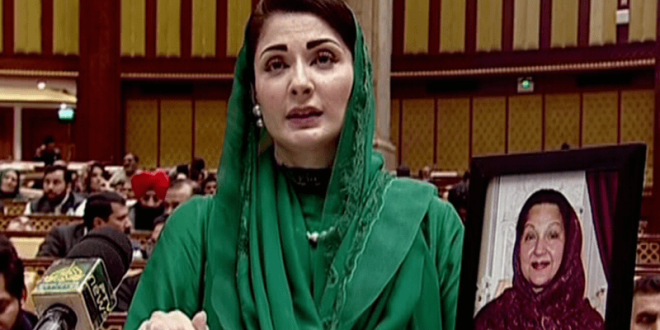
The Pakistan Markazi Muslim League (PMML) has escalated its confrontation with the ruling Pakistan Muslim League-Nawaz (PML-N) by serving a legal notice on Punjab Chief Minister Maryam Nawaz. The notice, issued through legal counsel on behalf of PMML President Khalid Masood Sandhu, demands that Ms. Nawaz retract her alleged remarks identifying the PMML as a “terrorist, illegal, and banned” organization. The accusations were reportedly made via her official X account and during a public address, subsequently amplified by television channels.
The PMML has given Ms. Nawaz a seven-day ultimatum to withdraw the contentious statements, remove all related disputed content from social media, and issue an unconditional public apology. Failure to comply, the party warns, will lead to the initiation of formal legal proceedings in competent courts, holding her accountable for all associated costs and consequences. This legal challenge follows the contentious November 8 by-election in NA-77 Gujranwala, where the PML-N secured victory, a result the PMML has vehemently disputed, alleging electoral irregularities and demanding a recount.
Background: The Shadow of Proscribed Organizations and Political Legitimacy
This incident is not an isolated political spat; it taps into several deep-seated issues within Pakistan’s political and security landscape. The core of the dispute lies in Ms. Nawaz’s allegations that “proscribed organizations were operating under new names,” implicitly linking the PMML to such entities. This accusation carries significant weight in Pakistan, a nation that has grappled with extremism and terrorism for decades, leading to the proscription of numerous militant and sectarian groups.
The state has continuously worked to counter the phenomenon of banned outfits attempting to re-emerge under new guises to circumvent legal restrictions. This historical context makes any direct or indirect association with such groups a grave charge, capable of severely damaging a political party’s reputation and legitimacy. The PMML, for its part, firmly asserts its legal standing, highlighting its registration with the Election Commission of Pakistan (ECP) since 2022. ECP registration is the primary gateway to political legitimacy in Pakistan, allowing parties to participate in elections and operate openly. Therefore, Ms. Nawaz’s remarks not only question PMML’s legal status but also, by extension, cast a shadow on the ECP’s vetting processes.
The timing of these allegations, post-by-election, suggests a political dimension where winning parties often seek to delegitimize rivals. However, using the sensitive label of “terrorism” or “banned organization” elevates the dispute beyond typical electoral rhetoric into a matter of national security and legal integrity.
Impact on Pakistan: Navigating Free Speech, Defamation, and Public Trust
The unfolding legal and political drama holds several potential impacts for Pakistan:
- Judicial Overload & Rule of Law: An increasing trend of political disputes finding their way into courts risks overburdening an already strained judicial system. It also highlights the fine line between political freedom of expression and legally actionable defamation, especially when serious allegations like terrorism are involved.
- Erosion of Public Trust: Such high-profile accusations from a sitting Chief Minister and a prominent political family can confuse the public. If the PMML is a legally registered party, these allegations can sow distrust in political discourse and even in the electoral process itself, questioning the integrity of parties allowed to contest elections.
- Heightened Political Polarization: Pakistan’s political landscape is already deeply polarized. This incident further exacerbates tensions between the ruling establishment and opposition elements, potentially leading to more aggressive rhetoric and less constructive dialogue.
- Implications for ECP’s Authority: Should the legal proceedings highlight a disconnect between a party’s ECP registration and allegations of being a “banned outfit,” it could prompt scrutiny of the ECP’s mechanisms for vetting and monitoring political parties.
- International Perception: Pakistan’s ongoing efforts to combat terrorism and demonstrate compliance with international standards (e.g., FATF guidelines) could be subtly impacted. Allegations of proscribed groups operating under new political banners, even if disputed, could raise questions externally.
Analysis: A High-Stakes Legal and Political Gambit
The PMML’s decision to serve a legal notice is a calculated move, transforming a political disagreement into a formal legal challenge. This strategy aims to achieve several objectives: clear the party’s name from grave allegations, force a retraction from a powerful political figure, and assert its legitimacy within Pakistan’s political fabric. By demanding a public apology, the PMML seeks to reverse the damage to its reputation and perhaps gain a moral victory.
For Maryam Nawaz and the PML-N, the situation is complex. While political rhetoric often involves strong accusations, labelling a registered party as “terrorist” or “banned” is an exceptionally serious charge, especially for a chief minister whose words carry official weight. If the PMML’s registration with the ECP is indeed clear and undisputed, these allegations could be seen as an abuse of power or a reckless attempt to discredit a political rival. The legal notice puts Ms. Nawaz in a difficult position: either retract the statements, which could be perceived as weakness, or face potentially lengthy and damaging legal proceedings that could further publicize the accusations and force a judicial review of the facts.
This dispute underscores the critical importance of factual accuracy and responsible discourse in political campaigning. In a country constantly battling the menace of extremism, carelessly using labels associated with terrorism can have profound consequences, potentially undermining legitimate political participation and diverting focus from genuine security threats. The outcome of this legal confrontation will not only define the immediate relationship between PMML and PML-N but also set a precedent for how allegations concerning national security and political legitimacy are handled within Pakistan’s volatile political landscape.
“`