Dost Pakistan Journeys Tours and safaris in the North & South Pakistsn
Related Articles


“`html
Pakistan’s Contempt Clash: Imran Khan’s Health, Court Orders, and Political Narratives
The Immediate News: Government Accuses PTI of Contempt, PTI Files Counter-Plea
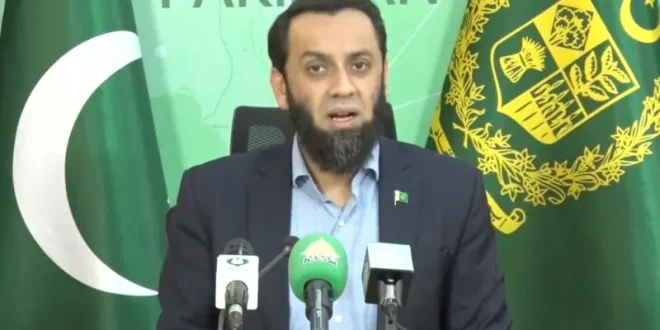
Pakistan’s political landscape witnessed another contentious chapter as the government, through Information Minister Attaullah Tarar, levelled serious accusations against the Pakistan Tehreek-e-Insaf (PTI) and former Prime Minister Imran Khan’s family. The government claims they violated a Supreme Court (SC) order by issuing public statements and interacting with media following Khan’s medical check-up at the Pakistan Institute of Medical Sciences (PIMS).
Tarar asserted the government fully complied with the SC’s directive for a transparent medical examination, despite not transferring Khan to Shifa International Hospital as initially sought by Khan’s legal team. The government’s stance is that health matters should not be politicized, a principle it accuses PTI of flouting. In a tit-for-tat development, Dr. Uzma Khan, Imran Khan’s sister, simultaneously filed a contempt petition against the government, alleging it wilfully disregarded the SC’s August 18 order to shift Khan to a private hospital for examination.
Background: A Deepening Political and Judicial Impasse
This latest episode of accusations and counter-accusations is not an isolated event but a stark reflection of Pakistan’s entrenched political crisis. Since his removal from power in April 2022, Imran Khan has been embroiled in numerous legal battles, culminating in his arrest and incarceration following the tumultuous events of May 9, 2023. His health and prison conditions have consistently been a point of contention between his party, PTI, and the incumbent government, leading to repeated judicial interventions.
The Supreme Court, finding itself at the nexus of this political maelstrom, issued an order on August 18, 2023, that specifically directed the government to transfer Khan to Shifa International Hospital within two days for a medical examination by a multidisciplinary board. Crucially, this order also contained explicit instructions forbidding Khan’s family, PTI members, and associated lawyers from disclosing his health condition or medical reports to the media or public until the next hearing. This clause was a clear attempt to de-politicize what had become a highly charged issue.
The government’s immediate response was to file a review petition, questioning the precedent of providing special facilities to prisoners and the legality of allowing examinations at private hospitals, arguing it was discriminatory and violated prison rules. Despite a procedural return of their initial petition, the government pressed ahead with a fresh plea. This legal manoeuvring, coupled with Khan’s eventual transfer to PIMS instead of Shifa, set the stage for the current round of contempt claims, highlighting the immense pressure on state institutions in Pakistan’s polarized environment.
Impact on Pakistan: Undermining Institutions and Fueling Discord
The continuous back-and-forth over Imran Khan’s medical treatment and the allegations of contempt of court from both sides carry significant repercussions for Pakistan’s fragile democratic and legal structures:
- Erosion of Judicial Credibility: When the Supreme Court’s directives are met with immediate review petitions, perceived defiance, or selective interpretation by state actors and political parties, it risks diminishing the judiciary’s authority. This ongoing struggle to enforce judicial orders can erode public faith in the justice system’s impartiality and effectiveness.
- Intensified Political Polarization: The dispute further entrenches the deep political divides. Each side uses the incident to bolster its narrative and discredit the opposition, making consensus-building and stable governance increasingly difficult. This ‘us vs. them’ mentality trickles down to the populace, exacerbating societal divisions.
- Questionable Precedents for Rule of Law: The government’s concerns about equal treatment for all prisoners are legitimate. However, the manner in which this principle is applied—or seen to be circumvented—in high-profile cases sets a potentially damaging precedent. It raises questions about the consistent application of the law and whether certain individuals receive preferential or discriminatory treatment based on political expediency.
- Challenges to Institutional Integrity: The conflicting statements emerging from different factions of the Pakistan Bar Council underscore the internal pressures faced by professional bodies. Such divisions can weaken the collective voice of legal professionals and raise doubts about their neutrality in politically sensitive matters.
- Narrative Control and Media Scrutiny: The SC’s directive to restrict media disclosure reflects the judiciary’s concern over the politicization of information. However, the subsequent events show the difficulty in controlling narratives in the age of social media, where accusations and counter-accusations quickly circulate, often without full context, further muddying the waters for the public.
Analysis: A Struggle for Supremacy and Public Opinion
The ongoing legal and political battle surrounding Imran Khan’s health is, fundamentally, a sophisticated struggle for narrative control and institutional supremacy. Both the government and the PTI are not merely reacting to events; they are strategically leveraging every development to shape public opinion and gain political mileage.
The government’s proactive stance, articulated by Minister Tarar, aims to project an image of adherence to the law and a commitment to preventing the politicization of sensitive issues. By filing review petitions and questioning the ‘special’ treatment for prisoners, it seeks to frame its actions as upholding universal legal principles rather than defying a judicial order. The accusation of PTI’s contempt, through public statements and gatherings, serves to discredit the opposition and shift the blame for the current impasse.
On the other side, PTI’s decision to file its own contempt petition is a direct challenge to the government’s perceived defiance of the Supreme Court. For PTI, ensuring their leader’s access to medical care at a facility of his choice is a matter of fundamental rights and a symbol of resistance against what they view as state oppression. The public gatherings and media engagement, despite judicial warnings, are integral to PTI’s strategy of mobilizing its base and maintaining pressure on the authorities, portraying the government as disrespectful of judicial authority.
The Supreme Court is caught in a delicate balance. Its orders are meant to be final and binding, yet the political realities make their enforcement incredibly challenging. The specific restriction on media disclosure in its August 18 order was a forward-thinking attempt to curb politicization, but its subsequent alleged violation by both sides highlights the formidable task of maintaining judicial sanctity in a deeply polarized nation. The outcome of these contempt proceedings will not only determine the immediate future of Imran Khan’s medical care but also significantly influence the perceived independence and authority of Pakistan’s judiciary in an era of unprecedented political volatility.
“`