Dost Pakistan Journeys Tours and safaris in the North & South Pakistsn
Related Articles

“`html
Pakistan’s Justice on Trial: The Detention of Imran Khan’s Sisters and the MPO Ordinance
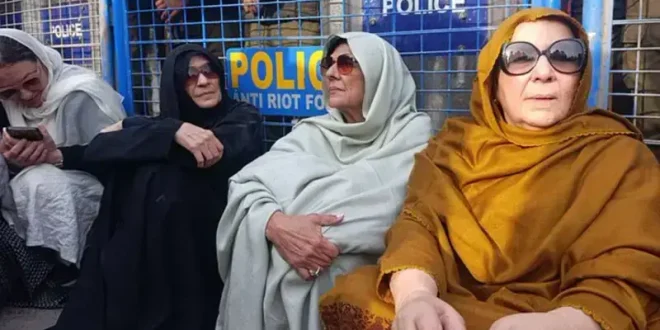
In a development that underscores the intricate dance between judicial oversight and executive action in Pakistan, the Lahore High Court (LHC) has issued summons to top officials, including the Punjab home secretary and the superintendent of Kot Lakhpat jail. The court’s directive comes in response to a petition challenging the continued detention of former Prime Minister Imran Khan’s three sisters – Aleema Khan, Noreen Niazi, and Uzma Khan – beyond their stipulated 30-day period under the Maintenance of Public Order (MPO) Ordinance, 1960.
The News in Focus
Justice Abher Gul Khan of the LHC took up the petition filed by Shahrez Khan, Aleema Khan’s son, on Thursday. The plea highlights that despite the expiry of their 30-day detention period on October 19 and 20, Imran Khan’s sisters remain in custody at Lahore’s Kot Lakhpat jail. Advocate Rana Mudassar Umar, representing the petitioner, argued that the detention orders, initially issued by the Deputy Commissioner, had lapsed, rendering their continued imprisonment illegal.
The court, while noting the Deputy Commissioner was not a party to the petition, nevertheless called for the personal appearance of the Punjab home secretary and the Kot Lakhpat jail superintendent on October 28, along with comprehensive reports on the matter. The petition critically asserts that the detention constitutes a violation of Article 10 of Pakistan’s Constitution, which safeguards rights related to arrest and detention, and that preventive detention cannot supersede ordinary criminal law, challenging the very application of Section 3 of the MPO Ordinance.
Background: A Deeper Look at the MPO and Political Climate
The detention of Imran Khan’s sisters is not an isolated incident but rather a symptom of Pakistan’s charged political landscape, particularly since the tumultuous events of May 9th, 2023. Imran Khan, leader of the Pakistan Tehreek-e-Insaf (PTI) party and a charismatic figure in national politics, has been at the center of a prolonged confrontation with the state machinery following his ouster from power in April 2022.
- The Maintenance of Public Order (MPO) Ordinance, 1960: This colonial-era law grants the executive sweeping powers of preventive detention. It allows authorities to detain individuals for up to 30 days (extendable) if they are deemed a threat to public order. While ostensibly designed to prevent violence or unrest, critics argue it is frequently misused to silence political dissent and target opponents without due process or formal charges, bypassing the regular criminal justice system.
- Article 10 of the Constitution of Pakistan: This fundamental right ensures safeguards as to arrest and detention. It mandates that no person shall be deprived of life or liberty save in accordance with law, and provides for rights such as being informed of the grounds of arrest, the right to consult and be defended by a legal practitioner, and presentation before a magistrate within 24 hours. The MPO, when applied arbitrarily or extended illegally, often comes into direct conflict with these constitutional protections.
- The PTI Crackdown: Following widespread protests and alleged vandalism on May 9th, numerous PTI leaders, workers, and supporters have faced arrests and detentions. Critics allege a systematic crackdown on the party, raising concerns about fundamental rights and political freedoms. The detention of Imran Khan’s sisters, prominent family members actively supporting him, fits within this broader narrative of perceived political targeting.
Impact on Pakistan’s Rule of Law and Human Rights
This case holds significant implications for Pakistan’s democratic fabric and its commitment to fundamental rights:
- Judicial Independence Under Scrutiny: The LHC’s role in this matter is crucial. Its decision will be closely watched as a test of judicial independence and its willingness to curb potential executive overreach. Upholding due process and demanding accountability from state officials is vital for maintaining public trust in the judiciary.
- Erosion of Civil Liberties: The alleged misuse of laws like the MPO for prolonged and possibly illegal detention chips away at the foundational principles of civil liberties and human rights. It creates an environment where citizens fear arbitrary detention, undermining freedom of expression and political association.
- Political Polarization: Such incidents further exacerbate political tensions and deepen the existing divides. The perception of injustice against high-profile political families can fuel public discontent and undermine efforts towards political stability.
- International Perception: Arbitrary detentions and challenges to the rule of law often draw the attention of international human rights organizations and democratic watchdogs, potentially impacting Pakistan’s image on the global stage.
Analysis: The Delicate Balance Between Order and Liberty
The ongoing legal battle surrounding the detention of Imran Khan’s sisters presents a classic dilemma faced by many democracies: how to balance the need for public order and national security with the imperative to protect fundamental human rights. The core of the challenge lies in the application and potential misuse of preventive detention laws like the MPO.
The petitioners’ argument that “preventive detention could not replace ordinary criminal law” is particularly potent. It highlights a critical legal principle: if an individual has committed a crime, they should be charged and tried under standard criminal procedures, not held indefinitely under an administrative order. The MPO is intended for *preventing* future acts that threaten public order, not for punitive detention or as a substitute for a judicial trial for past alleged offenses. When detentions extend beyond their legal limits, it transforms preventive custody into arbitrary imprisonment, directly violating constitutional guarantees.
The LHC’s decision to summon senior officials signifies a serious judicial intervention. It signals that the court is not willing to overlook alleged procedural irregularities or potential violations of fundamental rights. The reports demanded from the home secretary and jail superintendent will be critical in determining the factual basis for the continued detention and assessing whether proper legal protocols were followed. This case will set an important precedent regarding the accountability of executive authorities and the judiciary’s role as a guardian of citizens’ liberties.
As Pakistan grapples with persistent political instability, the manner in which its institutions handle such sensitive cases will significantly shape public perception of justice and fairness. The Oct 28 hearing is not just about the freedom of three individuals; it is about upholding the integrity of the legal framework and ensuring that the rule of law prevails over political expediency.
“`