Dost Pakistan Journeys Tours and safaris in the North & South Pakistsn
Related Articles


“`html
IMF Warns MENAP Region Faces Economic Contraction Amid Geopolitical Tensions
The News
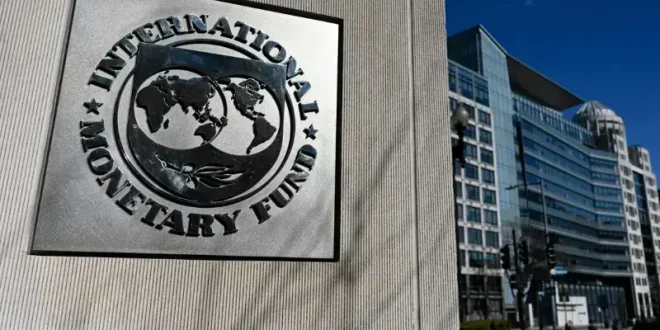
The International Monetary Fund (IMF) has issued a sobering economic forecast for the Middle East, North Africa, and Pakistan (MENAP) region, predicting a significant 1.3% contraction in Gross Domestic Product (GDP) for 2026. This downturn is primarily attributed to the escalating geopolitical tensions and regional conflicts, specifically citing the impact of the US-Israeli-led war against Iran. The IMF report, released in Dubai, highlights widespread adverse effects across critical sectors including energy production, global shipping routes, tourism, international trade, and overall investor confidence.
While a robust rebound to 6.6% growth is anticipated in 2027, the Fund cautions that economic output in these nations will generally remain below pre-conflict projections, indicating a lasting economic scar. The impact is noted as substantial yet uneven, with energy-exporting economies bearing the brunt of disruptions to production and shipping, while oil-importing nations have shown greater resilience, partly supported by remittances and tourism.
The IMF’s baseline scenario assumes a de-escalation of the conflict by early 2027 and a gradual normalisation of trade. However, the outlook remains clouded by “exceptionally high uncertainty,” with further disruptions to energy supply and trade routes, and tightening external financial conditions posing significant risks. Amidst this volatility, the IMF reiterates its call for policymakers to prioritize price stability, fiscal sustainability, central bank independence, and robust structural reforms.
Background
The Middle East and North Africa (MENA) region, stretching from Morocco to Pakistan, encompasses a diverse array of economies, from hydrocarbon-rich Gulf states to populous, resource-constrained nations like Pakistan. This region is a critical global hub for energy production, maritime trade routes (such as the Suez Canal and the Strait of Hormuz), and a significant source of remittances for many developing economies.
The “US-Israeli-led war against Iran” referenced by the IMF is a direct acknowledgment of the heightened geopolitical instability that has plagued the broader Middle East for an extended period, recently intensifying with the Israel-Hamas conflict, Houthi attacks on Red Sea shipping, and numerous proxy confrontations involving Iran and its allies. These tensions manifest not just as direct military engagements but as a continuous state of perceived risk, impacting investment decisions, commodity prices, and the free flow of goods.
Economically, many MENAP countries were already grappling with pre-existing challenges: persistent fiscal deficits, high public debt, youth unemployment, and the imperative to diversify away from oil dependence. For oil exporters, periods of high oil prices have often masked deeper structural issues. For oil importers, vulnerability to global energy price swings and external financing conditions is a constant threat. The IMF, as a global financial institution, regularly monitors these economies, provides macroeconomic analysis, offers policy advice, and, in many cases, extends financial assistance conditioned on economic reforms.
Impact on Pakistan
As a crucial component of the MENAP acronym, Pakistan’s economic health is intrinsically linked to regional stability, even as an oil-importing nation. While the IMF report suggests oil importers have shown greater resilience, Pakistan’s unique vulnerabilities mean it is far from immune to the broader regional downturn.
Firstly, Pakistan is a significant net importer of oil and gas. Any further disruption to global energy production or shipping, translating into higher international crude oil and liquefied natural gas (LNG) prices, would directly exacerbate Pakistan’s already precarious external account deficit and fuel domestic inflation. This would place immense pressure on the rupee and the nation’s foreign exchange reserves, requiring even more stringent fiscal management and potentially larger subsidies to protect consumers, which in turn strains public finances.
Secondly, disruptions to vital trade routes, particularly those passing through the Red Sea and Gulf regions, lead to increased freight costs and extended shipping times. This impacts the cost of both imported raw materials and exported finished goods, making Pakistani products less competitive and dampening overall trade volumes. Pakistan’s access to vital export markets and its supply chains for critical imports would suffer.
Thirdly, regional instability significantly deters foreign direct investment (FDI), which is desperately needed to stimulate economic growth and create jobs in Pakistan. Investors become risk-averse, preferring safer havens, thereby limiting capital inflows that could otherwise support infrastructure development and industrial expansion.
Finally, while the IMF notes remittances as a factor supporting oil importers, a prolonged downturn in Gulf economies, which host millions of Pakistani expatriates, could eventually lead to a decline in these crucial inflows. Given Pakistan’s consistent reliance on remittances to bolster its balance of payments, any reduction would be severely felt.
For Pakistan, the IMF’s advice to prioritize price stability, fiscal sustainability, and structural reforms becomes not just a recommendation but an urgent necessity. Stabilizing its economy amidst a turbulent region requires decisive policy actions to broaden the tax base, control expenditure, privatize state-owned enterprises, and improve the ease of doing business.
Analysis
The IMF’s forecast for a 1.3% contraction in the MENAP region’s GDP in 2026 underscores the profound link between geopolitical stability and economic prosperity. This is more than a mere numerical prediction; it signifies potential job losses, rising poverty, delayed development, and increased social unrest across a strategically vital part of the world.
The uneven impact on oil exporters versus importers highlights divergent economic structures. Oil-exporting economies, often characterized by heavy reliance on hydrocarbon revenues, are directly exposed to disruptions in global energy markets and shipping lanes. A direct hit to production capacity or a blockage of transit routes can immediately curtail their primary source of income. In contrast, many oil importers, while vulnerable to higher energy costs, often have more diversified economies (even if nascent), benefit from strong remittance flows from their diaspora in oil-rich nations (until those economies falter), and can implement policy measures to cushion domestic consumers.
Crucially, the warning that output will remain “below pre-war projections” even after a rebound signifies a long-term scarring effect. This means lost opportunities, delayed investments, capital flight, and a diversion of resources towards security instead of productive sectors. The region loses valuable time and potential growth, falling further behind its global peers in critical development indicators.
The “exceptionally high uncertainty” surrounding the outlook is perhaps the most defining characteristic. The interconnectedness of global energy markets, trade routes, and financial systems means that even localized conflicts can have far-reaching consequences. The risks outlined by the IMF – further energy disruptions, higher prices, and tighter external financial conditions due to global inflation concerns and interest rate hikes – create a multi-layered threat environment for the MENAP economies.
The IMF’s repeated policy recommendations are therefore not generic advice but targeted prescriptions for resilience. Maintaining price stability is paramount to protect household purchasing power and ensure a predictable investment environment. Fiscal sustainability means governments must manage debt responsibly to avoid crises and maintain the capacity to respond to shocks. Central bank independence is vital for credible monetary policy, free from political interference. Finally, structural reforms are essential to diversify economies, boost productivity, attract investment, and create sustainable jobs beyond the immediate crisis response.
In conclusion, the IMF’s assessment serves as a stark reminder that peace and stability are indispensable foundations for economic growth. For the MENAP region, navigating this turbulent period will require not only astute economic management but also a concerted effort towards de-escalation and long-term regional cooperation to foster an environment conducive to sustainable prosperity.
“`