Dost Pakistan Journeys Tours and safaris in the North & South Pakistsn
Related Articles


“`html
Pakistan’s Public Health Crisis: Imran Khan’s PIMS CTA Incident Exposes Systemic Flaws
The Immediate News
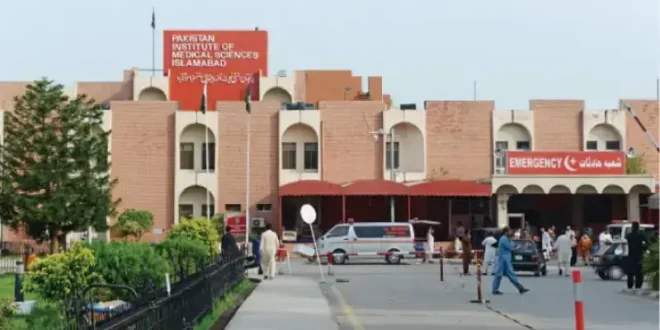
Prime Minister Shehbaz Sharif has launched an inquiry into the non-functional Computed Tomography Angiography (CTA) machine at the Cardiology Department of the Pakistan Institute of Medical Sciences (PIMS). This action comes after former Prime Minister Imran Khan was taken to PIMS for a medical check-up, where a recommended CTA test could not be performed due to the machine’s unavailability. A high-level committee, led by the Establishment Division secretary, has been formed to investigate the matter, determine facts, and assign responsibility. Intriguingly, it emerged that while the Cardiac Centre’s machine was indeed out of order since 2011, a functional CTA machine was available in PIMS’s Radiology Department since March 2022, but a critical lack of communication prevented its utilization for Imran Khan’s examination.
Background: A Glimpse into Pakistan’s Healthcare System
The incident at PIMS, one of Pakistan’s premier public hospitals, is more than just a logistical oversight; it’s a glaring symptom of deeper structural challenges plaguing the nation’s public healthcare system. PIMS, a tertiary care and teaching hospital, serves a vast population, often grappling with limited resources and immense patient load. The core of the current controversy revolves around a CTA machine, a vital diagnostic tool for assessing cardiovascular health without invasive procedures like conventional angiography. While the Cardiac Centre’s unit had reportedly been non-functional for over a decade, a functional alternative existed within the same institution in the Radiology Department, highlighting a severe disconnect.
This event is further complicated by the high-profile nature of the patient, Imran Khan. Currently imprisoned at Adiala Jail, Khan’s health has been a subject of intense public and judicial scrutiny. The Supreme Court had previously ordered his examination at Shifa International Hospital, a private facility. However, citing security concerns, authorities diverted him to PIMS. This background amplifies the significance of the CTA incident, transforming it from a routine hospital issue into a national discussion on governance, institutional efficiency, and patient care.
The repeated referrals of PIMS cardiology patients to private facilities for CTA procedures, as noted by an anonymous administrator, paints a grim picture of a system that, despite having resources, fails to optimize their use, potentially diverting public funds and patient trust to the private sector.
Impact on Pakistan: Eroding Trust and Demanding Accountability
The implications of this incident extend far beyond the unperformed test of a former premier. Firstly, it severely undermines public trust in state institutions, particularly the public health sector. If PIMS, a flagship public hospital, cannot effectively coordinate its own departments to provide a crucial diagnostic test for a high-profile patient, it raises serious questions about the quality of care and reliability for the average citizen. This perception can push more people towards often expensive private healthcare, exacerbating existing socio-economic disparities.
Secondly, the PM’s intervention and the formation of an inquiry committee, comprising senior officials and medical experts, signal the grave administrative and systemic failures at play. This public scrutiny could be a double-edged sword: while it might lead to much-needed reforms and accountability, it also exposes the fragility of governance structures when faced with basic operational challenges. The committee’s mandate to investigate equipment functionality, human resources, referral mechanisms, and potential diversion of business to private facilities touches upon critical areas often neglected in routine audits.
Finally, the incident brings Pakistan’s broader healthcare infrastructure into sharp focus. Years of underfunding, insufficient maintenance budgets, and a lack of integrated digital systems often lead to such embarrassing lapses. It highlights the urgent need for a holistic review of procurement policies, equipment lifecycle management, inter-departmental communication protocols, and continuous professional development for medical staff across public hospitals nationwide. The Adiala Jail to PIMS detour and the subsequent CTA failure will undoubtedly fuel public debate on the state of prisoner medical rights and the standards of public healthcare.
Analysis: A Systemic Breakdown, Not an Isolated Incident
The PIMS CTA machine debacle is not an isolated event but rather a symptom of deeper, systemic ailments afflicting Pakistan’s public health system. Several critical points emerge from this situation:
- Chronic Maintenance Neglect: The Cardiac Centre’s CTA machine reportedly being non-functional since 2011 points to a profound failure in equipment maintenance, asset management, and sustained investment in public health technology. Such prolonged disuse renders valuable public assets obsolete and wasteful.
- Severe Communication and Coordination Gaps: The most striking aspect is the existence of a functional CTA machine in PIMS’s Radiology Department since March 2022, yet the Cardiology Department and the medical team treating Imran Khan were either unaware, or a broken referral mechanism prevented its use. This highlights dysfunctional inter-departmental communication, lack of an integrated Hospital Information System (HIS), and potentially, professional silos where departments operate in isolation.
- Administrative Oversight Deficiencies: The PIMS administration bears significant responsibility for failing to ensure optimal utilization of existing resources and establishing clear, efficient referral protocols between departments. The fact that cardiologists were reportedly “not accustomed” to referring patients to radiology for CTA indicates a historical lack of standardized operating procedures and training.
- Potential for Malpractice and Corruption: The inquiry committee’s focus on whether patients were routinely referred to private facilities for CTA, and if “any particular private facility was given preference,” raises concerns about potential conflicts of interest, kickbacks, or deliberate undermining of public facilities to benefit private ones. If public hospitals possess the capability but intentionally redirect patients, it represents a severe breach of public trust and ethical conduct.
- Reactive vs. Proactive Governance: It often takes a high-profile case, like that of a former Prime Minister, to expose systemic flaws that affect countless ordinary citizens daily. This reactive approach to problem-solving, rather than proactive system strengthening, is characteristic of governance challenges in many developing nations.
The inquiry committee’s comprehensive terms of reference, covering technical capabilities, resource availability, referral mechanisms, administrative roles, and the ethical implications of private referrals, are commendable. For its findings to be truly impactful, they must lead to concrete, implementable reforms that transcend this specific incident. Pakistan’s public health sector desperately needs modern inventory management, robust maintenance schedules, inter-departmental integration through digital platforms, continuous staff training, and rigorous accountability mechanisms. The Imran Khan CTA incident, while embarrassing, offers a critical opportunity for Pakistan to confront and rectify the deep-seated issues undermining its citizens’ right to quality public healthcare.
“`