Dost Pakistan Journeys Tours and safaris in the North & South Pakistsn
Related Articles
Pakistan Edges Towards Constitutional Crisis: KP CM Defies Federal Emergency Threat Amidst PTI Long March
By [Your Name/Journalist Name]
The Latest Developments in Pakistan’s Political Standoff
Pakistan finds itself teetering on the brink of a significant constitutional and political confrontation as Khyber Pakhtunkhwa (KP) Chief Minister Sohail Afridi has unequivocally declared his refusal to accept any “illegal move,” specifically the imposition of Governor’s Rule or an emergency in the province. His firm stance comes amidst deliberations by the federal government, reportedly considering such measures due to unresolved differences over counterterrorism policy and the ongoing PTI long march.
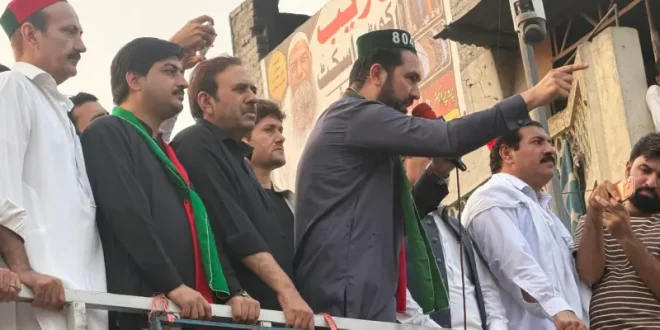
CM Afridi, leading the Pakistan Tehreek-e-Insaf (PTI) long march, warned that any attempt to impose federal control would redirect their protest from its planned route to Islamabad’s D-Chowk, signifying a direct challenge to the central government. The march, now in its seventh day within KP, is primarily aimed at securing the release of incarcerated PTI founder Imran Khan and highlighting alleged injustices.
Adding to the tension, authorities in Swabi, a key junction for the march, have begun deploying containers to block potential routes, particularly on the M-1 Motorway bridge linking KP and Punjab. However, roads remain open for general traffic, suggesting a cautious approach.
In a related development, CM Afridi also revealed he had resisted federal pressure to sign off on military operations in the province, reiterating his commitment to protecting provincial rights and the sacrifices made by Pakhtuns in the fight against terrorism. He asserted his readiness to sacrifice his political position for Imran Khan and the people of KP.
Meanwhile, the KP Inspector General of Police (IGP) has issued detailed operational guidelines for managing protests, emphasizing maximum restraint for peaceful demonstrations but outlining a phased use of force for violent situations, including tear gas, rubber bullets, and even aerial firing as a last resort. This directive comes as the KP Information Minister alleged the withdrawal of security for him and other provincial parliamentarians, prompting a sharp rebuke from the KP Assembly Speaker who demanded immediate restoration of security and warned against breaching parliamentary privileges.
Background to the Standoff: Political Fault Lines and Constitutional Debates
The current volatile situation in Pakistan is deeply rooted in a complex interplay of political rivalries, constitutional debates, and pressing security challenges. At its heart lies the increasingly strained relationship between the Pakistan Tehreek-e-Insaf (PTI), currently governing Khyber Pakhtunkhwa, and the federal coalition government led by the Pakistan Muslim League-Nawaz (PML-N).
The Political Landscape and PTI’s Agitation
Since the ouster of PTI founder Imran Khan from the prime minister’s office in April 2022 through a vote of no-confidence, Pakistani politics has been characterized by intense polarization. Khan’s subsequent incarceration on various charges has fueled widespread protests and a sense of political victimization among his supporters. The PTI has consistently demanded fresh general elections and the release of its leader, frequently resorting to public demonstrations and long marches as a primary tool of political pressure. The ongoing march, led by CM Sohail Afridi, is a continuation of this strategy, aiming to galvanize public support and force the federal government’s hand.
Constitutional Provisions: Governor’s Rule and Emergency
The federal government’s consideration of imposing Governor’s Rule or an emergency in KP invokes critical articles of the Pakistani Constitution. Article 234 empowers the President, on the advice of the Prime Minister, to declare Governor’s Rule in a province if the provincial government cannot be carried on in accordance with the provisions of the Constitution. This effectively suspends the provincial government and places the province under direct federal administration. Similarly, a state of emergency, covered under Article 232, allows the President to issue a Proclamation of Emergency if the security or economic life of Pakistan, or any part thereof, is threatened by war, external aggression, or internal disturbance. Such a proclamation grants the federal government extensive powers, potentially impacting fundamental rights and the autonomy of provincial governments, marking a significant departure from normal democratic governance.
The Counterterrorism Conundrum in KP
A significant point of contention is the divergent approaches to counterterrorism policy, particularly in KP. The province, bordering Afghanistan, has historically borne the brunt of extremist violence. The recent resurgence of the Tehrik-i-Taliban Pakistan (TTP) and other militant groups has escalated security concerns. While the federal government reportedly advocates for a more robust, potentially military-led response, CM Afridi and the KP government have repeatedly expressed reservations about large-scale military operations, emphasizing the immense sacrifices already made by the local populace and suggesting alternative strategies, perhaps involving dialogue or more localized law enforcement actions. The breakdown of talks between the federal and provincial governments on this crucial issue has exacerbated tensions, painting a grim picture of disunity in the face of a national security threat.
This backdrop of political animosity, constitutional pressures, and critical security challenges forms the crucible in which the current standoff between the federal government and the KP administration is unfolding, threatening to further destabilize an already fragile political environment.
Implications for Pakistan: A Nation on Edge
The escalating federal-provincial showdown in Pakistan carries profound implications for the nation’s political stability, democratic institutions, and socio-economic fabric. The potential imposition of federal rule in Khyber Pakhtunkhwa, coupled with the ongoing mass protest, threatens to push Pakistan into a deeper crisis.
Heightened Political Instability and Polarization
A move to impose Governor’s Rule or an emergency in KP would undoubtedly be perceived by the PTI and its supporters as a direct assault on their provincial mandate and a further attempt to marginalize the party. This could trigger widespread public unrest, not just in KP but across the country, further entrenching political polarization. The threat of the long march converging on Islamabad’s D-Chowk highlights the potential for significant disruption to daily life, commerce, and public order in the capital, potentially leading to clashes between protesters and law enforcement.
Erosion of Federalism and Democratic Norms
Pakistan’s constitutional framework is built on principles of federalism, granting autonomy to its provinces. An arbitrary or politically motivated imposition of federal rule risks severely undermining this delicate balance, eroding trust between the center and the provinces. Such actions could set a dangerous precedent, weakening democratic norms and potentially fostering resentment that could simmer for years, making future governance and consensus-building even more challenging.
Setback to Counterterrorism Efforts
The disagreement over counterterrorism policy comes at a critical time when militant groups, particularly the TTP, are showing signs of resurgence. Political infighting and a lack of unified strategy between the federal and provincial governments can severely hamper effective counterterrorism operations. A fractured approach not only compromises national security but also sends a signal of disarray to militant elements, potentially emboldening them. The security concerns in KP are genuine, and addressing them effectively requires a cohesive national effort, not political bickering.
Economic Uncertainty and Investor Confidence
Pakistan’s economy is already grappling with high inflation, a balance of payments crisis, and the need for sustained foreign investment. Political instability and constitutional crises act as significant deterrents to both local and international investors. Uncertainty surrounding governance, the rule of law, and the potential for widespread protests further dampens economic prospects, making it harder to attract crucial capital and implement necessary reforms. This prolonged political turmoil can inflict long-term damage on economic recovery efforts.
Human Rights and Public Order Concerns
The guidelines issued to the KP police for managing protests, while emphasizing restraint, also detail a graduated use of force. The withdrawal of security for MPAs and the Speaker’s strong reaction underscore concerns about political targeting and the potential for human rights violations during crowd control. In such charged environments, the risk of excessive force, arbitrary arrests, and suppression of dissent looms large, potentially leading to a deterioration of human rights standards and further public distrust in state institutions.
In essence, the current impasse is more than just a political squabble; it’s a critical test for Pakistan’s democratic resilience, its commitment to federalism, and its ability to address pressing national security challenges without succumbing to internal discord.
Analysis: Navigating a Perilous Path in Pakistan’s Political Landscape
The confrontation brewing between the federal government and the Khyber Pakhtunkhwa administration represents a perilous juncture for Pakistan, testing the limits of its constitutional framework and the resilience of its democratic institutions. This isn’t merely a dispute over policy; it’s a battle for political leverage and constitutional supremacy.
A Constitutional Conundrum: The Implication of Federal Rule
The threat of Governor’s Rule or an emergency in KP is a highly charged constitutional matter. While Articles 232 and 234 provide the legal framework for such interventions, their use is traditionally reserved for extreme circumstances where provincial governance has demonstrably failed or national security is gravely imperiled. Deploying these powers based on political differences or policy disagreements, particularly regarding counterterrorism where nuanced provincial concerns exist, could be perceived as an overreach. CM Afridi’s steadfast refusal and threat of escalating the march to Islamabad indicate the PTI’s readiness to challenge such a move both legally and politically, potentially plunging the nation into a full-blown constitutional crisis.
PTI’s Calculated Provocation and the Imran Khan Factor
The PTI’s long march is a calculated strategy to exert maximum pressure on the federal government. By making Imran Khan’s release a central demand, the party keeps its charismatic leader at the forefront of its narrative, rallying its dedicated support base. The strategic ambiguity surrounding the march’s final destination, coupled with the explicit threat to head to D-Chowk if federal rule is imposed, serves to keep the federal government guessing and under constant threat of escalation. This tactic, while effective in mobilizing supporters, also carries significant risks of confrontation and potential violence, especially given the history of such protests in Pakistan.
The Federal Government’s Dilemma: Security vs. Stability
The federal government faces a daunting challenge. On one hand, it has legitimate concerns about national security and the resurgence of terrorism in KP, which necessitates a coherent and effective counterterrorism strategy. On the other hand, a heavy-handed approach, such as imposing federal rule, risks alienating a popular provincial government, fueling public anger, and destabilizing the country further. The meeting between PM Shehbaz and President Zardari suggests the seriousness with which this option is being considered, but the political ramifications of such a move are immense. The challenge lies in finding a balance that addresses security imperatives without further fracturing the political landscape.
The Counterterrorism Stalemate: A Failure of Consensus
The deep chasm between the federal and KP governments on counterterrorism policy is particularly troubling. Effective counterterrorism requires a unified front, intelligence sharing, and coordinated operations. CM Afridi’s claim of refusing to sign documents for military operations highlights a fundamental disagreement on strategy. While KP has suffered immensely from terrorism, the federal government’s insistence on a particular approach without provincial buy-in risks an ineffective or even counterproductive outcome. This policy stalemate weakens Pakistan’s overall response to a grave national security threat.
Law Enforcement and the Erosion of Autonomy
The police guidelines for handling protests, while seemingly standard, are issued in a highly politicized environment. The immediate allegation of security withdrawal for MPAs and the KP Speaker’s intervention underscore the fragility of institutional autonomy and the potential for politicization of law enforcement. The Speaker’s invocation of the KP Provincial Assembly (Powers, Immunities and Privileges) Act 2026 highlights the ongoing struggle to protect parliamentary rights and prevent undue executive interference. This situation creates an environment where law enforcement officers are caught between their professional duties and political pressures.
The Path Forward: De-escalation or Confrontation?
The coming days are critical. CM Afridi’s announcement of the next plan of action on Oct 13 in Swabi will be a pivotal moment. The federal government has a narrow window to de-escalate tensions through dialogue and genuine efforts to address provincial concerns, rather than resorting to constitutional strong-arming. A sustainable solution requires a consensus-based approach to counterterrorism and a respect for provincial autonomy, rather than a confrontation that risks further unraveling Pakistan’s fragile political fabric. The alternative is a dangerous trajectory towards intensified confrontation, with unpredictable and potentially severe consequences for the nation.