Dost Pakistan Journeys Tours and safaris in the North & South Pakistsn
Related Articles

“`html
Pakistan’s Azm-i-Istehkam: Unpacking the Mir Ali Counter-Terrorism Operation in North Waziristan
Pakistan’s security landscape remains a complex tapestry of challenges, with counter-terrorism operations forming a critical front. A recent intelligence-based operation (IBO) in Mir Ali, North Waziristan, has once again brought the nation’s resolve against militancy into sharp focus. This article delves into the specifics of this operation, providing context on Pakistan’s ongoing struggle, the implications for regional stability, and an analysis of the evolving nature of the terrorist threat.
The News: A Decisive Strike in North Waziristan
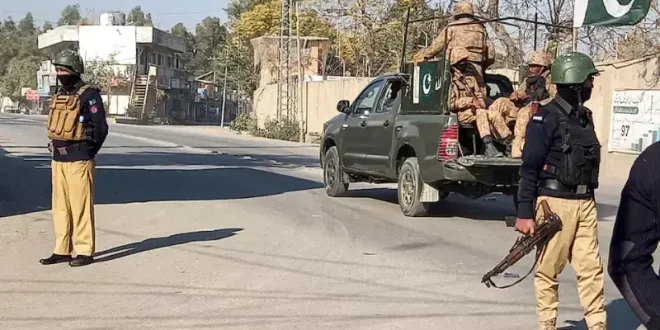
On Monday, Pakistan’s security forces successfully conducted an IBO in Muzak village, on the southern outskirts of Mir Ali in North Waziristan, Khyber Pakhtunkhwa (KP). The operation resulted in the neutralization of two terrorist hideouts and the recovery of a significant cache of improvised explosive devices (IEDs), explosive materials, weapons, and ammunition.
A striking and deeply concerning revelation from the Inter-Services Public Relations (ISPR) statement was that these hideouts were deliberately established within mosques. The military’s media wing identified the terrorists as belonging to the “India-sponsored Fitna al-Khawarij,” a term the state uses to refer to the banned Tehreek-i-Taliban Pakistan (TTP). The ISPR further asserted that these terrorists, allegedly facilitated by the Afghan Taliban, were also operating torture cells within these places of worship, underscoring their “reprehensible desecration” of Islamic principles.
President Asif Ali Zardari and KP Governor Faisal Karim Kundi commended the security forces’ professionalism and success. Both leaders emphatically condemned the misuse of religious sites by terrorists, stressing their detachment from true Islamic teachings and reaffirming support for intensified counter-terrorism efforts under the new “Azm-i-Istehkam” vision.
Background: Understanding Pakistan’s Enduring Struggle
The operation in Mir Ali is not an isolated incident but a critical component of Pakistan’s broader, relentless counter-terrorism campaign. To fully grasp its significance, several contextual elements are crucial:
- North Waziristan’s Strategic Importance: Once a semi-autonomous tribal region bordering Afghanistan, North Waziristan has historically been a stronghold for various militant groups, including the TTP and Al-Qaeda. While major military operations like Zarb-e-Azb in 2014 dislodged many militants, pockets of resistance and resurgent activity persist, often fueled by cross-border movement.
- The Fitna al-Khawarij Narrative: The term “Fitna al-Khawarij” is strategically employed by the Pakistani state to delegitimize the TTP. Historically, Khawarij were an early Islamic sect known for their extremism and violent opposition to established authority. By linking the TTP to this historical archetype, Pakistan aims to portray the group as an aberrant, anti-Islamic entity, thereby eroding any ideological appeal they might claim among religious segments of the population. The “India-sponsored” label adds a dimension of foreign conspiracy, framing the threat as externally instigated.
- The Azm-i-Istehkam Vision: This new “vision” or campaign signifies a renewed, comprehensive approach to tackling terrorism. It moves beyond purely kinetic military operations to encompass political, economic, and social dimensions, aiming for long-term stability and eliminating the root causes and enablers of militancy, particularly foreign-sponsored elements. The Mir Ali operation serves as an early demonstration of this vision in action.
- The Resurgence of Militancy in KP and Balochistan: Both KP and Balochistan have witnessed a concerning uptick in terrorist attacks. The Pakistan Institute for Conflict and Security Studies (PICSS) reported 49 militant attacks nationwide in a recent week, highlighting the volatile security environment. This resurgence is often attributed to the porous border with Afghanistan and the perceived safe havens for militant groups following the Taliban’s takeover in Kabul.
- Desecration of Mosques: The use of mosques as terrorist hideouts and torture cells is a deeply provocative act. It not only violates international humanitarian principles protecting civilian structures but also represents a profound sacrilege within Islam. This tactic aims to challenge the state’s moral authority and potentially sow discord, but it also risks alienating the local population, who overwhelmingly reject such acts.
Impact on Pakistan: A Multi-faceted Challenge
The Mir Ali operation, and the broader counter-terrorism campaign it represents, has far-reaching impacts on Pakistan:
- Enhanced Security Posture: The persistent threat necessitates a robust and well-equipped security apparatus. Operations like this demonstrate the military’s ongoing commitment and capability, yet also highlight the continuous strain on resources and personnel.
- Shaping Public Opinion: By exposing the desecration of mosques and the alleged foreign sponsorship, the state aims to galvanize public support against terrorists, reinforcing the narrative that these groups are enemies of both the state and religion. This is crucial for maintaining national unity in the face of extremism.
- Regional Diplomatic Tensions: The explicit mention of “Afghan Taliban facilitation” and “India-sponsored” terrorism invariably adds layers of complexity to Pakistan’s regional diplomacy. It strains relations with Afghanistan, which Pakistan expects to prevent cross-border attacks, and further exacerbates long-standing mistrust with India.
- Economic Implications: A volatile security environment deters foreign investment, impacts trade routes, and diverts essential funds from development projects towards security expenditures. Achieving lasting peace is paramount for unlocking Pakistan’s economic potential.
- Reinforcing State Authority: Each successful operation contributes to asserting the writ of the state in areas that were once considered no-go zones. This is vital for maintaining law and order and ensuring the sovereignty of Pakistani territory.
Analysis: Strategic Significance and Lingering Challenges
The Mir Ali operation underscores several critical aspects of Pakistan’s approach to national security:
The Dual Narrative and Strategic Messaging
Pakistan’s consistent narrative of “India-sponsored” terrorism and “Afghan Taliban facilitation” serves multiple strategic purposes. It allows the government to externalize the threat, rally domestic support, and pressure international actors regarding regional stability. While the validity of these claims is often debated, they form a cornerstone of Pakistan’s communication strategy against militancy.
Militant Tactics and Counter-Narratives
The use of religious sites by terrorists is a calculated tactic. It aims to exploit the sanctity of these places, hoping that security forces might hesitate to operate there, or that any action might be misconstrued as an attack on religion. However, Pakistan’s strong condemnation and framing of this as an act of “desecration” by the terrorists themselves effectively counters this tactic, turning public sentiment against the militants.
Azm-i-Istehkam: A New Chapter?
The operation aligns perfectly with the recently unveiled Azm-i-Istehkam vision. It signals a proactive, intelligence-led approach that is not confined to specific areas but aims to root out terrorist infrastructure comprehensively. The emphasis on eliminating “foreign-sponsored and supported terrorism” points towards a renewed focus on border management and addressing external linkages.
Lingering Challenges for Long-term Stability
Despite operational successes, the resurgence of militant activity, particularly in KP, indicates that deep-seated challenges remain. These include:
- Border Management: The porous Pakistan-Afghanistan border continues to be a significant challenge, facilitating militant movement and resupply.
- Ideological Roots: Military operations alone cannot eradicate the extremist ideology that fuels these groups. A parallel effort involving counter-narratives, educational reforms, and community engagement is crucial.
- Socio-Economic Development: Addressing grievances, poverty, and lack of opportunities in marginalized regions can reduce the appeal of militant recruitment.
- Political Stability: Internal political stability and consensus on national security policies are vital for a sustained and effective counter-terrorism strategy.
In conclusion, the Mir Ali operation is a significant tactical victory within Pakistan’s ongoing counter-terrorism efforts. It reaffirms the state’s resolve and demonstrates the operational capacity of its security forces under the new Azm-i-Istehkam vision. However, achieving lasting peace and stability in North Waziristan and the broader region will require a multi-faceted approach that combines robust security measures with sustained political will, diplomatic engagement, and socio-economic upliftment.
“`