Dost Pakistan Journeys Tours and safaris in the North & South Pakistsn
Related Articles
Pakistan’s Fuel Fight: JI’s Ultimatum on Petroleum Levy Amidst Economic Strain
The News
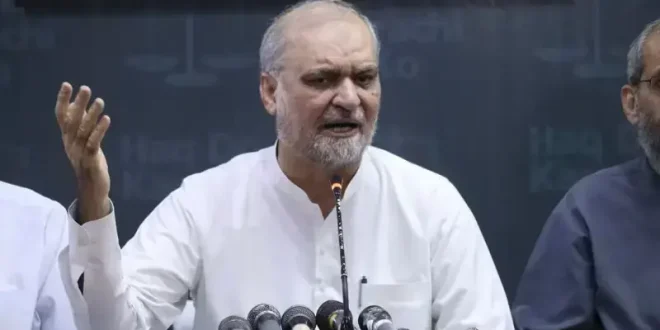
In a significant political development, Jamaat-i-Islami (JI) chief Hafiz Naeemur Rehman has taken a firm stance against meeting Prime Minister Shehbaz Sharif. The JI leader, speaking from Mansoorah, declared that any talks would be futile without a clear commitment from the government to abolish the controversial petroleum levy.
The Prime Minister had reportedly sought a meeting with the JI chief, conveyed through Planning Minister Ahsan Iqbal to JI vice chief Liaqat Baloch, urging a suspension of the party’s planned protest march until October 12. However, Rehman underscored that ministerial statements suggesting the levy would not be scrapped made a meeting without prior assurance pointless. He warned that if tangible relief is not provided by the deadline, JI would announce a date for an Islamabad march, intensifying its nationwide public meetings and signature campaign, which has already included 42-day sit-ins against the levy.
Rehman emphasized the need for “meaningful relief” for consumers, urging the government to capitalize on reported oil price reductions from Saudi Arabia for Asian markets. He directly challenged the government’s frequent argument of being constrained by International Monetary Fund (IMF) conditions, questioning whether similar fiscal discipline applied to luxury official expenditures, such as an Rs11 billion aircraft.
Beyond the petroleum levy, the JI chief also castigated Punjab’s governance, attributing issues in education and agriculture to “four decades of family rule.” He highlighted alarming statistics, claiming 11,000 schools had been sold, with another 25,000 potentially listed for sale. Farmers, he noted, faced soaring agricultural costs, with a 50kg DAP fertiliser bag rising by Rs3,000, while wheat prices for farmers lagged far behind market rates for flour, exacerbating their financial distress. Citing World Bank data, Rehman pointed to Pakistan’s poverty rate at 23%, exceeding 40% under national criteria, with Punjab experiencing the most significant increase in poverty over the last five years.
Published in Dawn, October 11th, 2026 (analysis written subsequent to the news report)
Background: Understanding the Stakes
The current confrontation between Jamaat-i-Islami and the government over the petroleum levy is deeply rooted in Pakistan’s persistent economic challenges and complex political landscape.
The Petroleum Levy: A Double-Edged Sword
The petroleum levy is essentially a government tax imposed on petroleum products like petrol and diesel. Unlike the sales tax, which is shared with provinces, the petroleum levy is a federal revenue stream, often unconstitutional in its lack of oversight on expenditure. It serves as a crucial, albeit regressive, source of income for the national exchequer. While it helps fund government operations and manage the fiscal deficit, its direct impact is felt by every citizen through increased fuel prices, which in turn inflates transportation costs, food prices, and overall cost of living. For a country already grappling with high inflation, any increase or retention of such a levy becomes a significant burden on households and businesses.
The IMF Constraint: A Tightrope Walk
Pakistan is no stranger to the International Monetary Fund (IMF), having entered numerous bailout programs over the decades. The current government is operating under strict IMF conditionalities aimed at fiscal consolidation, revenue generation, and economic stabilization. Abolishing a significant revenue stream like the petroleum levy without a viable alternative would directly contradict these conditions, potentially jeopardizing the ongoing IMF program. This puts the government in a precarious position: succumb to public pressure for relief and risk IMF disapproval, or adhere to IMF dictates and face widespread public discontent and political instability.
Political Climate and Public Discontent
Pakistan’s political environment remains volatile, with a coalition government navigating an economic crisis, frequent political upheavals, and mounting public frustration. Inflation, particularly food and energy inflation, has eroded purchasing power, pushing more families into poverty. Jamaat-i-Islami, traditionally a religiously conservative political party, often positions itself as a voice for the common person, leveraging public grievances to mobilize support. Their sustained protest campaigns, including sit-ins and marches, are a well-worn tactic to exert pressure on the ruling establishment and gain political mileage.
Agricultural Distress and Poverty
The agricultural sector, the backbone of Pakistan’s economy, is facing severe challenges. Skyrocketing input costs, including fertilizer and fuel, coupled with disparities between producer and market prices, are squeezing farmers’ incomes. This distress contributes significantly to rural poverty. The JI chief’s mention of school sales and the dramatic increase in poverty rates, especially in Punjab, paints a grim picture of human development challenges, further fueling public anger and the demand for immediate relief measures.
Impact on Pakistan: Economic, Political, and Social Ripples
The current standoff over the petroleum levy has far-reaching implications across Pakistan’s economic, political, and social fabric.
Economic Ramifications
- Government Revenue and Fiscal Health: Abolishing the petroleum levy would punch a significant hole in the government’s revenue stream. This would either necessitate finding alternative, potentially less popular, tax measures, or lead to increased borrowing, further ballooning the national debt. Maintaining the levy, conversely, ensures a steady revenue flow critical for debt servicing and public expenditure, but at the cost of public goodwill.
- Inflationary Pressures: While the levy contributes to inflation, its abolition could offer some respite to consumers, potentially lowering fuel prices and, subsequently, transport and food costs. However, without addressing structural economic issues, any relief might be temporary. The government’s struggle to leverage international oil price reductions highlights deeper issues in economic management and consumer benefit pass-through.
- IMF Program Stability: Any unilateral decision to scrap the levy would likely be met with disapproval from the IMF, potentially delaying tranches of loans or necessitating renegotiations, further destabilizing Pakistan’s precarious balance of payments situation.
Political Stability and Governance
- Increased Political Tensions: JI’s threat of an Islamabad march adds another layer of instability to an already fractious political environment. Sustained street protests can disrupt daily life, deter investment, and put immense pressure on a government already struggling with legitimacy and economic management.
- Government’s Dilemma: Prime Minister Sharif’s government faces an unenviable choice: either risk political backlash and public unrest by adhering to IMF conditionalities and keeping the levy, or jeopardize the IMF program by giving in to demands for its abolition. Finding a middle ground, such as a partial reduction or a commitment to phased withdrawal with alternative revenue measures, might be the only viable path.
- Public Trust and Accountability: The JI chief’s critique of luxury government spending amidst pleas of IMF constraints resonates deeply with a struggling populace, eroding public trust in governance and fostering a perception of elite privilege over common welfare.
Social and Human Cost
- Worsening Poverty: High fuel prices disproportionately affect the poor and lower-middle class, directly impacting their mobility, cost of essential goods, and ability to sustain livelihoods. The reported increase in poverty rates, especially in Punjab, underscores the urgency of relief measures.
- Agricultural Sector Distress: The rising cost of agricultural inputs, exacerbated by fuel prices, threatens food security and the incomes of millions of farmers. This could lead to a vicious cycle of reduced agricultural output and higher food inflation.
- Education and Social Services: Concerns about the sale of public schools highlight a broader neglect of social sectors, potentially compromising the future of an entire generation and perpetuating cycles of poverty and underdevelopment.
Analysis: A Test of Resolve and Responsibility
The current confrontation is more than just a debate about a tax; it’s a critical barometer of Pakistan’s economic governance, political stability, and the social contract between the state and its citizens.
JI’s Calculated Strategy
Jamaat-i-Islami’s unwavering stance is a calculated political maneuver. By making the abolition of the petroleum levy a non-negotiable condition for dialogue, JI aims to:
- Position itself as a champion of the poor: In a climate of severe economic hardship, demanding an end to a universally disliked tax allows JI to connect directly with the grievances of ordinary citizens.
- Mobilize public support: Sustained protests, sit-ins, and the threat of an Islamabad march are designed to galvanize its base and attract broader public sympathy, asserting its relevance as a significant opposition force.
- Exert maximum pressure: With an already fragile coalition government grappling with multiple crises, JI’s ultimatum seeks to force concessions and demonstrate its political leverage.
Their rejection of the “IMF constraint” argument, by pointing to government luxury spending, is a particularly potent rhetorical device designed to highlight perceived hypocrisy and rally public sentiment against the ruling elite.
The Government’s Tightrope Walk
Prime Minister Shehbaz Sharif’s government faces a formidable challenge. On one hand, the public’s clamor for relief is undeniable, and JI’s protests risk escalating into broader unrest. On the other, the government is bound by the strict conditionalities of the IMF, which views the petroleum levy as a vital component of revenue generation for fiscal stability. Abolishing it without a robust alternative revenue stream would likely trigger a crisis with the international lender, imperiling essential financial lifelines.
The government’s initial approach of seeking to defer the protest and engage in talks suggests a desire to de-escalate without making immediate, potentially disastrous, commitments. However, JI’s pre-condition has effectively called their bluff, forcing them to confront the core issue head-on.
Beyond the Levy: Structural Issues
The petroleum levy debate, while critical, also shines a light on deeper structural issues plaguing Pakistan’s economy: an over-reliance on indirect taxes that disproportionately burden the poor, a persistent current account deficit, unsustainable levels of public debt, and chronic underinvestment in human development and productive sectors. The agricultural distress and poverty statistics cited by JI are symptoms of these systemic failures, which no single levy adjustment can entirely fix.
Prospects for Resolution
The path forward is fraught with difficulty. A complete abolition of the levy seems unlikely given IMF constraints, but a partial reduction, or a commitment to specific, time-bound alternative revenue measures, might offer a compromise. The government could explore avenues to reduce non-development expenditure, as highlighted by JI, to free up fiscal space. However, political will and the ability to implement difficult reforms will be key.
If the government fails to offer substantial relief or a credible roadmap by the Oct 12 deadline, JI’s threatened Islamabad march could further destabilize the political landscape, adding to the woes of a nation already struggling with economic uncertainty. The outcome of this standoff will be a significant test of the government’s ability to balance economic pragmatism with political responsiveness, and JI’s capacity to translate public sentiment into tangible policy change.
“`