Dost Pakistan Journeys Tours and safaris in the North & South Pakistsn
Related Articles
“`html
Pakistan’s Political Volatility Erupts in Khyber: An Analysis of the Bara Protests
The News
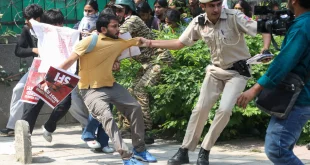
In a stark manifestation of Pakistan’s heightened political tensions, a protest by workers of the Pakistan Tehreek-e-Insaf (PTI) in Bara, Khyber, Khyber Pakhtunkhwa (KP), escalated into violent clashes with police on Tuesday. The demonstration, primarily aimed at challenging the imposition of Governor’s Rule in the province—a move that rendered PTI’s Sohail Afridi non-functional as Chief Minister—saw government buildings, including offices of the National Database and Registration Authority (NADRA) and Rescue 1122, set ablaze. Eyewitness accounts and hospital reports confirmed injuries to both protesters and law enforcement personnel, with police reportedly using live rounds and tear gas to disperse the crowd, while protesters were seen manhandling officers. Authorities subsequently announced the arrest of approximately 50 individuals labeled as “miscreant elements,” with a provincial adviser controversially claiming that a significant number were “illegal Afghans,” an assertion yet to be independently verified. The incident highlights the volatile intersection of political grievances and state response in an already polarized nation.
Background to the Bara Violence
The violent eruption in Bara is not an isolated incident but rather a symptom of deeper political fissures currently gripping Pakistan. The core grievance fueling the protest—the imposition of Governor’s Rule in Khyber Pakhtunkhwa—is a constitutional measure allowing the federal government to suspend a provincial administration, typically invoked in cases of a breakdown in law and order or constitutional machinery. For PTI, which has historically commanded significant electoral support in KP, this move is perceived as a direct attack on its mandate and a continuation of what it calls political victimization following the controversial general elections.
Pakistan’s political landscape has been tumultuous since the February 2024 general elections. PTI, despite claiming victory based on independent candidate results, found itself sidelined from power at the federal level and facing significant challenges in forming provincial governments, especially in its strongholds like KP. The party’s founder, Imran Khan, remains incarcerated, and PTI alleges widespread rigging and a concerted effort to dismantle its political influence. Against this backdrop, the federal government’s decision to impose Governor’s Rule, coupled with an emergency declaration in 12 KP districts including Khyber, is seen by PTI supporters as a deliberate attempt to dislodge their elected representatives and suppress dissent.
Khyber Pakhtunkhwa itself holds strategic significance. Bordering Afghanistan, the province has often been at the forefront of security challenges and socio-economic complexities. Its deeply rooted political culture means that any perceived disenfranchisement or imposition from the center can easily ignite public anger, particularly when catalyzed by local leadership, as seen with MPA Abdul Ghani Afridi reportedly joining the Bara demonstration.
Impact on Pakistan’s Political Stability and Future
The events in Bara carry significant implications for Pakistan’s already fragile political stability:
- Escalation of Political Tensions: The violence signals a worrying escalation of the political crisis. Incidents of property damage, injuries, and the use of force by state apparatus risk setting a dangerous precedent and could embolden further unrest across the country, especially if other regions share similar grievances.
- Erosion of Democratic Norms: The recurrent invocation of constitutional measures like Governor’s Rule, particularly when viewed through a partisan lens, undermines public trust in democratic processes. When elections are seen as flawed and governments are perceived to be formed through manipulation, the very fabric of democratic governance weakens.
- Challenges to Law and Order: The clashes expose a critical challenge for Pakistan’s law enforcement agencies in managing large-scale political protests peacefully. The resort to live rounds and allegations of police being manhandled highlight a breakdown in effective crowd control and a potential overreach of force. The controversial claim regarding “illegal Afghans” further complicates the narrative, potentially diverting attention from core political issues while fueling xenophobia.
- Deepening Public Polarization: Such incidents inevitably deepen the existing chasm between political factions. With each act of violence and each accusation, the potential for constructive dialogue diminishes, leaving society increasingly fractured and making national consensus-building even more elusive.
- Economic Repercussions: Political instability is a significant deterrent to both domestic and foreign investment. Pakistan’s economy is already under severe strain, and prolonged periods of unrest will only exacerbate economic woes, hinder growth, and make it difficult to attract crucial foreign capital.
- International Scrutiny: Episodes of political violence and alleged human rights abuses draw negative attention from the international community, potentially impacting diplomatic relations, aid packages, and Pakistan’s global standing.
Analysis: A Nation on Edge
The Bara incident is more than just a local disturbance; it is a microcosm of Pakistan’s profound political challenges. At its heart lies the unresolved legitimacy crisis stemming from the recent elections. PTI supporters feel their mandate has been stolen, and the imposition of Governor’s Rule in a province where they hold sway is perceived as yet another act of political engineering designed to systematically dismantle their power base. This sense of injustice is a powerful motivator for protest, often overriding calls for calm from leaders like the Bara Siyasi Ittehad.
The state’s response is also critical to analyze. While maintaining law and order is paramount, the use of force, particularly live rounds, and the narrative of “miscreant elements” including “illegal Afghans,” raise questions about proportionality and the potential to further inflame an already volatile situation. Such rhetoric can serve to delegitimize protests, but it can also deepen public resentment and create fertile ground for further radicalization among those who feel their voices are being suppressed and their grievances ignored. The distinction between legitimate protest and criminal activity becomes blurred, making resolution more difficult.
Moving forward, Pakistan faces a delicate balancing act. The right to peaceful assembly and protest is a cornerstone of any democracy, yet it must be balanced against the state’s responsibility to protect public property and ensure citizen safety. The current trajectory, marked by escalating confrontation and a lack of genuine political dialogue, threatens to plunge the nation into deeper instability. Without a concerted effort by all political stakeholders to address core grievances, particularly regarding electoral integrity and the rule of law, incidents like Bara are likely to recur, pushing Pakistan further towards a precipice. A path towards de-escalation must involve meaningful dialogue, adherence to constitutional principles, and a commitment to resolving political disputes through peaceful and democratic means, rather than through force or constitutional maneuvering perceived as partisan.
“`