Dost Pakistan Journeys Tours and safaris in the North & South Pakistsn
Related Articles
India’s Democracy at a Crossroads: The Cockroach Janta Party Protests and Electoral Integrity
The Latest: Mass Detentions Amidst Electoral Integrity Concerns
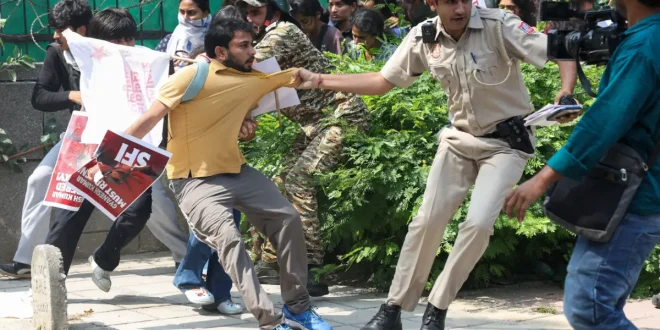
New Delhi recently became the epicenter of a significant democratic challenge as the youth-led Cockroach Janta Party (CJP) launched a nationwide protest against alleged irregularities in the Election Commission of India’s (ECI) voter roll revision. The demonstration culminated in the detention of CJP founder Abhijeet Dipke and thousands of activists attempting to march in the capital.
According to CJP statements, their leaders were apprehended even before disembarking their flight in Delhi, with allegations of denial of legal access and communication. Meanwhile, police initiated a massive security clampdown across New Delhi, closing metro stations, cancelling numerous train services, and implementing mobile internet shutdowns around the primary protest site at Jantar Mantar. Despite these measures, CJP leaders claimed over 15,000 protesters were detained, many reportedly chanting anti-government slogans as they were taken into custody.
These protests are a direct response to intensifying calls for the resignation of ECI Chief Gyanesh Kumar, following concerns that the voter roll revision could disenfranchise millions and unfairly benefit Prime Minister Narendra Modi’s ruling Bharatiya Janata Party (BJP). International bodies, including the UN Human Rights office and Amnesty International, have voiced concerns over the mass detentions, urging India to uphold fundamental rights to peaceful assembly and expression.
Unpacking the Context: India’s Electoral Landscape and the Rise of the CJP
At the heart of the current unrest is India’s Election Commission (ECI), a constitutional body tasked with ensuring free and fair elections in the world’s largest democracy. The ECI’s credibility is paramount to India’s democratic legitimacy. However, its recent voter roll revision exercise, which began in 2025 and has reportedly seen over 133 million names excluded from draft rolls, has come under severe scrutiny.
While the ECI asserts the revision aims to remove duplicate and ineligible voters, including efforts to prevent “foreign illegal immigrants” from participating, opposition parties and civil society groups contend it disproportionately impacts marginalized and minority communities. Allegations have also surfaced, specifically from the Indian Express, suggesting that critical decisions related to this revision might have been made without the unanimous approval of all three election commissioners, further eroding public trust in the ECI’s impartiality. The ECI, in response, maintains all decisions were unanimous and legally sound.
Stepping into this politically charged environment is the Cockroach Janta Party (CJP). A youth-led movement, the CJP gained prominence and went viral, symbolizing resilience and ubiquity – much like a cockroach, they are difficult to suppress. They previously demonstrated their mobilizing power in July, leading to the resignation of an education minister amidst an examination scandal. This latest agitation marks a significant escalation, targeting the very bedrock of India’s democratic process. Their ability to galvanize youth and utilize social media platforms makes them a formidable voice of dissent, reflecting deeper societal anxieties, particularly among Gen Z, regarding governance and democratic accountability.
Regional Ripples: How India’s Internal Dynamics May Affect Pakistan
While the protests and electoral controversies in India are primarily internal matters, the political stability and democratic health of a nation as significant as India inevitably carry potential, albeit indirect, implications for its neighbors, including Pakistan. The events underscore a broader narrative in South Asia regarding governance, human rights, and the perceived integrity of democratic institutions.
Firstly, the global perception of India as a thriving democracy, a narrative often championed by its leadership, could be challenged by sustained reports of electoral impropriety and suppression of dissent. This shift in perception might influence international engagements and diplomatic stances across the region. For Pakistan, which frequently highlights human rights concerns and democratic challenges within India on international platforms, these developments could be leveraged to reinforce its critiques of Indian governance.
Secondly, prolonged internal political instability in India, especially concerning core democratic processes, could divert the Modi government’s focus from external affairs or, conversely, lead to a more assertive foreign policy as a means of domestic distraction or nationalistic consolidation. Such shifts could impact regional diplomatic engagements and the delicate balance of relations between nuclear-armed neighbors like India and Pakistan. Any increased rhetoric or policy adjustments, even if not directly related to the protests, would be closely monitored.
Lastly, the allegations of disenfranchisement targeting marginalized and minority communities in India resonate with broader concerns about minority rights in the subcontinent. This parallel, though distinct in context, can influence the regional discourse on inclusive governance and state treatment of diverse populations, potentially shaping how both countries are viewed and how they engage with issues of human rights on the international stage.
Analysis: A Test of Democratic Principles and Dissent
The recent events in New Delhi represent a critical litmus test for India’s democratic fabric. The mass detentions, internet shutdowns, and heavy security deployment reflect a government seemingly intent on stifling public dissent, contrasting sharply with the fundamental right to peaceful protest enshrined in democratic principles. This assertive state response risks alienating a significant segment of the population, particularly the youth, who are increasingly vocal about governance issues.
For Prime Minister Narendra Modi, these protests pose a “fresh challenge,” coming at a time when, as political analysts suggest, his political standing might be at its weakest. Despite a strong mandate in previous general elections, upcoming state elections (such as Uttar Pradesh next year, given the article’s October 2026 context) and the 2029 general elections mean that any erosion of public trust in electoral processes or perception of authoritarianism could have significant political repercussions. The CJP, with its youthful energy and unconventional moniker, embodies a new wave of activism that is proving difficult for traditional political structures to manage.
The core issue of electoral integrity is paramount. A credible Election Commission is the bedrock of any functioning democracy. When allegations of impropriety, lack of transparency, and partisan bias are leveled against the ECI, it shakes public confidence in the fairness of the entire electoral system. While the ECI defends its actions as necessary to clean up voter rolls, the sheer scale of deletions and the specific allegations raise legitimate questions that require transparent and impartial investigation, not suppression.
The CJP’s defiant stance, encapsulated by the statement “We will be back, let them fill up all the jails,” suggests a movement unbowed by state action. The support from opposition figures like Rahul Gandhi and the condemnation from international human rights bodies further amplify the protests, turning them into a national and international talking point. The confrontation between the CJP’s grassroots mobilization and the government’s crackdown underscores a growing tension within Indian society – between the exercise of state power and the assertion of citizen rights.
Ultimately, how the Modi government navigates this challenge will significantly define the trajectory of Indian democracy in the coming years. A failure to address the underlying concerns about electoral integrity and freedom of expression risks deepening societal divisions and further polarizing the political landscape, potentially setting the stage for more intense confrontations ahead of crucial elections.
“`