Dost Pakistan Journeys Tours and safaris in the North & South Pakistsn
Related Articles

Pakistan’s Maliha Ali Stuns Russia at IMMAF Worlds: An Underdog Story of Grit and Strategy
The News: A Triumphant Upset in Tbilisi
In a dramatic display of skill and determination, Pakistan’s Maliha Ali, a 24-year-old athlete from Hunza, Gilgit-Baltistan, secured a stunning victory over Russia’s Veronika Drozdova at the International Mixed Martial Arts Federation (IMMAF) World Championships in Tbilisi, Georgia. This triumph is particularly significant given the disparity in resources between the two nations’ athletic programs. Drozdova, a 19-year-old two-time European champion, represented a Russian contingent boasting over 60 athletes and one of the most robustly funded MMA programs globally.
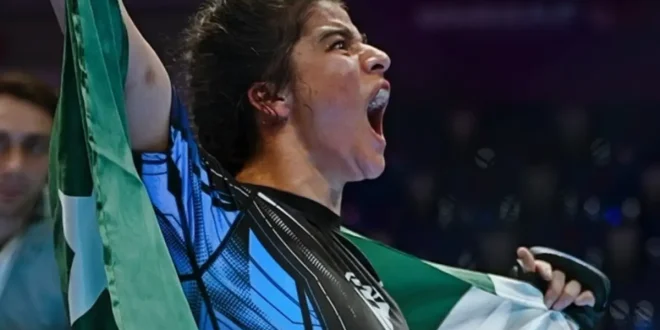
Ali, already an accomplished wushu champion and national kickboxing gold medalist with a recent silver from the IMMAF World Cup in Angola, entered the featherweight (65.8kg) bout with confidence. Fighting from a southpaw stance, she demonstrated tactical brilliance, dominating the initial two rounds with clean strikes, a crucial takedown, and powerful ground-and-pound from full mount. Despite tiring in the third round, which Drozdova controlled, Ali’s earlier performance earned her a decisive split decision win. The emotional aftermath saw Ali prostrating in gratitude, draped in the Pakistani flag, embodying a moment of profound personal and national pride.
Background: Against All Odds
Maliha Ali’s victory is more than just a win; it’s a powerful narrative of resilience against formidable odds. The Russian MMA program benefits from extensive government backing and substantial financial investment, allowing for comprehensive training, state-of-the-art facilities, and a deep talent pool. In stark contrast, the Pakistan MMA Federation operates with severely limited resources, often struggling due to insufficient government funding and a challenging national sports policy. As Pakistan MMA Federation President Omar Ahmed highlighted, they are arguably the “most underfunded and probably the least-resourced federation” at such global events.
Despite these financial constraints, the Pakistani team showcased remarkable ingenuity and dedication. Following Maliha’s silver medal performance in Angola, the federation orchestrated a rigorous six-week training camp. Critically, they brought in an international jiu-jitsu and grappling coach specifically to address identified weaknesses in their fighters’ ground game. This strategic, targeted intervention proved pivotal, allowing Maliha to execute a finely tuned game plan against her Russian opponent. The federation’s success hinges not on vast wealth, but on what Omar Ahmed describes as their “grit and desire to succeed,” turning every victory into a profound statement against adversity.
Impact on Pakistan: Inspiring a Nation
Maliha Ali’s triumph resonates deeply within Pakistan, offering a powerful source of national pride and inspiration. In a country where sports development often faces systemic hurdles, her win on a global stage underscores the immense talent and potential that exists, particularly when nurtured with strategic support. This victory casts Maliha as a significant role model, especially for young women in sports and athletes from regions like Gilgit-Baltistan, demonstrating that geographic or economic background does not limit achievement.
The win also brings much-needed visibility to mixed martial arts in Pakistan. It challenges perceptions, highlights the dedication of athletes and the federation, and could potentially attract greater interest from sponsors, local businesses, and even government bodies. Such high-profile successes are crucial for pushing for better sports infrastructure and funding policies within the country. As Maliha’s twin sister Manesha also competes for a world title, their combined efforts are not just about individual glory but about elevating the profile of Pakistani combat sports and inspiring a new generation to pursue their athletic dreams, regardless of the challenges.
Analysis: The Strategy of the Underdog
Maliha Ali’s victory at the IMMAF World Championships offers compelling insights into the dynamics of competitive sports, especially when resources are unevenly distributed. Her win is a powerful testament to the idea that strategic preparation and adaptable coaching can effectively bridge significant financial gaps. The Pakistani federation’s decision to identify specific weaknesses after the Angola World Cup and invest in specialized coaching for grappling, despite their limited budget, highlights a pragmatic and intelligent approach to athlete development. This targeted training allowed Ali to not only counter a formidable opponent but to dictate the pace and nature of the fight in the crucial early rounds.
This event also shines a spotlight on the critical role of amateur MMA platforms like the IMMAF World Championships. These tournaments provide essential international exposure and competitive experience for athletes from diverse backgrounds, often serving as a stepping stone to professional careers. For nations like Pakistan, these championships are invaluable, offering a stage where sheer talent and willpower can overcome the resource advantage of sporting giants.
Ultimately, Maliha Ali’s victory transcends the individual fight, embodying the spirit of the underdog. It’s a vivid illustration that while funding undoubtedly provides an advantage in sports, it is not the sole determinant of success. The “grit and desire to succeed” spoken of by Omar Ahmed, combined with smart, adaptive coaching, can yield extraordinary results. For Pakistan MMA, this triumph is not just a moment of celebration; it’s a strategic blueprint and a beacon of hope, demonstrating that with focused effort and an unwavering spirit, even the least-resourced can achieve greatness on the world stage, potentially paving the way for increased support and a brighter future for combat sports in the nation.