Dost Pakistan Journeys Tours and safaris in the North & South Pakistsn
Related Articles


“`html
Pakistan’s UN Peacekeeping Warning: A Cry for Sustained Global Security Amid Budget Cuts
An analysis of Pakistan’s urgent call to safeguard UN peacekeeping operations against financial erosion.
The News: A Dire Warning from a Committed Partner
In a crucial intervention at the UN General Assembly, Pakistan, a stalwart contributor to UN Peacekeeping operations, has sounded an alarm: do not let financial austerity hollow out the world’s primary instrument for maintaining international peace and security. Ambassador Syed Haider Shah, Pakistan’s Permanent Representative to the UN, highlighted the perilous path the organization treads by allowing budget constraints to dictate the operational capabilities of peacekeeping missions.
The warning comes amidst a backdrop of significant financial pressure on the UN. The General Assembly has approved a $5.1 billion budget for peacekeeping operations for 2026-27, a notable 10% reduction from the previous allocation. This follows a funding crisis last year that already forced the repatriation of a quarter of uniformed personnel and significant expenditure cuts. For Pakistan, a nation that has consistently deployed its personnel globally to stabilize conflict zones, this trend is deeply concerning, threatening the very essence of collective security.
Ambassador Shah articulated a vision for reforms that prioritize effectiveness and operational integrity, emphasizing that political objectives, not financial ceilings, must determine mission mandates and resource allocation. Pakistan outlined six key priorities for strengthening peacekeeping, including the primacy of political solutions, adequately resourced mandates, improved safety for peacekeepers, and maintaining peacekeeping as a shared UN responsibility. The core message is clear: efficiency must strengthen, not diminish, the unique value of UN peacekeeping.
Background: The Evolving Landscape of UN Peacekeeping
To understand the gravity of Pakistan’s warning, it’s essential to contextualize the role and challenges facing UN Peacekeeping. Established in 1948, UN peacekeeping missions have evolved from traditional observation roles to complex, multi-dimensional operations encompassing civilian protection, humanitarian aid, security sector reform, and supporting political processes. These “Blue Helmets” represent the international community’s collective will to mitigate conflict and protect vulnerable populations in some of the world’s most dangerous regions.
However, the global security landscape has become increasingly complex. Conflicts today are often intra-state, characterized by non-state actors, asymmetric warfare, terrorism, and proxy involvement. Furthermore, factors like climate change and resource scarcity are emerging as conflict drivers, demanding more sophisticated and adaptable responses. Simultaneously, UN peacekeeping faces chronic financial and political pressures. Member states, particularly major contributors, sometimes express ‘peacekeeping fatigue’ or push for cost-cutting, leading to a widening gap between ambitious mandates and available resources.
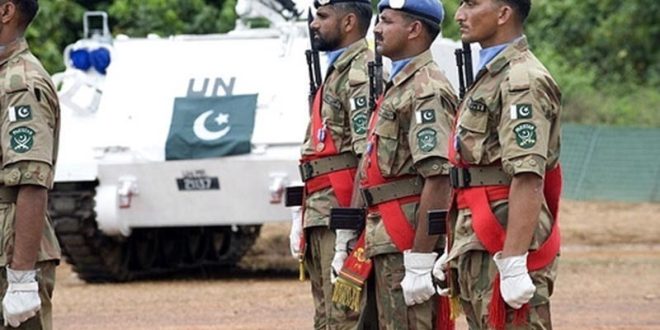
Pakistan’s standing in this discussion is unparalleled. As one of the largest and longest-serving troop-contributing countries (TCCs), over 170,000 Pakistani military and police personnel have served in UN missions over six decades, with 183 having made the ultimate sacrifice. This extensive experience provides Pakistan with unique insights into the operational realities, logistical needs, and safety challenges inherent in these missions. Hosting the United Nations Military Observer Group in India and Pakistan (UNMOGIP) further underscores its direct engagement with UN monitoring efforts on its own soil.
A significant recent contribution by Pakistan, alongside Denmark, was championing UN Security Council Resolution 2823. Unanimously adopted with record co-sponsorship, this resolution aims to strengthen accountability for crimes committed against peacekeepers – a testament to Pakistan’s commitment not only to deploying its personnel but also to ensuring their protection and justice for their sacrifices.
Impact on Pakistan: More Than Just Troop Deployment
For Pakistan, the weakening of UN Peacekeeping due to budget cuts is not merely an abstract concern; it has tangible implications across several domains:
- Strategic Foreign Policy Pillar: Participation in UN Peacekeeping is a cornerstone of Pakistan’s foreign policy, projecting its commitment to international peace, responsible global citizenship, and multilateralism. A diminished peacekeeping apparatus reduces a vital platform for Pakistan to exercise its influence and demonstrate its capabilities on the world stage.
- Personnel Deployment and Professional Development: As a major TCC, reduced missions or smaller contingents directly affect the deployment opportunities for Pakistani military and police personnel. These deployments are crucial for their professional development, cross-cultural training, and exposure to diverse operational environments. They also contribute to foreign exchange earnings for the country.
- Safety and Accountability of Peacekeepers: With 183 lives lost, the safety of peacekeepers is a deeply personal and national concern for Pakistan. Budget cuts can lead to inadequate equipment, reduced intelligence capabilities, and diminished logistical support, directly compromising the safety of deployed personnel. Pakistan’s emphasis on Resolution 2823 is a direct response to this vulnerability, seeking to ensure accountability even as resources dwindle.
- Maintaining Regional Stability: While distinct from peacekeeping missions, Pakistan hosts UNMOGIP, highlighting its historical reliance on UN mechanisms for monitoring and dispute resolution. A broader weakening of UN’s collective security tools could indirectly affect perceptions of its capacity to mediate or monitor sensitive regional situations.
- Reputation and Advocacy: Pakistan’s consistent and vocal advocacy for robust peacekeeping reinforces its image as a principled and proactive member of the international community. Allowing peacekeeping to decline risks undermining a key area where Pakistan has established significant credibility and expertise.
Analysis: The Perilous Disconnect Between Need and Resource
Pakistan’s warning encapsulates a critical paradox confronting the international community: the growing need for UN Peacekeeping in an increasingly volatile world, juxtaposed with shrinking financial resources. This disconnect poses severe risks to global security and the UN’s foundational mandate.
The Erosion of Political Will vs. Fiscal Prudence
While calls for efficiency and cost reduction are valid in any large organization, Pakistan rightly cautions against allowing “financial ceilings to determine operational requirements.” This suggests that current budget cuts might be driven more by a desire for fiscal retrenchment rather than a strategic overhaul aimed at improving effectiveness. True reform, as Pakistan advocates, should strengthen capabilities, not dilute them. The underlying issue is often a lack of political will among powerful member states to adequately fund mandates they themselves approve, or to pursue the political solutions that would render peacekeeping unnecessary.
The “Cost-Efficient” Argument Revisited
Ambassador Shah’s assertion that “Peacekeeping remains a vital, effective and cost-efficient means for ensuring peace and security” is a powerful economic argument. The costs of *failing* to prevent or contain conflicts far outweigh the investment in peacekeeping. These costs include massive humanitarian crises, forced displacement, regional destabilization, the proliferation of armed groups, and the potential need for far more expensive and politically contentious unilateral interventions. UN peacekeeping, with its universal legitimacy and established logistical systems, offers a multilateral and often more sustainable approach.
Consequences of a Hollowed-Out Peacekeeping
If UN Peacekeeping is allowed to weaken significantly, the consequences could be dire:
- Increased Civilian Casualties: Without the protective presence of peacekeepers, vulnerable populations in conflict zones will face greater risks.
- Escalation of Conflicts: Peacekeeping missions often provide the crucial space for political dialogue. Their absence could lead to prolonged and intensified conflicts.
- Loss of UN Legitimacy: A perceived inability of the UN to fulfill its core mandate of maintaining peace would erode trust and confidence in the organization.
- Rise of Ad-Hoc Interventions: Weakened UN mechanisms could lead to a proliferation of unilateral or regional interventions, potentially lacking the legitimacy, impartiality, and broad international support that UN missions enjoy.
- Undermining International Norms: The weakening of peacekeeping could signal a broader retreat from multilateralism and collective responsibility for global security.
The Future of Global Security Cooperation
Pakistan’s call for “preparing for future military and police requirements” underscores an understanding that peacekeeping must adapt to emerging threats. However, such adaptation requires investment, not disinvestment. The emphasis on strengthening accountability for crimes against peacekeepers (Resolution 2823) is also critical, as it addresses a core issue affecting troop morale and the willingness of TCCs to deploy their personnel into increasingly dangerous environments.
In conclusion, Pakistan’s impassioned plea at the UN is more than just a concern from a major troop contributor; it is a critical reminder to the international community that global peace and security are not commodities to be subjected to arbitrary budget cuts. It calls for renewed political will, strategic investment, and a collective recommitment to an instrument that, despite its challenges, remains indispensable in a world yearning for stability. The message is stark: weaken peacekeeping now, and the world may find itself ill-prepared for the inevitable conflicts to come.
“`