Dost Pakistan Journeys Tours and safaris in the North & South Pakistsn
Related Articles


“`html
PHC Suspensions: A Blow to Judicial Oversight Amidst KP Emergency
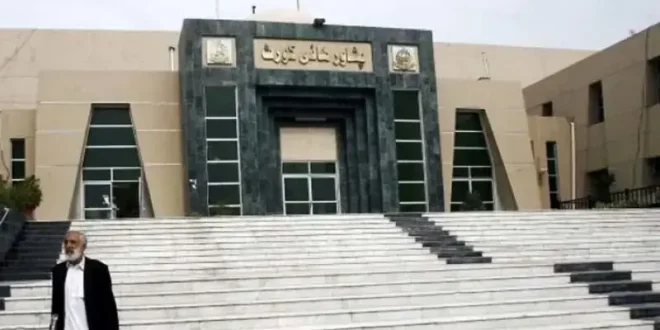
The recent decision by the Peshawar High Court (PHC) to remove over 100 petitions from its cause lists marks a critical moment for judicial independence and fundamental rights in Pakistan. Following a directive from the Federal Constitutional Court (FCC), the PHC has effectively suspended its writ jurisdiction under Article 199 for all cases filed after October 12, particularly in Khyber Pakhtunkhwa (KP). This move, impacting a range of high-profile cases from challenges to emergency rule to alleged illegal detentions of political figures, raises profound questions about the balance of power and access to justice in the country.
The News: Judicial Curbs in Khyber Pakhtunkhwa
On Saturday, the Peshawar High Court significantly curtailed its judicial scope by delisting approximately 105 petitions scheduled for November 10. These crucial petitions included direct challenges to the imposition of emergency and governor’s rule in Khyber Pakhtunkhwa, as well as pleas against the alleged illegal detention of former Chief Minister Sohail Afridi, KP Assembly Speaker Babar Saleem Swati, PTI provincial president Junaid Akbar, and numerous other lawmakers, leaders, and party workers. Also affected were petitions concerning detentions under the Maintenance of Public Order Ordinance, cases of “missing persons,” and challenges to government anti-encroachment drives and the repatriation of Afghan nationals.
This widespread delisting came in direct compliance with a restraining order issued by the Federal Constitutional Court on November 5. The FCC’s directive stipulates that proceedings before the PHC, initiated under Article 199 of the Constitution on or after October 12, are to remain suspended. The rationale provided by the FCC was the deployment of armed forces in aid of civil power across the entire province of KP, following an Interior Ministry order on October 11 under Article 245 of the Constitution. The FCC further instructed the PHC to return any new petitions filed under Article 199, advising petitioners to seek redress from an “appropriate” forum.
The Insaf Lawyers Forum (ILF) swiftly condemned the decision, characterizing it as a grave assault on constitutional supremacy, judicial independence, and the right to justice for the 45 million people of KP. The ILF emphasized that constitutional provisions like Articles 9, 10-A, 25, and 199 are sacrosanct guarantees of fundamental rights, and courts exist to uphold, not restrict, these protections.
Background: Understanding Pakistan’s Constitutional Powers
To fully grasp the gravity of the PHC’s decision, it’s essential to understand the constitutional framework at play and the prevailing political climate in Pakistan, particularly in Khyber Pakhtunkhwa. The country has been navigating a period of intense political instability, marked by crackdowns on a major political party and frequent invocations of state powers.
Key Constitutional Articles Explained:
- Article 199 (Writ Jurisdiction of High Court): This article empowers High Courts to issue directives, orders, or writs to ensure that any person performing functions in connection with the affairs of the Federation or a Province acts within the bounds of the law. It is a vital tool for citizens to seek redress against unlawful state actions, including illegal detentions and violations of fundamental rights.
- Article 232 (Proclamation of Emergency by President): Allows the President to declare a state of emergency if the security of Pakistan, or any part thereof, is threatened by war, external aggression, or internal disturbance beyond the power of a Provincial Government to control.
- Article 234 (President’s Rule in a Province): Permits the President to assume the functions of the Provincial Government if the constitutional machinery in a province breaks down or if a situation arises where the Provincial Government cannot be carried on in accordance with the Constitution. This is often referred to as Governor’s Rule.
- Article 245 (Armed Forces to Act in Aid of Civil Power): This crucial article states that the armed forces shall, under the direction of the Federal Government, defend Pakistan against external aggression or threat of war, and, subject to law, act in aid of civil power when called upon to do so. Crucially, Clause (4) states: “Any High Court shall not exercise any jurisdiction under Article 199 in relation to any area in which the Armed Forces of Pakistan are, for the time being, acting in aid of civil power in pursuance of Article 245.” This clause is at the heart of the current controversy.
- Articles 9, 10-A, 25 (Fundamental Rights): These articles guarantee fundamental rights such as the right to life and liberty (Article 9), the right to a fair trial and due process (Article 10-A), and equality before the law (Article 25). These rights are generally considered inalienable and are protected by the judiciary.
The deployment of armed forces under Article 245, especially when coupled with emergency proclamations under Articles 232 and 234, provides significant powers to the executive. However, the exact extent to which this should curtail judicial review has been a subject of historical debate in Pakistan, often leading to a delicate balance between national security concerns and citizen rights.
Impact on Pakistan: Erosion of Rights and Trust
The FCC’s ruling and the subsequent PHC action have far-reaching implications for Pakistan’s constitutional framework, human rights record, and democratic health:
- Erosion of Fundamental Rights: The immediate and most severe impact is the suspension of a primary avenue for citizens to seek redress against state overreach. When a High Court’s writ jurisdiction under Article 199 is curtailed, individuals facing alleged illegal detention, arbitrary state actions, or human rights abuses are left without a readily accessible legal recourse. This directly undermines the guarantees of fundamental rights enshrined in the Constitution.
- Diminished Judicial Independence: This decision raises serious concerns about the judiciary’s ability to act as an independent check on executive power. If constitutional courts are compelled to suspend their core functions during an emergency, it suggests a weakening of the judicial branch relative to the executive and military, potentially diminishing public trust in the justice system.
- Undermining the Rule of Law: The principle of rule of law dictates that all individuals and institutions are accountable to the same laws, and that legal processes are followed. Suspending judicial review for a broad category of cases, even under emergency provisions, can be perceived as an abrogation of due process and a step towards arbitrary governance.
- Heightened Political Tensions: Given that many of the affected petitions relate to the detention of leaders and workers of a prominent political party (PTI), this move is likely to exacerbate existing political instability and polarization. It fuels perceptions of a targeted crackdown, further alienating political factions.
- Precedent for Future Emergencies: This interpretation of Article 245 sets a potentially dangerous precedent. A broad application of this clause could, in future emergencies, be used to justify widespread suspension of judicial oversight, making it easier for governments to operate without accountability.
- Challenges for Ordinary Citizens: While high-profile political cases grab headlines, the delisting also affects routine matters for ordinary citizens, such as property disputes, anti-encroachment challenges, and humanitarian pleas from Afghan nationals. Their access to justice is equally, if not more, compromised.
- International Scrutiny: Such actions often draw attention from international human rights organizations and democratic watchdogs, potentially impacting Pakistan’s standing on global human rights indices.
Analysis: A Precedent for Executive Overreach?
The core of the controversy lies in the interpretation of Article 245(4). While the clause explicitly states that High Courts shall not exercise Article 199 jurisdiction in areas where armed forces are acting in aid of civil power, the broad application by the FCC, suspending *all* Article 199 petitions filed after a certain date across an entire province, warrants close scrutiny.
Critics, like the Insaf Lawyers Forum, would argue that while Article 245(4) imposes a limitation, its scope should be narrowly interpreted to prevent a wholesale suspension of fundamental rights. Does the deployment of armed forces for “aid to civil power” necessarily imply that *all* grievances against the state, even those unrelated to immediate military operations, should be beyond judicial review? Historically, such clauses have been interpreted to prevent interference with military operations, not to blanket-suspend fundamental rights. The FCC’s decision to suspend all petitions filed after October 12, regardless of their direct connection to the armed forces’ immediate operations, appears to be a very expansive interpretation.
The directive for petitioners to approach an “appropriate” forum also raises practical concerns. If the High Court, the primary forum for fundamental rights enforcement, is unavailable, what alternative is truly “appropriate” and accessible? While the Supreme Court remains an option, it is a court of last resort and cannot realistically handle the volume of cases typically addressed by High Courts, let alone an surge due to such suspensions. This effectively creates a significant barrier to justice, if not a complete denial in many instances.
Furthermore, the specific targeting of petitions challenging the detention of political opponents adds a layer of concern. While the FCC’s order is general, its immediate impact is profoundly felt by those challenging the current political climate. This perception of selective justice can further erode public faith in the impartiality of state institutions.
The requirement for the KP advocate general to report on areas where armed forces are no longer needed hints at a potential for modification of the order. However, the immediate effect is a substantial curtailment of judicial oversight at a time when it is arguably most needed. This episode represents a critical test for Pakistan’s constitutional democracy and the resilience of its institutions against pressures that seek to limit fundamental freedoms.
The legal fraternity, including the Pakistan Bar Council and Supreme Court Bar Association, now faces a crucial moment to advocate for constitutional principles and citizens’ rights. The trajectory of justice and democratic norms in Pakistan will heavily depend on how this constitutional crisis is navigated.
“`