Dost Pakistan Journeys Tours and safaris in the North & South Pakistsn
Related Articles
Pakistan Navigates a Turbulent Global Order: Diplomacy, Strength, and Strategic Uncertainty
Keywords: Pakistan diplomacy, global tensions, multipolar world, US-China relations, Middle East conflict, Israel-Palestine, Iran nuclear deal, geopolitics, strategic uncertainty, Pakistan foreign policy, regional peace, Margalla Dialogue, Ishaq Dar, John J. Mearsheimer, Vali Nasr, Indo-Pak relations, Kashmir dispute, Afghanistan terrorism
The News: A Call for Diplomacy Amidst Shifting Sands
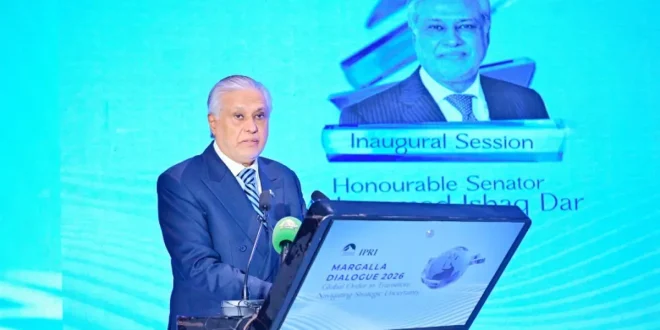
In a rapidly evolving international landscape, Pakistan has unequivocally asserted its commitment to diplomacy, dialogue, and multilateral cooperation. Speaking at the Margalla Dialogue 2026, Deputy Prime Minister and Foreign Minister Ishaq Dar emphasized that Pakistan’s path forward lies in cultivating “strength at home and effective diplomacy abroad.” This strategy is crucial for confronting an uncertain global order, characterized by intensifying great power rivalries and mounting risks of confrontation.
Dar highlighted Pakistan’s foundational relationship with China, constructive engagement with the United States, and expanding ties across Saudi Arabia, Turkiye, Iran, the Gulf states, Europe, and Central Asia. He reaffirmed Pakistan’s dedication to regional peace, stressing the need for a just resolution to the Jammu and Kashmir dispute in line with UN Security Council resolutions, and vowed to protect its rights under the Indus Waters Treaty against any attempts by India to weaponize water. Furthermore, he addressed the persistent challenge of terrorism emanating from Afghan territory, affirming Pakistan’s resolve to safeguard its citizens while supporting a stable Afghanistan. Pakistan’s proactive role in facilitating US-Iran talks in Islamabad earlier this year underscored its commitment to resolving conflicts through dialogue.
The dialogue also featured stark assessments from international scholars. Prof. John J. Mearsheimer of the University of Chicago delivered a scathing critique of US and Israeli policies, asserting that the US is embroiled in a losing war against Iran, driven by what he termed irrational decisions. Mearsheimer unequivocally accused Israel of committing “genocide” in Gaza, aiming to displace Palestinians, and highlighted US complicity through diplomatic support and vetoing UN resolutions. He described the global shift from a unipolar to a multipolar system, identifying the US, China, and Russia as the three dominant powers. Mearsheimer also noted Pakistan’s unique advantage in this new order, maintaining cordial ties with both the US and China without having to choose sides, and suggested India’s limitations in becoming a great power.
Adding to this perspective, Middle East scholar Dr. Vali Nasr lauded Iran’s resilience against US and Israeli pressures. He warned of Israel’s expansionist agenda and the potential threat posed to Pakistan by a nascent military alliance between India, the UAE, and Israel. Nasr further suggested that US preoccupation with conflicts in Iran and Ukraine might lead its East Asian allies, like Japan and South Korea, to reconsider their security reliance on Washington. The prospect of Iran withdrawing from the Nuclear Non-Proliferation Treaty (NPT), a concern echoed by former US diplomat Robin Raphel, emerged as another critical destabilizing factor.
Background: Navigating a New Geopolitical Reality
The Margalla Dialogue’s theme, ‘Global Order in Transition: Navigating Strategic Uncertainty,’ perfectly encapsulates the current geopolitical climate. The post-Cold War era, once defined by a unipolar world with unquestioned US dominance, is steadily giving way to a more complex multipolar arrangement. This transition is marked by the ascendancy of new global powers, particularly China, and the resurgence of Russia, challenging established norms and creating a vacuum of leadership in certain spheres.
Against this backdrop, traditional alliances are being re-evaluated, and regional flashpoints are gaining increased international significance. The Middle East, in particular, remains a cauldron of tension, with the protracted Israel-Palestine conflict reaching critical humanitarian levels, profoundly impacting regional stability. The nuclear ambitions of Iran and the broader US-Iran relationship, exacerbated by past policy decisions such as the US withdrawal from the JCPOA under the Trump administration, continue to be a source of global concern. Meanwhile, the strategic competition between the US and China shapes global trade, technology, and military postures, pushing nations to carefully calibrate their foreign policies.
Pakistan’s geostrategic location places it at the nexus of these global shifts. Bordering Iran, Afghanistan, China, and India, and with historical ties to both the Western bloc and emerging Eastern powers, Pakistan finds itself in a precarious yet potentially advantageous position. Its historical relationship with the US, intertwined with security cooperation and economic aid, coexists with a “all-weather friendship” with China, foundational to its economic corridors and infrastructure development. The enduring rivalry with India, particularly over Kashmir and transboundary water resources, remains a constant feature of its foreign policy calculus, further complicated by regional power realignments. Understanding these intricate layers of global and regional dynamics is essential to appreciating Pakistan’s proposed diplomatic framework.
Impact on Pakistan: Opportunities and Challenges in a Multipolar World
Pakistan’s strategy of “strength at home and effective diplomacy abroad” is a pragmatic response to the aforementioned global turbulence, carrying significant implications for its future. The emphasis on internal stability, economic resilience, and national cohesion forms the bedrock upon which effective external policy can be built. A strong domestic front enables Pakistan to project confidence and negotiate from a position of strength on the international stage.
In a multipolar world, Mearsheimer’s observation that Pakistan enjoys the unique advantage of cordial ties with both the US and China, avoiding the pressure to choose sides, presents a crucial opportunity. This strategic flexibility allows Pakistan to engage with both superpowers, leveraging their economic and security interests without becoming overly reliant on either. This balanced approach is vital for maintaining its strategic autonomy and securing its national interests in an increasingly competitive environment. The aspiration to become a “middle power” like Germany or Japan, underpinned by wealth creation, signifies a long-term vision to enhance its global standing and influence.
However, the shifting global order also presents formidable challenges for Pakistan. The persistent Kashmir dispute, articulated by Dar as central to regional peace, continues to be a flashpoint with India. Coupled with warnings about India’s potential weaponization of water under the Indus Waters Treaty, these issues demand robust diplomatic and legal strategies. The Makkah Joint Defence Agreement with Saudi Arabia and Turkiye, framed as a defensive collective security arrangement, reflects Pakistan’s efforts to diversify its security partnerships and enhance regional stability.
Furthermore, the threat of an India-UAE-Israel military alliance, as highlighted by Dr. Vali Nasr, introduces a new and complex dimension to Pakistan’s regional security calculations. Such an alliance could potentially alter the power balance in the broader South Asian and Middle Eastern regions, necessitating a re-evaluation of Pakistan’s defense and diplomatic strategies. The ongoing challenge of terrorism from Afghanistan underscores the imperative for a stable and integrated Afghanistan, crucial for Pakistan’s internal security and regional connectivity. Pakistan’s demonstrated capacity to facilitate dialogue, as seen in the US-Iran talks, positions it as a potential mediator in regional conflicts, enhancing its diplomatic leverage and contributing to de-escalation efforts.
Analysis: A Pragmatic Path Amidst Profound Uncertainty
Pakistan’s articulated foreign policy at the Margalla Dialogue reflects a sophisticated understanding of the current global paradigm. The dual emphasis on domestic strength and assertive diplomacy is not merely rhetorical but a strategic necessity. In a world where great powers are increasingly focused inward or embroiled in distant conflicts, countries like Pakistan must carve out their own space, ensuring national security while contributing to regional and global stability.
Prof. Mearsheimer’s candid assessment of US policy failures, particularly regarding Iran and the Israel-Palestine conflict, offers a critical lens through which to view the erosion of American global leadership. His accusation of “genocide” in Gaza, with US complicity, underscores the profound moral and geopolitical stakes. This perspective, while controversial, highlights a growing sentiment among a segment of international observers regarding the legitimacy and effectiveness of traditional US foreign policy. Such criticisms, when emanating from influential academic circles, inevitably influence global perceptions and challenge the existing power dynamics, potentially opening doors for alternative diplomatic configurations and leadership roles.
The shift towards a multipolar world, while increasing risks of confrontation as Dar noted, also decentralizes power and offers states like Pakistan greater strategic autonomy. Pakistan’s ability to maintain strong ties with both Washington and Beijing is a testament to its pragmatic approach, avoiding the pitfalls of Cold War-era bloc politics. This flexibility is a valuable asset, allowing it to navigate complex geopolitical currents and pursue its national interests without being constrained by exclusive allegiances.
The looming threat of Iran’s potential withdrawal from the NPT, prompted by “actions and statements of President Trump” as suggested, represents a grave concern for global non-proliferation. If realized, this could trigger a domino effect, destabilizing the entire nuclear arms control framework and introducing unprecedented security challenges. This particular issue intertwines regional stability with global security, demanding concerted international diplomatic efforts to prevent such an outcome.
Ultimately, Pakistan’s aspiration to become a “middle power” is ambitious but attainable, provided it focuses relentlessly on wealth creation and institutional strengthening. In a fragmented global order, a confident, economically robust Pakistan, adept at balancing complex relationships and championing dialogue, can play a pivotal role not just in its immediate region but on the broader international stage. The insights from the Margalla Dialogue serve as a crucial compass, guiding Pakistan through the profound strategic uncertainty that defines our contemporary world.