Dost Pakistan Journeys Tours and safaris in the North & South Pakistsn
Related Articles


“`html
Pakistan’s Constitutional Crossroads: The Battle for Freedoms and Democracy
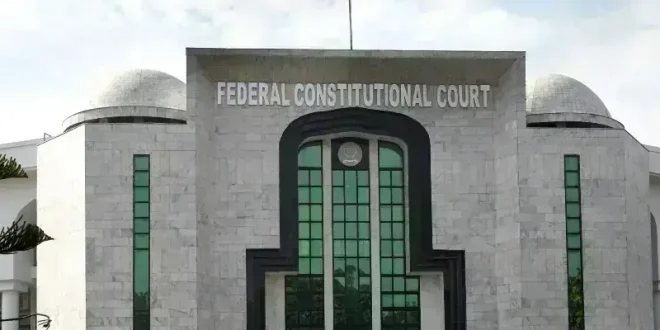
Opposition leaders have escalated their challenge against the detention of former Khyber Pakhtunkhwa Chief Minister Sohail Afridi and numerous other elected lawmakers, directly appealing to Pakistan’s Federal Constitutional Court (FCC). This move signifies a critical juncture for the nation’s democratic principles, pitting executive authority against fundamental constitutional protections. The unfolding legal battle will test the limits of emergency powers and the judiciary’s role in safeguarding the mandate of the people.
The News: A Direct Challenge to State Authority
In a significant development, Mehmood Khan Achakzai, the Leader of the Opposition in the National Assembly, and Raja Nasir Abbas, his counterpart in the Senate, have jointly petitioned the Federal Constitutional Court (FCC) for the immediate release of Sohail Afridi, the non-functional Chief Minister of Khyber Pakhtunkhwa (KP), along with eight provincial assembly members and six members of the National Assembly. Afridi has been out of public sight since October 11, following the federal government’s imposition of Governor’s Rule and a state of emergency in KP. While authorities confirmed his “preventive custody” shortly after, the Pakistan Tehreek-e-Insaf (PTI) maintains that Afridi remains the legitimate chief minister.
The petition before the FCC is a comprehensive legal challenge, invoking fundamental rights enshrined in the Constitution, including Articles 4 (right of individuals to be dealt with in accordance with law), 9 (security of person), 10 (safeguards as to arrest and detention), 14 (dignity of man), 17 (freedom of association), and 19-A (right to information). It questions whether arbitrary state action against elected legislators undermines representative governance and constitutes an indirect disenfranchisement of the electorate. Furthermore, it explicitly alleges “political victimisation” and discriminatory treatment based on political affiliation.
The petitioners demand the disclosure of the detainees’ whereabouts, their production before the FCC, and a declaration that their custody is unlawful. This legal offensive extends beyond just the current detentions; it also seeks to clarify the constitutional limits of executive authority under Articles 232 (emergency proclamation), 234 (Governor’s Rule), and 245 (deployment of armed forces), arguing that these powers cannot suspend fundamental rights or circumvent democratic mandates. Separately, Raja Nasir Abbas and Sardar Akhtar Jan Mengal have also sought to be impleaded in another ongoing FCC case that restrained the Peshawar High Court (PHC) from hearing petitions related to PTI activists’ detentions, highlighting a broader legal struggle against state actions in KP.
Background: A State of Emergency and Political Tensions
The current legal challenge is deeply rooted in Pakistan’s tumultuous political landscape, particularly the strained relationship between the federal government and the PTI. The imposition of Governor’s Rule and a state of emergency in Khyber Pakhtunkhwa on October 11 marked a dramatic escalation. Governor’s Rule, typically enacted under Article 234 of the Constitution when a provincial government cannot function constitutionally, effectively suspended the provincial assembly and transferred executive powers to the Governor. Simultaneously, the declaration of an emergency under Article 232 usually cites threats to security or economic life.
However, the detention of an elected chief minister and numerous lawmakers, coupled with the assertion of “preventive custody” without transparent legal proceedings, has fueled accusations of political engineering. The PTI, whose founder and former Prime Minister Imran Khan has faced a series of legal challenges and political setbacks, views these actions as a deliberate attempt to dismantle its political influence. This narrative of “political victimization” is central to the opposition’s FCC petition.
The constitutional articles at the heart of this dispute represent a delicate balance of power. While Articles 232, 234, and 245 grant the state significant powers during emergencies, the opposition’s argument hinges on the premise that these powers are not unfettered and must always remain subservient to fundamental rights. The recent intervention by the FCC to restrain the Peshawar High Court from hearing similar petitions related to PTI detentions further complicates the judicial landscape, raising questions about the scope of judicial review in matters of state security and emergency. This background paints a picture of a nation grappling with the fundamental tenets of its democracy and the constitutional limits of state power.
Impact on Pakistan: Erosion of Democratic Norms and Judicial Scrutiny
The ongoing legal battle, particularly the FCC’s eventual ruling, holds profound implications for Pakistan’s democratic future and its constitutional framework. At its core, this situation challenges the very essence of representative democracy. The detention of elected representatives, especially a provincial chief minister, under ambiguous circumstances and without due process, undermines the mandate bestowed by the electorate. It raises concerns about the ability of elected officials to perform their duties free from arbitrary state interference, thereby potentially “disenfranchising” the voters they represent.
The crisis also places Pakistan’s judiciary, particularly the FCC, under intense scrutiny. The Court is tasked with interpreting the delicate balance between executive authority exercised under emergency provisions and the inviolable fundamental rights guaranteed to citizens. Its decisions will set critical precedents regarding the limits of emergency powers (Articles 232, 234, 245) and the extent to which these can supersede individual liberties and the democratic process. The previous restraint placed on the Peshawar High Court by the FCC in similar cases suggests a cautious approach, but the current petition directly confronts the legality of the detentions and the broader constitutional implications.
Beyond the legal sphere, this episode further exacerbates political instability and deepens divisions within the country. It reinforces perceptions of an uneven playing field, where political opposition faces severe crackdowns. Such actions erode public trust in state institutions, including the government, law enforcement, and potentially even the judiciary, if its rulings are perceived as validating executive overreach. The long-term impact could be a weakening of democratic norms, a chilling effect on political dissent, and a more centralized, less accountable governance structure, which could have lasting repercussions for Pakistan’s stability and progress.
Analysis: A Defining Moment for Constitutional Governance
The petition filed by opposition leaders before the Federal Constitutional Court represents far more than a request for release; it is a fundamental challenge to the constitutional fabric of Pakistan. This is not merely a case of individual detentions but a critical test of whether the state’s expansive emergency powers can override fundamental rights and the democratic mandate of the people. The legal and political narrative is stark: executive authority, bolstered by claims of emergency and preventive custody, stands in direct opposition to the principles of rule of law, due process, and representative democracy.
The explicit mention of “political victimisation” in the petition underscores the prevalent sentiment that these detentions are politically motivated, targeting the Pakistan Tehreek-e-Insaf (PTI) and its leadership. In a functioning democracy, the detention of an elected chief minister and numerous lawmakers, especially without transparent charges or access to legal recourse, is an extraordinary measure that warrants the highest level of judicial scrutiny. The silence surrounding Sohail Afridi’s whereabouts and the generalized nature of “preventive custody” claims only amplify concerns about accountability and legality.
The FCC’s role in this crisis is paramount. It serves as the ultimate arbiter, tasked with upholding the supremacy of the Constitution. Its decisions will determine the true extent of Articles 232, 234, and 245, clarifying whether these emergency provisions indeed provide an unfettered license for the state to bypass fundamental rights (Articles 4, 9, 10, 14, 17, 19-A, 25). The previous restraint on the Peshawar High Court suggests a delicate balancing act, but the current petition directly forces the FCC to confront the legality of the detentions and the potential for abuse of power.
Ultimately, the resolution of these petitions will be a defining moment for constitutional governance in Pakistan. It will either reinforce the checks and balances vital for a thriving democracy or signal a further erosion of institutional safeguards. The Court’s ability to assert its independence and uphold fundamental rights against potentially arbitrary executive actions will not only impact the fate of the detained lawmakers but also shape the trajectory of Pakistan’s democratic evolution for years to come.
“`