Dost Pakistan Journeys Tours and safaris in the North & South Pakistsn
Related Articles

“`html
Pakistan’s Dual Leadership at the Helm: Unpacking the Influence of PM Shehbaz and CDF Munir in a Shifting Muslim World
The News: A Historic Recognition of Influence
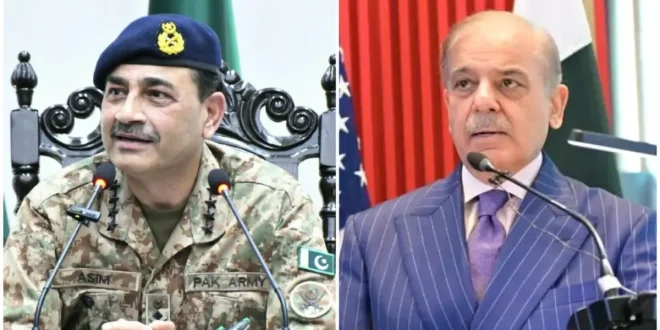
In a significant development reflecting evolving global dynamics, Pakistan’s Prime Minister Shehbaz Sharif and Chief of Defence Forces (CDF) Field Marshal Asim Munir have been jointly recognized among the most influential Muslims worldwide. The prestigious annual list, “The 500 Most Influential Muslims,” published by the Royal Islamic Strategic Studies Centre (RISSC) in Jordan, placed both Pakistani leaders at the top spot. This rare honor is shared with Saudi Arabia’s King and Crown Prince, and Türkiye’s President, signifying a powerful emerging alignment within the Muslim world.
This unprecedented shared top ranking, featuring five individuals across three entries, marks a pivotal moment, primarily attributed to the newly formed Makkah Joint Defence Agreement. The RISSC report highlights this pact as a “massive shift” in inter-Muslim nation cooperation, forging a mutual-defence alliance that strategically combines Saudi Arabia’s immense financial resources, Türkiye’s advanced technological and manufacturing capabilities, and Pakistan’s formidable military strength. This strategic alignment, operating on a “one for all, all for one” security principle, is poised to redefine regional politics and security paradigms.
Beyond the top tier, the list acknowledges a broad spectrum of influence. Notable figures include Iran’s Supreme Leader Ayatollah Mojtaba Khamenei, Jordan’s King Abdullah II, and influential scholars like Pakistan’s Sheikh Muhammad Taqi Usmani and Maulana Tariq Jamil. The report also recognized humanitarian efforts, naming Palestinian paediatrician Dr. Hussam Abu Safiya as “Man of the Year” for his unwavering dedication in Gaza amid conflict, and Minab school attack survivor Fatemeh Zahra Sheikhabadi as “Woman of the Year” for her courageous advocacy at the UN Human Rights Council, highlighting courage and integrity beyond traditional power structures.
Background: Understanding the Royal Islamic Strategic Studies Centre and the Makkah Pact
The Royal Islamic Strategic Studies Centre (RISSC), an independent research entity based in Amman, Jordan, has been compiling its annual “The 500 Most Influential Muslims” report since 2009. This meticulously researched publication serves as a crucial barometer of influence within the global Muslim community, extending beyond mere political power to encompass religious scholarship, social activism, cultural contributions, and humanitarian work. Its rankings offer valuable insights into the individuals and trends shaping the narratives and trajectories of over 1.8 billion Muslims worldwide, making it a significant annual reference.
The bedrock of this year’s top-tier recognition for Pakistan’s leadership is the Makkah Joint Defence Agreement. While specific operational details of the pact are yet to be fully publicised, the RISSC report characterises it as a transformative mutual-defence arrangement. Historically, efforts towards broad military or political unity among Muslim-majority nations have faced numerous complexities due to diverse national interests, regional rivalries, and geopolitical alignments. This agreement, by explicitly uniting the core strengths of three significant Muslim nations – Saudi Arabia’s economic prowess and spiritual significance, Türkiye’s industrial and technological independence, and Pakistan’s substantial military and strategic depth – signals a deliberate and pragmatic move towards a more cohesive and self-reliant security architecture within parts of the Muslim world.
This alliance represents a strategic pivot towards collective security, potentially driven by evolving regional threats, the growing need for enhanced strategic autonomy, and a desire to project a stronger, unified front on global security issues. Its emphasis on a “one for all, all for one” ethos suggests a deep level of commitment and shared responsibility among the signatory nations, aiming to reshape power dynamics.
Impact on Pakistan: Elevated Stature and Strategic Validation
For Pakistan, this dual recognition of Prime Minister Shehbaz Sharif and Chief of Defence Forces Asim Munir carries profound implications. It underscores a significant enhancement of Pakistan’s standing on the international stage, particularly within the Muslim world. The inclusion at the apex of such a respected list validates not just the individual leadership of its top officials, but also the nation’s strategic importance and its proactive role in fostering regional security.
- Reinforced Geopolitical Leverage: Pakistan’s central role within the Makkah Joint Defence Agreement offers the nation enhanced geopolitical leverage. It solidifies long-standing strategic partnerships with Saudi Arabia and bolsters its growing ties with Türkiye, potentially leading to greater diplomatic influence in regional and global forums, and strengthening its position on critical international matters.
- Validation of Foreign Policy: The report explicitly acknowledges Pakistan’s deft navigation of “economic stabilisation challenges, regional security pressures, and major-power diplomatic balancing acts.” This recognition validates Islamabad’s complex foreign policy approach, which successfully maintains strategic alliances while engaging with diverse global powers and regional neighbours, including Iran.
- Potential for Economic Synergy: While the pact is primarily defence-oriented, such deep strategic alliances often pave the way for increased economic cooperation, trade, and investment. Collaboration in defence industries, technology transfer, and joint ventures could significantly benefit Pakistan’s economy and industrial base, attracting capital and expertise.
- Boost to National Morale: Recognition on an international platform, especially from a respected Islamic institute, can significantly boost national morale and foster a sense of pride in the country’s leadership and its substantial contributions to the wider Muslim community. It reinforces a positive self-perception.
- Increased Responsibility: With elevated influence comes greater responsibility. Pakistan will likely face increased expectations to contribute actively to regional stability, mediate conflicts, and play a more proactive and constructive role in addressing challenges faced by the Muslim world.
Analysis: A New Era of Muslim Cooperation and Geopolitical Realignment
The RISSC’s latest rankings and the prominence given to the Makkah Joint Defence Agreement suggest a notable geopolitical realignment within the Muslim world. This pact transcends symbolic gestures, aiming for tangible collective security among key players. It signifies a potential move towards greater self-reliance and strategic autonomy for these nations, potentially reducing dependence on traditional external security guarantors and fostering indigenous defence capabilities.
The alliance’s focus on combining diverse strengths—Saudi Arabia’s financial wealth, Türkiye’s robust industrial and technological might, and Pakistan’s formidable military prowess—presents a potent model for future collaborations. It challenges the conventional understanding of power dynamics in the Middle East and South Asia, potentially establishing a new power bloc capable of projecting significant influence both regionally and globally.
However, this nascent alliance also raises crucial questions that will define its trajectory:
- Regional Reactions: How will other regional powers, particularly those not party to the agreement, such as Iran, Egypt, and the UAE (also featured in the top rankings), perceive and react to this strengthened trilateral alliance? Will it foster broader cooperation or intensify existing geopolitical rivalries and lead to new alignments?
- Sustainability of Unity: Historically, diverse national interests, ideological differences, and external pressures have often hindered sustained pan-Islamic unity. Can the Makkah Agreement truly overcome these complexities for long-term, cohesive strategic action and shared objectives?
- Beyond Defence: While framed explicitly as a defence pact, the underlying spirit of cooperation could extend to economic, cultural, and political spheres, potentially leading to deeper integration and coordinated policies among these nations. The success of the defence alliance might serve as a litmus test for broader partnerships.
- The Broader Narrative of Influence: The inclusion of humanitarian figures like Dr. Abu Safiya and Fatemeh Zahra Sheikhabadi, alongside political and military leaders, highlights a comprehensive understanding of influence. It suggests that true leadership in the Muslim world is increasingly defined not only by state power but also by moral courage, intellectual contribution, and advocacy for justice and human dignity. This broader perspective enriches the discourse on Muslim leadership, moving beyond purely geopolitical considerations to acknowledge the impact of individuals inspiring hope and change.
In conclusion, the recognition of Pakistan’s leadership at the pinnacle of global Muslim influence, intrinsically linked to the Makkah Joint Defence Agreement, marks a watershed moment. It signals a bold new chapter in inter-Muslim cooperation, positioning Pakistan as a pivotal player in a dynamically evolving regional and global landscape. The coming years will undoubtedly reveal the full extent of this alliance’s transformative potential and its lasting impact on the Muslim world and international relations.
“`