Dost Pakistan Journeys Tours and safaris in the North & South Pakistsn
Related Articles
“`html
TABLE TENNIS: THE DREAMS OF A TEENAGER
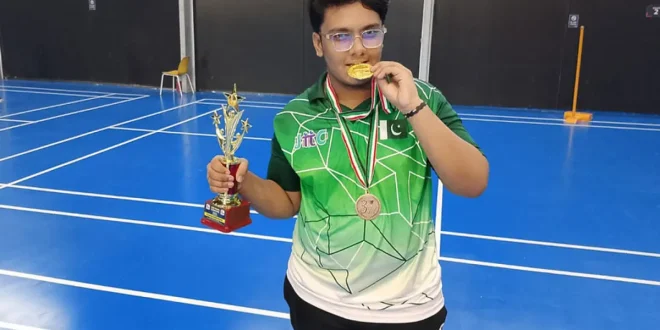
At just 16 years old, Arham bin Farrukh has emerged as a beacon of hope in Pakistan’s table tennis landscape. His story is one of remarkable personal dedication and extraordinary family support, culminating in an impressive tally of 45 medals, including international gold. Yet, Arham’s journey also serves as a poignant mirror reflecting the broader challenges faced by non-cricket sports in a nation often fixated on a single passion. His ascent from a makeshift dining table court to international championships encapsulates both the raw talent abundant in Pakistan and the systemic hurdles that threaten to impede its full realization.
The News: A Star on the Rise
Arham bin Farrukh’s narrative is nothing short of inspiring. In a mere six years, he has amassed an astounding 45 medals across regional, national, and international table tennis events. His recent accolades include two U-19 doubles gold medals at the National Championships (2025 and 2026), a gold at the Pakistan Student Olympics in September, and a significant gold at the 2024 TTC Open International Table Tennis Championship U-21 singles in Sharjah, where he famously defeated an Indian opponent. This international triumph, alongside a bronze in the open category, places him among a select few Pakistani juniors, including Hoor Jawad and Saroj Sajid, to achieve such global recognition in recent years.
What makes Arham’s achievements particularly noteworthy is not just the volume of his wins, but the consistent upward trajectory since his debut in 2021. His first podium finish at the All-Karachi School Championship signaled the arrival of a serious contender, whose ambition is to “win it all” – from national titles to representing Pakistan at the Olympics.
Background: From Dining Table to International Stage
Arham’s journey began humbly, on a dining table with a makeshift net, initiated by his father, Farrukh Kamal. This informal introduction to table tennis, initially to combat boredom, became a defining moment. Farrukh Kamal, himself a former top Sindh player and South Asian Veterans’ Championship silver medalist, recognized and nurtured his son’s budding talent. This personal connection to the sport and the hands-on coaching from a parent highlight a common informal pathway for sporting talent in countries where formal infrastructure is lacking.
Beyond personal inclination, Arham’s shift from cricket and Taekwondo to table tennis was also influenced by practical considerations, such as a dust allergy. The validation from the International Table Tennis Federation (ITTF) uploading their home-recorded video for World Table Tennis Day in 2019 provided a significant boost, transforming a hobby into a passion. This early recognition, albeit informal, underscored the potential that lay within the young player.
The story also offers a poignant reminder of Karachi’s sporting past. Once a thriving hub for table tennis expertise from the 1950s to the 1980s, the city has witnessed a substantial decline over the decades. Arham, therefore, represents not just his personal ambition, but also the hope for a resurgence of a once-vibrant sporting community struggling against the apathy and financial constraints that plague the Pakistan Table Tennis Federation (PTTF).
Impact on Pakistan: A Glimmer of Hope in a Fading Legacy
Arham bin Farrukh is more than just an individual athlete; he is a symbol of potential and resilience for Pakistani table tennis. His success, particularly his international medals, offers a rare glimmer of hope in a sporting landscape often characterized by underachievement and neglect outside of cricket. He carries the aspirations of Karachi’s table tennis community, aiming to restore its former glory and demonstrate that talent can still thrive, even in challenging environments.
Arham bin Farrukh, a 16-year-old prodigy, has become a potent symbol of resilience and latent talent in Pakistani table tennis, challenging the systemic neglect of non-cricket sports.
Moreover, Arham is not an isolated case. His father, Farrukh Kamal, points to other promising young players like Muhammad Abdal, Noor Ahmed (from Khyber Pakhtunkhwa), Ayan Haider, Abu Hurraira (from Punjab), and Arham’s doubles partner Muhammad Abbas. These names represent a generation poised to achieve international accolades, provided they receive the necessary support. Their collective potential underscores the missed opportunities arising from the PTTF’s lack of focus on player development and the critical shortage of professional facilities and coaching.
In a country where sports other than cricket struggle for attention and investment, the success of athletes like Arham provides crucial, albeit limited, visibility. It serves as a powerful reminder that diversifying sporting interests and investing in talent across various disciplines can lead to national pride and success on the global stage. However, without a robust support system, these individual sparks of brilliance risk being extinguished by the “same old story” of financial constraints and inadequate resources.
Analysis: The Paradox of Talent Amidst Systemic Neglect
The Parental Backbone: A Double-Edged Sword
Arham’s journey powerfully illustrates the pivotal role of parental dedication in nurturing sporting talent in Pakistan. Farrukh Kamal is not merely a father; he is Arham’s primary coach, motivator, and financial backer. From setting up a table in their small apartment to devising a specialized training program with local coaches, his commitment is unwavering. This hands-on, self-funded approach is heroic, but it also highlights a critical systemic failure: the reliance on individual families to overcome institutional shortcomings. While deeply admirable, this model is unsustainable for widespread athletic development and disproportionately benefits those with the means and knowledge, leaving countless other talents undiscovered or undeveloped.
The “Same Old Story”: Financial and Infrastructural Deficits
The core challenge facing Arham and many like him is explicitly termed “the same old story” in the news piece – chronic financial constraints and a severe shortage of professional facilities. Arham’s family shoulders the burden of his equipment (a Rs50,000 table), training, and even international travel costs. The lack of sponsorships and institutional support forces families into immense sacrifice. Furthermore, the deteriorating condition of public facilities, such as the “bad floors” at Islamia Club and the National Coaching Centre, poses a direct threat to player safety and development, forcing players like Arham to seek safer, often private, alternatives or rely solely on home setups.
This deficit is exacerbated by the Pakistan Table Tennis Federation’s (PTTF) perceived “lack of focus on honing players.” Without a clear, well-funded national development program, robust talent identification, and accessible, high-quality coaching, the path to becoming a world-class athlete remains largely a personal uphill battle rather than a supported journey.
The Non-Cricket Conundrum and Olympic Dreams
Pakistan’s sporting landscape is heavily skewed towards cricket, overshadowing other sports in terms of funding, media attention, and career prospects. Arham’s father initially tried to steer him towards cricket, acknowledging the difficulties of pursuing a non-cricket sport. Arham’s steadfast dedication to table tennis, despite these warnings, speaks volumes about his passion and conviction. His dream to qualify for the Olympics is not merely a personal aspiration; it represents the collective ambition of countless non-cricket athletes in Pakistan who yearn for global representation and recognition.
For Pakistan to genuinely capitalize on talents like Arham, a fundamental shift is required. This involves:
- Increased Investment: Dedicated government and private sector funding for non-cricket sports federations.
- Infrastructure Development: Upgrading existing facilities and building new, safe, and modern training centers nationwide.
- Professional Coaching Pathways: Access to international-standard coaches and structured development programs from grassroots to elite levels.
- Sponsorships and Stipends: Financial support for promising athletes to ease the burden on families and allow players to focus solely on their training.
- Federation Accountability: Greater transparency and a clear strategy from the PTTF for talent identification, nurturing, and international exposure.
Arham bin Farrukh embodies the pure grit that powers Pakistani sport. His success is a testament to what individual determination can achieve. However, for his dream of Olympic glory, and for the dreams of countless other young athletes, to truly flourish, the nation must move beyond relying on sheer will and invest strategically in creating an ecosystem where such talent can thrive, not just survive.
“`