Dost Pakistan Journeys Tours and safaris in the North & South Pakistsn
Related Articles

“`html
Political Tensions Flare: Balochistan Assembly Walkout Highlights Security Concerns for JUI-F Chief Fazlur Rehman
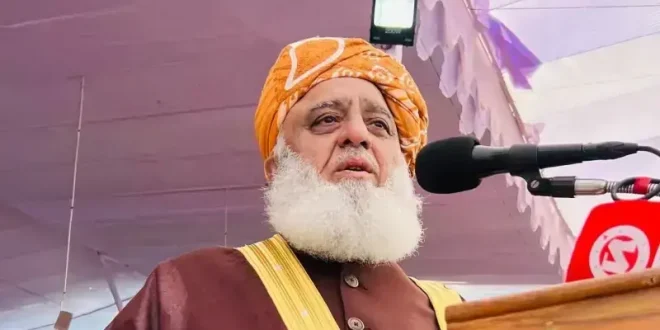
The recent walkout by opposition members in the Balochistan Assembly, protesting the withdrawal of security personnel for Jamiat Ulema-e-Islam-Fazl (JUI-F) chief Maulana Fazlur Rehman, underscores the delicate and often contentious nature of political security in Pakistan. This incident not only shines a light on the specific risks faced by prominent political figures but also raises broader questions about state patronage, institutional roles, and the dynamics of government-opposition relations.
The News
On Monday, the Balochistan Assembly session was disrupted when opposition members, primarily from the JUI-F and National Party (NP), staged a walkout. The immediate catalyst was the sudden withdrawal of security guards previously assigned to Maulana Fazlur Rehman. JUI-F MPA Zahid Reki, initiating the protest, voiced grave concerns, reminding the house of the Maulana’s past survival of two assassination attempts and directly holding Prime Minister Shehbaz Sharif responsible should any harm befall the JUI-F chief. This sentiment was echoed by NP chief Dr. Abdul Malik Baloch, who described the situation as regrettable and joined the walkout with his party members.
The protest, however, proved temporary. Following intervention and assurances from provincial ministers, including Home Minister Ziaullah Langove and Noor Muhammad Dummar, the protesting lawmakers returned to the assembly. Both ministers, while acknowledging Maulana Fazlur Rehman’s stature, also took the opportunity to defend the sacrifices of the country’s security institutions, cautioning against statements that might undermine them. Amidst these political tensions, the assembly proceeded to pass two bills: the Balochistan Fisheries and Aquaculture Bill and the Balochistan Non-Formal Education Bill, before adjourning.
Background: Maulana Fazlur Rehman and Pakistan’s Political Landscape
Maulana Fazlur Rehman is a formidable and veteran figure in Pakistani politics, leading the JUI-F, a religious-political party with a significant electoral base, particularly in the Khyber Pakhtunkhwa (KP) and Balochistan provinces. His political career has been marked by a complex interplay of alliances and opposition, making him a central character in various federal and provincial governments and opposition movements.
- Persistent Security Threats: The explicit mention of two prior assassination attempts is crucial. This is not a speculative threat but a documented history of violence directed at his person, elevating the seriousness of any decision to withdraw his security detail. Such events typically warrant heightened, not reduced, protective measures.
- Political Leverage and Opposition: JUI-F has often been a vocal opposition force against successive governments, including those aligned with the establishment. At the time of this news (November 2026), with Shehbaz Sharif as Prime Minister, it implies JUI-F is likely part of the federal opposition. The withdrawal of security for such a high-profile critic can be, and often is, interpreted through a political lens, raising suspicions of punitive action rather than a routine administrative decision.
- Balochistan’s Volatile Context: Balochistan, Pakistan’s largest but least populated province, is characterized by its complex geopolitical dynamics, a long-running insurgency, and a sensitive security environment. Political figures, particularly those with a strong regional presence like Maulana Fazlur Rehman, often operate under heightened threat levels. The JUI-F holds considerable sway in many parts of the province, making its leaders key targets for various actors.
- VIP Security Protocols: In Pakistan, the provision of VIP security often becomes a contentious issue, frequently criticized for its perceived arbitrary nature, political favoritism, and drain on state resources. However, for leaders with a credible history of targeted attacks, security withdrawal becomes a matter of life and death, fueling political outrage.
Impact on Pakistan: Beyond the Assembly Floor
The incident in the Balochistan Assembly, though confined to a provincial legislature, carries significant implications for Pakistan’s broader political landscape:
- Exacerbation of Political Tensions: This move intensifies the already strained relationship between the government and the opposition. It feeds into a narrative that state resources, including security provisions, can be weaponized against political rivals, further eroding trust and fostering an environment of confrontation.
- Questioning the Fairness of Security Assessments: If the withdrawal of security for a leader with a documented history of assassination attempts is not based on transparent, objective threat assessments, it raises serious questions about the integrity and impartiality of the state’s security apparatus. This could lead to demands for greater transparency in VIP security protocols nationwide.
- Civil-Military Relations and Institutional Perceptions: The provincial ministers’ responses, which pivoted from addressing security concerns to defending “institutions” and their sacrifices, are telling. This reaction suggests a deep sensitivity within the political establishment regarding any perceived criticism of Pakistan’s powerful security agencies. It implies that decisions related to high-profile security might be intertwined with broader institutional dynamics, and questioning such decisions could be seen as questioning the institutions themselves.
- Precedent for Selective Application: Such incidents can set a dangerous precedent, where security provisions become a tool of political leverage rather than a fundamental right based on objective threat assessments. This could disproportionately affect opposition figures or those who are critical of the ruling establishment, impacting the vibrancy of democratic dissent.
- Stability in Balochistan: In a province already grappling with complex security challenges and political grievances, any action that generates fresh political instability or mistrust among local leaders can have ripple effects, potentially complicating efforts to maintain peace and build consensus.
Analysis: A Test of Political Will and Institutional Impartiality
The walkout over Maulana Fazlur Rehman’s security withdrawal is more than just a procedural protest; it’s a potent symbol of underlying political tensions and questions about the impartiality of state mechanisms in Pakistan.
The decision to remove security for a leader who has demonstrably faced grave threats is puzzling if viewed purely from a security perspective. This leads to the inevitable conclusion that political motivations are likely at play. Is it an attempt to neutralize a vocal opposition figure by making him feel vulnerable, or to subtly pressure him and his party into a more accommodating stance? Given JUI-F’s historical ability to mobilize masses, particularly in conservative regions, any attempt to weaken its leadership could be seen as strategically advantageous by political rivals.
The immediate effectiveness of the protest, forcing provincial ministers to intervene and offer assurances, demonstrates the power of collective opposition in drawing attention and demanding accountability. However, the nature of the ministers’ response – shifting focus to the sacrifices of “institutions” – indicates a careful balancing act. While acknowledging the Maulana’s stature, they simultaneously reinforced the narrative that the state’s security apparatus is beyond reproach, subtly cautioning against direct criticism. This highlights the delicate tightrope walk Pakistani politicians often undertake when sensitive security matters intersect with political grievances.
Moving forward, this incident will likely contribute to a climate of heightened political mistrust. It serves as a reminder that in Pakistan, even fundamental issues like personal security can become entangled in political maneuvering. For democratic norms to strengthen, it is imperative that decisions regarding the security of political figures are transparent, guided solely by objective threat assessments, and free from any perception of political vendetta. The walkout in Balochistan Assembly, therefore, is not just a regional incident but a potent indicator of the ongoing struggle for political fairness and institutional impartiality across Pakistan.
“`