 Dost Pakistan Journeys Tours and safaris in the North & South Pakistsn
Related Articles


“`html
Pakistan & Malaysia Boost Defence Ties: A Strategic Deep Dive into Regional Security
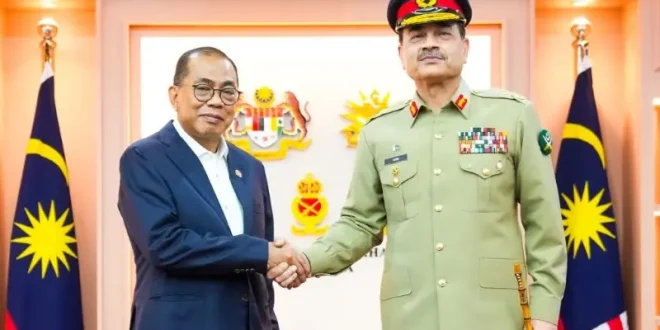
In a significant move signalling strengthened diplomatic and military bonds, Pakistan’s Chief of Army Staff (COAS), General Syed Asim Munir, recently concluded a high-profile visit to Malaysia. His engagements with Malaysian Prime Minister Anwar Ibrahim and Defence Minister Mohamed Khaled bin Nordin underscored a mutual commitment to deepen bilateral defence and security cooperation, setting a new trajectory for their strategic partnership.
The News: Reaffirming Commitment to Defence Collaboration
During his official tour, General Asim Munir engaged in comprehensive discussions with Malaysian leadership, focusing on strengthening the already existing robust bilateral relations, particularly across defence and security domains. The meetings addressed evolving regional and global security dynamics, emphasizing shared interests in promoting peace and stability.
Prime Minister Anwar Ibrahim extended a warm welcome to General Munir, acknowledging the longstanding friendship, trust, and cooperation between the two nations. He reiterated Malaysia’s resolve to enhance ties, especially in military and defence sectors. General Munir, in turn, lauded Malaysia’s constructive role in fostering peace in Southeast Asia and expressed Pakistan’s eagerness to further institutionalize defence cooperation and military-to-military linkages.
The visit culminated in a reaffirmation of both countries’ shared commitment to bolster defence ties through consistent high-level exchanges, enhanced military collaboration, and sustained dialogue on critical security issues. The Pakistani COAS was also accorded a ceremonial guard of honour at the Ministry of Defence in Kuala Lumpur and is slated for induction into the prestigious National Defence Studies Centre’s Hall of Fame, recognizing his leadership and contributions.
Background: A Foundation of Shared Interests
The relationship between Pakistan and Malaysia is deeply rooted in shared Islamic heritage, cultural affinity, and common developmental aspirations. Both nations are prominent members of the Organisation of Islamic Cooperation (OIC) and have consistently supported each other on various international platforms. While their economic and political ties have steadily grown, defence cooperation has always been a cornerstone, though often operating below the radar of mainstream headlines.
Pakistan, with its strategically vital location at the crossroads of South Asia, Central Asia, and the Middle East, views its engagement with Southeast Asian nations as crucial for diversifying its foreign policy and economic partnerships. This aligns with a broader “Look East” policy, aimed at fostering stronger connections beyond traditional Western alliances.
Malaysia, on the other hand, plays a pivotal role in ASEAN, navigating complex geopolitical currents in a region vital for global trade and security, particularly concerning the Strait of Malacca and the South China Sea. Its defence strategy focuses on maintaining regional stability and enhancing its capabilities through international partnerships.
The current leadership dynamic—with General Munir at the helm of Pakistan’s armed forces and Anwar Ibrahim, a seasoned statesman, leading Malaysia—provides a fertile ground for reinvigorating these alliances, leveraging their combined experience to address contemporary challenges.
Impact on Pakistan: Strategic Depth and Diversification
This renewed focus on strengthening defence ties with Malaysia carries significant implications for Pakistan across several fronts:
- Strategic Diversification: It allows Pakistan to broaden its defence partnerships beyond conventional allies, fostering greater strategic autonomy and resilience in its foreign policy.
- Enhanced Regional Influence: A robust partnership with a key ASEAN member bolsters Pakistan’s diplomatic footprint in Southeast Asia, providing greater leverage in regional and global forums, particularly on issues related to Islamic solidarity and developing nations.
- Defence Industry Boost: Closer military cooperation can open avenues for technology transfer, joint defence production, and potential sales of Pakistani defence products, such as the JF-17 Thunder fighter jet or the Super Mushshak trainer aircraft, to Malaysia. This would be a significant boost for Pakistan’s indigenous defence industry.
- Capacity Building and Training: Opportunities for joint military exercises, intelligence sharing, and specialized training programs in areas like counter-terrorism, maritime security, and disaster response can enhance the capabilities of both armed forces. Pakistan’s extensive experience in counter-insurgency and counter-terrorism operations can be particularly valuable.
- Economic Synergy: While primarily defence-focused, stronger military ties often lay the groundwork for increased trade, investment, and cultural exchanges, contributing to overall economic growth and stability.
Analysis: Beyond Bilateralism Towards a Shared Regional Vision
General Munir’s visit and the subsequent affirmations are more than just symbolic gestures of friendship; they signal a deliberate and strategic effort to operationalize and deepen defence cooperation between Pakistan and Malaysia. This initiative aligns perfectly with Pakistan’s “Look East” policy, seeking to forge stronger ties with dynamic Asian economies and security partners.
The discussions on “evolving regional and global security dynamics” highlight a shared understanding that collaboration is essential in a world grappling with complex challenges, from maritime security threats to cyber warfare and traditional geopolitical rivalries. Both Pakistan and Malaysia advocate for a rules-based international order and stability in their respective regions, making them natural partners in promoting peace.
Future areas of cooperation are likely to include:
- Joint Exercises: Expanding the scope and frequency of joint naval, air, and land exercises to enhance interoperability and readiness.
- Defence Procurement & Modernization: Exploring opportunities for Malaysia to acquire Pakistani defence equipment or for both nations to collaborate on upgrading their military hardware.
- Intelligence Sharing: Strengthening mechanisms for sharing intelligence, particularly concerning terrorism, regional extremist threats, and maritime security.
- Training & Education: Increasing military exchanges, cadet programs, and staff college courses to foster deeper understanding and professional development.
Ultimately, this reinvigorated partnership signifies a move towards fostering greater South-South cooperation, demonstrating that developing nations can pool resources and expertise to enhance their collective security and contribute meaningfully to global peace. While challenges such as funding constraints and the need for sustained political will persist, the clear commitment from both leaderships bodes well for a stronger, more resilient Pakistan-Malaysia defence axis in the years to come.
“`
