Dost Pakistan Journeys Tours and safaris in the North & South Pakistsn
Related Articles


“`html
Pakistan’s Provincial Divide: The Complexities of Creating New Administrative Units
Amidst calls for improved governance and resource distribution, the debate over creating new provinces in Pakistan, including the contentious idea of a separate Karachi province, continues to intensify. Political players, notably PTI and the federal government, are navigating a complex landscape of constitutional mandates and public sentiment.
The Latest Developments on New Provinces in Pakistan
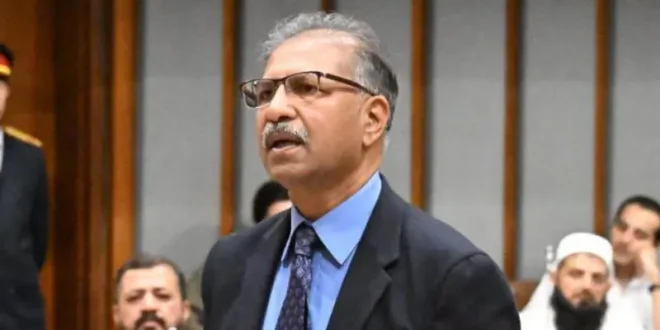
The intricate discussion surrounding the establishment of new administrative units in Pakistan has gained renewed momentum. Barrister Ali Zafar, the parliamentary leader of the Pakistan Tehreek-e-Insaf (PTI) in the Senate, recently confirmed that party founder and former Prime Minister Imran Khan supports the creation of new provinces, specifically mentioning Karachi as a potential candidate for provincial status. Zafar, however, underscored the critical importance of adhering to constitutional provisions, differentiating a referendum as merely a means to gauge public opinion from the actual legislative process required to alter provincial boundaries.
This statement arrives at a time when the ruling Pakistan Muslim League-Nawaz (PML-N)-led federal government is advocating for a nationwide referendum on new provinces. This proposal has, ironically, faced considerable resistance from its coalition ally, the Pakistan Peoples Party (PPP), highlighting the deep divisions within the political spectrum on this sensitive issue. PTI itself, while open to the idea of new provinces, has indicated it awaits the specifics of any proposed legislation, such as a potential 28th Constitutional Amendment, before making a definitive decision, emphasizing the need for constitutional legitimacy and public consensus.
Background: A Recurring Demand for Better Governance
The call for creating new provinces or administrative units is not new in Pakistan’s political discourse. It reflects long-standing grievances related to governance, equitable resource distribution, and representation. Regions like South Punjab, Hazara in Khyber Pakhtunkhwa, and various parts of Sindh, including Karachi, have historically voiced demands for administrative autonomy or separate provincial status. Proponents argue that smaller provinces can lead to:
- Improved Governance: Facilitating better administration, closer access to government services, and more localized decision-making.
- Equitable Resource Distribution: Ensuring a fairer share of federal resources and development projects, especially for historically marginalized regions.
- Addressing Ethnic/Linguistic Demands: Providing a political platform for distinct cultural or linguistic groups.
However, the process is fraught with constitutional complexities. Pakistan’s Constitution, particularly Article 239, explicitly states that any alteration of provincial boundaries requires a two-thirds majority vote in the concerned provincial assembly, followed by similar majorities in both the National Assembly and the Senate. This provision makes the creation of new provinces a formidable legislative challenge, often requiring broad inter-party consensus that has historically been difficult to achieve.
Potential Impact on Pakistan’s Future
The creation of new provinces could profoundly reshape Pakistan’s political, economic, and social landscape:
Governance and Development
On one hand, proponents argue that new provinces could decentralize power, leading to more responsive local governance and targeted development initiatives. On the other hand, it could lead to increased bureaucratic overheads, requiring significant financial resources for establishing new administrative structures, secretariats, and judicial systems. The financial viability of these new units, especially their capacity to generate sufficient revenue, remains a key concern, as highlighted by Barrister Zafar.
Inter-Provincial Harmony and Federalism
While new provinces might address some regional grievances, particularly those based on administrative neglect or ethnic identity, there is also a risk of creating new fault lines. The debate over whether provinces should be created on an administrative or linguistic basis is crucial here. Divisions along linguistic lines could potentially exacerbate existing tensions, while administrative divisions might be more palatable. The overall impact on the strength of the federation itself is also a concern, with some, like former PTI Chairman Barrister Gohar Ali Khan, cautioning against “hasty decisions” that could weaken the federal structure.
Economic Implications
The creation of new provinces would necessitate a renegotiation of the National Finance Commission (NFC) Award, which determines the distribution of revenue between the federal government and the provinces. This could lead to intense inter-provincial disputes over resource allocation and could impact federal finances significantly.
Analysis: Political Maneuvering and Constitutional Hurdles
The current discourse reveals a complex interplay of political strategy, constitutional interpretation, and public sentiment surrounding the creation of new administrative units in Pakistan.
PTI’s Strategic Support for New Provinces
Imran Khan’s clear endorsement, as articulated by Barrister Zafar, positions PTI as supportive of decentralization and regional autonomy, potentially appealing to movements advocating for new provinces like those in South Punjab, Hazara, and Karachi. Zafar’s specific suggestions for provinces in Sindh (Karachi, interior Sindh, central Sindh) and Punjab (South and North Punjab) align with long-standing regional demands. However, PTI’s caution regarding the “how” – insisting on adherence to constitutional legality – indicates a careful approach. They are awaiting the draft of any proposed 28th Constitutional Amendment to scrutinize its details, ensuring it aligns with their vision of legitimate change.
The Federal Government’s Referendum Dilemma
The PML-N-led federal government’s insistence on a nationwide referendum, championed by Interior Minister Mohsin Naqvi, appears to be a politically astute move but is legally problematic. While a referendum can gauge public opinion, it cannot, by itself, create new provinces under Pakistan’s existing constitutional framework. Article 239 unequivocally requires the consent of the respective provincial assembly. Therefore, the referendum proposal could be seen as:
- A Public Opinion Gauge: To demonstrate public desire for change, which might then be used to pressure provincial assemblies.
- A Deferral Tactic: To delay a difficult decision by putting it to a non-binding public vote.
- A Political Test: To expose divisions within opposition parties or within the federal coalition itself, as evidenced by PPP’s strong opposition to the idea of dividing Sindh.
The PPP’s vehement rejection of a referendum, especially concerning any division of Sindh, highlights the significant challenge the federal government faces even within its own ranks. The idea of a Karachi province, for instance, would require the Sindh Assembly’s approval, a scenario highly improbable given PPP’s dominance in the province and its strong stance against dividing Sindh.
The Constitutional Impasse and the 28th Amendment
The core of the issue lies in the constitutional mechanism for creating new provinces. Without a two-thirds majority in the concerned provincial assembly, any federal initiative is dead on arrival. This makes the discussion around a “possible 28th Amendment” crucial. Such an amendment could potentially aim to:
- Facilitate the process under existing Article 239 by providing a framework.
- Attempt to modify Article 239 itself to bypass or lessen the requirement of provincial assembly consent, which would be highly contentious and challenge the very spirit of federalism.
PTI’s focus on the draft reflects a shrewd understanding that the devil is in the details, particularly concerning how such an amendment would navigate the constitutional requirement of provincial consent. This careful approach contrasts with the federal government’s more generalized push for a referendum.
Ultimately, the debate over new provinces in Pakistan is less about whether they are beneficial and more about the “how.” It’s a test of political will, inter-party consensus, and adherence to constitutional principles. For any meaningful progress, political actors will need to bridge their differences and find a constitutionally sound path forward, going beyond mere referendums to engage in genuine legislative action that respects Pakistan’s federal structure and the mandate of its provincial assemblies.
“`