 Dost Pakistan Journeys Tours and safaris in the North & South Pakistsn
Related Articles


“`html
Deepening Alliances: Analyzing Pakistan-Malaysia’s Renewed Defence Commitment
The News: A Strategic Handshake
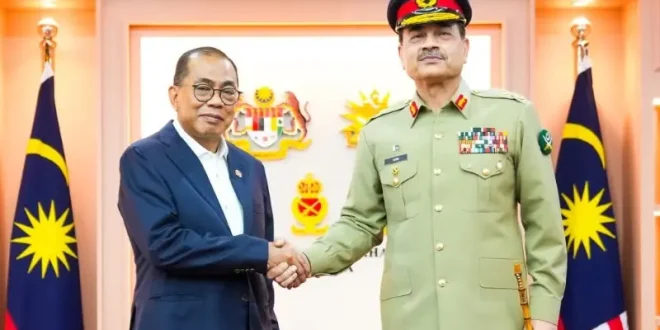
In a significant diplomatic and military outreach, Pakistan’s Chief of Army Staff (COAS) and Chief of Defence Forces (CDF), General Asim Munir, recently concluded an official visit to Malaysia. The high-profile engagement saw General Munir hold crucial meetings with Malaysian Prime Minister Anwar Ibrahim and Defence Minister Mohamed Khaled bin Nordin. The core message emanating from these discussions, as conveyed by Pakistan’s Inter-Services Public Relations (ISPR), was a strong reaffirmation of both nations’ commitment to significantly strengthen their bilateral defence and military cooperation. Leaders from both sides exchanged perspectives on evolving regional and global security dynamics, emphasizing mutual interest in promoting peace and stability. The visit underscored the longstanding friendship between Pakistan and Malaysia, paving the way for enhanced institutional linkages, military-to-military engagements, and exploration of new avenues for collaborative defence initiatives.
Background: A Foundation of Shared Interests
The recent high-level visit between Pakistan and Malaysia is not an isolated event but rather builds upon a robust history of diplomatic, economic, and cultural ties. Both nations are prominent members of the Organization of Islamic Cooperation (OIC) and share common positions on various global issues, fostering a relationship rooted in mutual respect and understanding. While Pakistan has traditionally focused its defence partnerships on long-standing allies like China and the United States, there has been a growing strategic imperative to diversify its defence outreach. Similarly, Malaysia, a key player in Southeast Asia and a strategically important nation bordering the crucial Malacca Strait, consistently seeks to enhance its defence capabilities and regional security architecture without aligning exclusively with any major power bloc.
In the defence sphere, interactions between Pakistan and Malaysia have historically included training exchanges, reciprocal visits by military officials, and participation in multilateral exercises. However, the current geopolitical landscape, marked by evolving maritime security challenges, the rise of non-state actors, and increasing great power competition, necessitates a more robust and formalized defence partnership. Pakistan, with its significant experience in counter-terrorism and a developing indigenous defence industry, offers a unique value proposition, while Malaysia brings its strategic location and growing regional influence.
Impact on Pakistan: Strategic Diversification and Economic Opportunity
For Pakistan, strengthening defence ties with Malaysia carries multifaceted benefits, extending beyond purely military considerations:
- Strategic Diversification: This partnership aligns with Pakistan’s broader foreign policy goal of diversifying its strategic engagements. Reducing over-reliance on a few traditional partners enhances Pakistan’s geopolitical flexibility and resilience in an increasingly complex world.
- Defence Exports and Industry Growth: Pakistan’s burgeoning defence industry, which produces aircraft like the JF-17 Thunder, naval vessels, and various small arms, stands to gain significantly. Malaysia represents a potential market for these exports, providing economic dividends and fostering technological collaboration, which could include co-production or technology transfer agreements.
- Enhanced Diplomatic Leverage: Deepening relations with a significant ASEAN member like Malaysia bolsters Pakistan’s diplomatic standing in Southeast Asia and within the broader Islamic world. This can translate into stronger support on international forums and better coordination on issues of mutual concern.
- Maritime Security Cooperation: Both nations have vested interests in maritime security. Pakistan’s naval expertise in the Arabian Sea and Indian Ocean, combined with Malaysia’s strategic position guarding key sea lanes, creates a strong foundation for cooperation in counter-piracy, search and rescue operations, and intelligence sharing in critical waterways.
- Capacity Building and Training: Exchanges and joint exercises offer valuable opportunities for the Pakistani armed forces to learn from Malaysian counterparts, particularly in areas like jungle warfare and specialized maritime operations relevant to Southeast Asian terrain.
Analysis: Towards a Concrete, Future-Oriented Partnership
The recent commitment to strengthening Pakistan-Malaysia defence ties signals a move beyond symbolic gestures towards a more substantive and results-oriented partnership. The emphasis on “institutional linkages,” “military-to-military engagements,” and “new avenues of collaboration” suggests a roadmap for concrete actions in the near future.
Key areas ripe for intensified cooperation include:
- Joint Exercises and Training: Regular combined military exercises, particularly focusing on counter-terrorism, maritime security, and humanitarian assistance/disaster relief (HADR), would enhance interoperability and mutual understanding.
- Defence Industrial Collaboration: Pakistan’s ambition to boost its defence exports finds a willing partner in Malaysia, which seeks to modernize its armed forces. Discussions could lead to significant contracts for Pakistani-made defence equipment or even joint ventures in manufacturing and maintenance. The JF-17 fighter jet, for instance, could be a strong contender for Malaysia’s air force modernization plans.
- Intelligence Sharing: In an era of evolving security threats, robust intelligence-sharing mechanisms, especially concerning counter-terrorism and maritime domain awareness, would be mutually beneficial.
- Technology Transfer and Research: Collaboration in defence research and development, leveraging each nation’s strengths, could lead to innovative solutions for shared security challenges.
This evolving partnership is also a reflection of broader geopolitical currents. As the global order shifts towards multipolarity, middle powers like Pakistan and Malaysia are increasingly seeking to build resilient bilateral and regional security frameworks, rather than solely relying on existing alliances or great power patronage. Their strengthened bond contributes to a more distributed security architecture in the Indo-Pacific region, fostering stability by creating diverse nodes of cooperation.
In conclusion, General Munir’s visit to Malaysia and the unequivocal reaffirmation of a shared commitment to strengthening defence ties underscore a strategic alignment between two important Islamic nations. This partnership promises not only to bolster their respective defence capabilities but also to contribute significantly to regional peace and security through a pragmatic and forward-looking approach to collaboration.
“`
