 Dost Pakistan Journeys Tours and safaris in the North & South Pakistsn
Related Articles

“`html
Pakistan’s Polio Fight: Karak Case Signals Persistent Challenges in Eradication Drive
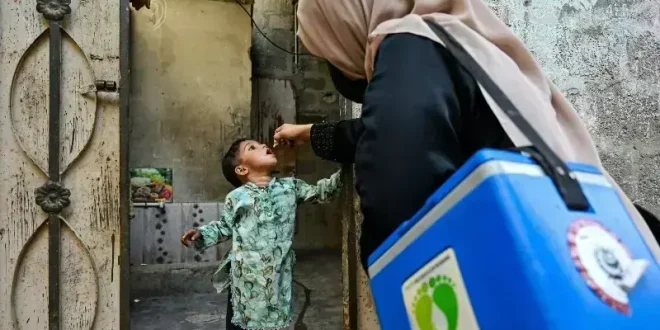
Polio workers continue their efforts to vaccinate children across Pakistan. (Image for illustrative purposes)
Pakistan, one of the last two nations grappling with endemic poliovirus, has reported its 10th paralytic polio case of 2026. This latest infection, identified in a 14-month-old girl from Karak district in Khyber Pakhtunkhwa (KP), carries significant implications for the country’s ongoing, arduous eradication efforts. The case is particularly concerning as it marks the first reported from Karak in six years, highlighting the virus’s persistent threat and its capacity to resurface in previously cleared regions.
The News
The National Emergency Operations Centre for Polio Eradication (NEOC) recently confirmed this critical development. The affected child resides in the Shnawa Gudi Khel union council of Karak. This incident brings the total number of polio cases nationwide for 2026 to ten, with eight originating from Khyber Pakhtunkhwa and two from Sindh.
Officials have traced the genetic lineage of this new case, linking it to poliovirus strains circulating intensely in southern KP. Specifically, Bannu district, which borders Karak, has consistently shown wild poliovirus type 1 (WPV1) in its sewage samples over the past eight months. This environmental surveillance data underscores an alarming level of sustained virus circulation, posing a continuous risk to unvaccinated children in neighboring areas.
The NEOC has reiterated the urgent need for consistent and comprehensive vaccination drives across the country, emphasizing that the oral polio vaccine is the only defense against this incurable, debilitating disease that can lead to lifelong paralysis or even death.
Background: Pakistan’s Decades-Long Battle Against Polio
Polio eradication stands as one of humanity’s most ambitious public health undertakings. Globally, efforts have reduced polio cases by over 99.9% since the late 1980s. However, the final push towards a polio-free world hinges on Pakistan and Afghanistan, the only two countries where the wild poliovirus remains endemic. This shared geopolitical landscape, characterized by porous borders and significant population movement, presents unique challenges to eradication efforts.
Pakistan launched its national polio eradication program in 1994, a period when the country faced an estimated 20,000 polio cases annually. Through monumental efforts, including the deployment of hundreds of thousands of dedicated polio workers, the nation has achieved a remarkable 99.8% reduction in cases, bringing the reported figure down to 31 in 2025. This progress is a testament to sustained international support, government commitment, and the relentless dedication of frontline health workers who often operate in challenging circumstances.
The strategy revolves around repeated, widespread vaccination campaigns targeting every child under five with two drops of the World Health Organisation (WHO) prequalified oral polio vaccine. Alongside these campaigns, robust environmental surveillance – testing sewage for poliovirus – plays a crucial role in detecting silent transmission, even in the absence of clinical paralysis.
Despite these successes, persistent issues like vaccine hesitancy, security concerns for health workers, and logistical hurdles in reaching remote populations continue to impede the final eradication. These factors contribute to pockets of unvaccinated or under-vaccinated children, creating reservoirs where the virus can persist and resurface.
Impact on Pakistan: Beyond the Individual Case
Each new polio case in Pakistan reverberates far beyond the immediate suffering of the affected child and their family:
- Public Health Burden: Lifelong paralysis places an immense strain on families and the national healthcare system, requiring ongoing medical care and rehabilitation.
- Erosion of Trust: Persistent circulation can fuel vaccine hesitancy and misinformation, undermining public confidence not only in polio campaigns but also in other essential health interventions.
- Economic Implications: The continuous need for mass vaccination campaigns requires significant financial and human resources, diverting funds and personnel that could otherwise be allocated to other pressing health issues.
- International Scrutiny and Restrictions: While less prevalent than in earlier years, the endemic status can still impact Pakistan’s global standing and, in extreme cases, lead to travel advisories or health-related restrictions.
- Setback to Global Eradication: As one of the last two remaining endemic countries, Pakistan’s success or failure directly impacts the global target of complete polio eradication. A single case anywhere is a threat to children everywhere.
Analysis: Navigating the “Last Mile” Challenge
The Karak case serves as a stark reminder of the complexities inherent in the “last mile” of polio eradication. Its emergence after a six-year hiatus in the district underscores several critical points:
- Virus Resilience and Mobility: Poliovirus is highly contagious and can travel stealthily. The genetic link to southern KP, particularly Bannu, highlights how persistent transmission in one area poses a direct threat to neighboring regions, even those previously cleared. This emphasizes the critical need for a coordinated, region-wide strategy.
- Importance of Environmental Surveillance: The eight months of WPV1 detection in Bannu’s sewage samples were a clear warning sign. Environmental surveillance is a powerful tool for early detection, indicating silent virus circulation before it causes paralysis. This data should ideally trigger even more targeted and intensive response campaigns in and around such hotspots.
- The Challenge of Sustained Immunity: While overall transmission might have seen reduction, pockets of unvaccinated children remain vulnerable. The 14-month-old girl’s infection points to gaps in routine immunization or missed doses during campaigns, likely due to mobile populations, refusals, or logistical challenges.
- The “High-Risk” District Focus: The third sub-national polio campaign, launched in October 2026 and targeting 97 high-risk districts, is a crucial strategic response. These intensified efforts are essential to close immunity gaps, particularly in areas identified by environmental and clinical surveillance as vulnerable.
- Addressing Core Resistance: For complete eradication, merely covering children isn’t enough; reaching every child with every required dose is vital. This often means confronting and overcoming the root causes of vaccine hesitancy and refusal through tailored communication strategies, community engagement, and ensuring the safety and trust of polio workers.
The substantial reduction of polio cases in Pakistan is an undeniable triumph, showcasing what dedicated effort can achieve. However, the recent cases, especially in areas like Karak, illustrate that complacency is not an option. The fight is not over until zero cases are sustained globally.
Pakistan’s path to polio eradication demands unwavering political will, continuous financial backing, regional cooperation with Afghanistan, and deep community engagement. The ongoing intensified campaigns and vigilant surveillance are not merely about responding to cases, but proactively building a wall of immunity strong enough to finally push the wild poliovirus into the annals of history, ensuring no child suffers from this preventable disease again.
“`
