Dost Pakistan Journeys Tours and safaris in the North & South Pakistsn
Related Articles



“`html
Tarar Urges Social Media Giants to Establish Offices in Pakistan: A Deep Dive into Digital Sovereignty and Content Governance
In a significant move signalling Pakistan’s intent to assert greater control over its digital landscape, Federal Information Minister Attaullah Tarar has called upon major social media companies to establish local offices and expand their presence within the country. While extending a warm invitation for business growth, Tarar simultaneously articulated profound concerns regarding the platforms’ impact on national discourse and online safety, highlighting a critical juncture in Pakistan’s approach to digital governance.
The News: A Dual Message on Digital Engagement
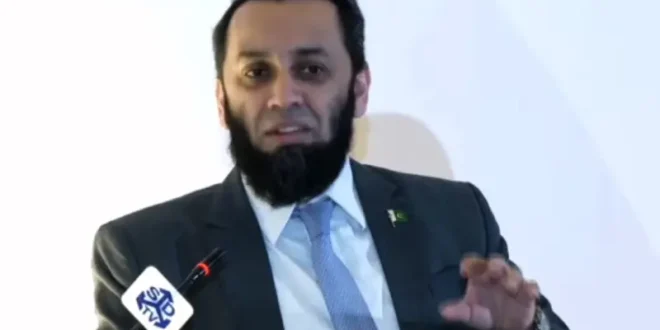
Speaking at a seminar organised by the Sustainable Policy Development Institute in Islamabad, Minister Tarar extended a clear message: “Social media platforms are most welcome. We want their business to grow in Pakistan.” He underscored the immense potential within Pakistan’s vibrant youth population, capable of creating “positive content,” which these global platforms could significantly benefit from. This overture aligns with a vision of fostering a thriving digital economy and leveraging local talent.
However, this invitation came tethered with pointed criticism. Tarar accused social media companies of “financially incentivising terrorism, harassment against women and child abuse,” stating that virality is often “directly linked to financial incentives” through view-based payments. He starkly declared an “algorithmic injustice,” asserting that platforms have “failed to protect the dignity and privacy of citizens.” While acknowledging ongoing engagements with these companies, the minister expressed frustration over the government’s inability to ensure adherence to local laws, advocating for tailored policies beyond a “one-size-fits-all fix.”
These remarks follow closely on the heels of Interior Minister Mohsin Naqvi’s assertion that freedom of speech must not be a “shield” for those crossing “red lines” such as terrorism, hate speech, incitement to violence, and child sexual exploitation. This synchronised messaging from key government figures indicates a concerted effort to redefine the terms of engagement with global tech giants.
Background: Pakistan’s Digital Crossroads
Pakistan, with its rapidly growing internet penetration and a youth bulge constituting a significant portion of its population, presents a massive and expanding market for social media platforms. The nation is at a digital crossroads, experiencing both the transformative benefits of connectivity and the profound challenges of online harms. Social media has become an indispensable tool for communication, commerce, and civic engagement, yet it also mirrors societal issues like misinformation, extremism, and privacy violations.
Historically, Pakistan’s relationship with social media companies has been complex, marked by occasional content blocking, debates over freedom of expression, and attempts at regulatory frameworks like the Prevention of Electronic Crimes Act (PECA). The demand for local offices is not new; it reflects a global trend where governments, particularly in the Global South, seek greater accountability and compliance from tech companies that operate across borders without significant physical presence or tax obligations in many host nations. Countries like India have already implemented stringent IT rules mandating local compliance officers and faster content takedown mechanisms, prompting many platforms to adapt their operations.
The government’s emphasis on “positive content” and concerns over “algorithmic injustice” speaks to a growing understanding that algorithms are not neutral tools but powerful shapers of public discourse, capable of amplifying both constructive and destructive narratives. The financial models driving these platforms often inadvertently reward engagement above all else, sometimes leading to the prioritization of sensational or inflammatory content.
Impact on Pakistan: Opportunities and Obstacles
Potential Benefits for Pakistan:
- Economic Boost: The establishment of local offices would bring foreign direct investment (FDI), create jobs for local talent in tech and related sectors, and contribute to tax revenues, bolstering Pakistan’s digital economy.
- Improved Content Moderation: A local presence could facilitate quicker and more culturally nuanced content moderation, allowing for a better understanding of local contexts and a faster response to problematic content, including hate speech and incitement that might be missed by foreign moderation teams.
- Policy Alignment: Direct engagement would enable clearer communication between platforms and regulators, potentially leading to the formulation of policies that are tailored to Pakistan’s specific legal, social, and cultural peculiarities.
- Digital Literacy & Collaboration: Local offices could partner with government and civil society on initiatives for digital literacy, online safety campaigns, and promotion of local creative industries, harnessing the youth potential for positive digital content.
Challenges and Concerns:
- Censorship Fears: Digital rights activists and civil society groups often voice concerns that mandatory local offices could empower the government to exert undue influence over content moderation, potentially leading to censorship or suppression of dissent under the guise of combating harmful content.
- Regulatory Uncertainty: Social media companies may be wary of perceived regulatory ambiguity or rapid policy shifts, which could create an unpredictable business environment and deter investment. Past instances of platform blocking have contributed to this perception.
- Operational Complexities: Setting up and operating offices in a new market comes with logistical, legal, and human resource challenges. Companies might also be hesitant to share proprietary algorithmic information or comply with data localization demands.
- Balancing Act: The government faces the delicate task of balancing national security and online safety with the fundamental rights to freedom of expression and privacy, without alienating critical foreign investment or isolating its digital population.
Analysis: Navigating Digital Sovereignty and Accountability
Minister Tarar’s call marks Pakistan’s clear stance in the ongoing global debate on digital sovereignty and the accountability of tech giants. His articulation of “algorithmic injustice” is particularly salient. It moves beyond merely blaming users for creating harmful content to critiquing the fundamental business models of platforms that, by design, prioritize engagement and virality. When content is “financially incentivised” based on views, it creates a powerful incentive structure that can inadvertently reward sensationalism, polarization, and even harmful narratives, as these often generate higher engagement.
The demand for localized policies also resonates deeply. The “one-size-fits-all” approach, often dictated by Western liberal democratic norms, frequently fails to account for the unique socio-cultural, religious, and political dynamics of diverse nations. Pakistan’s government seeks a framework that respects its “local peculiarities” while upholding universal principles of human rights and online safety. This is a legitimate aspiration shared by many nations globally.
However, the challenge lies in defining these “peculiarities” and “red lines” without impinging on legitimate free speech and digital rights. The Interior Minister’s enumeration of non-negotiable “red lines” – terrorism, hate speech, incitement to violence, and sexual exploitation of children – is largely consistent with international norms. The critical test will be in the implementation and interpretation of these lines, ensuring they are not broadly applied to stifle legitimate criticism, dissent, or journalistic reporting, as rightly acknowledged by Minister Naqvi.
For social media companies, engaging with Pakistan’s demands presents a strategic dilemma. On one hand, ignoring a market of over 240 million people is difficult. On the other, establishing a local presence could expose them to increased regulatory scrutiny, legal liabilities, and political pressures. This necessitates a careful negotiation that could set precedents for how these companies operate in other developing markets.
Ultimately, a sustainable path forward will require a collaborative approach. Pakistan needs to develop transparent, consistent, and predictable regulatory frameworks that clearly define expectations for platforms while safeguarding fundamental rights. Social media companies, in turn, must demonstrate a greater commitment to algorithmic transparency, localized content moderation, and proactive measures to mitigate online harms, moving beyond mere reactive takedowns. This evolving dynamic underscores a global shift where states are increasingly asserting their sovereign right to shape the digital spaces within their borders, demanding accountability from the powerful entities that govern so much of modern communication.
“`