Dost Pakistan Journeys Tours and safaris in the North & South Pakistsn
Related Articles


“`html
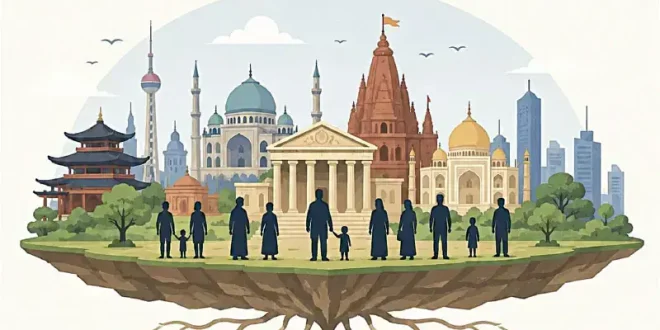
The Resurgence of Civilisational States: Reshaping Global Politics and Identity
In an increasingly turbulent international landscape, a concept once confined to academic discourse is rapidly gaining prominence: the civilisational state. This idea posits that certain nations define themselves not merely by modern political borders or linguistic groups, but as the enduring heirs to ancient, distinct civilisations. This profound shift, driven by a fragmenting post-Cold War order, is reshaping national identities and global power dynamics, ushering in an era where culture and historical legacy are becoming potent currencies in international relations.
Background: From Nation-States to Civilisational Identity
The origins of this contemporary concept can be traced back to seminal political thought. In 1996, American political scientist Samuel Huntington’s The Clash of Civilisations controversially argued that future global conflicts would be primarily cultural, rather than ideological. Decades later, Christopher Coker observed that the modern rise of civilisational states provides real-world validation for Huntington’s core thesis, suggesting a fundamental reorientation of international politics around cultural blocs.
While Coker highlighted its contemporary relevance, the term “civilisational state” itself was coined earlier by American political scientist Lucian Pye in 1990. Pye famously described China as “a civilisation pretending to be a nation state,” capturing its unique historical depth and self-perception. British academic Martin Jacques further elaborated on this, arguing in 2009 that the West’s persistent misreading of China stems from viewing it through a traditional nation-state lens, rather than appreciating its distinct civilisational values.
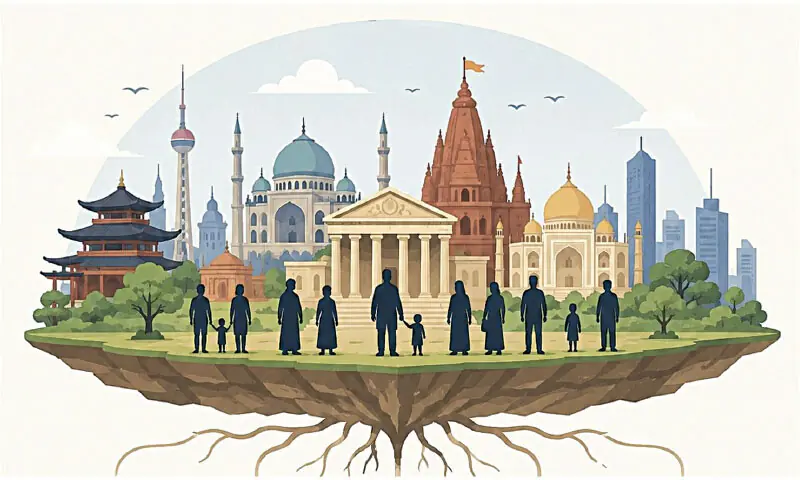
So, what precisely distinguishes a civilisational state from the conventional nation-state? The latter, a European construct barely three-and-a-half centuries old, typically envisions political boundaries aligning neatly with a singular national identity. In contrast, a civilisational state asserts itself as the embodiment of an entire, unique civilisation, often one with millennia of history, culture, and shared values that transcend modern territorial definitions.
The Erosion of the Post-Cold War Order
The ascendancy of the civilisational state is a direct symptom of the decline of the unipolar global order that emerged after the Cold War. Following the collapse of the Soviet Union in 1991, the United States stood as the sole superpower, and the Western model of the nation-state and liberal democracy reached its zenith. However, this model began to show cracks in the early 2000s. Efforts to transplant democracy into diverse cultural contexts frequently faltered, and even within its Western heartland, democracy faced a crisis of legitimacy, acutely exposed by the 2008 financial crash.
This period saw the global rise of populism, a movement that often leveraged existing disenchantment with struggling democracies. Populist leaders, dismissing “universal truths” and standard democratic mechanisms as inadequate for local challenges, eagerly adopted the civilisational state framework. They rebranded their nations as custodians of ancient civilisations, asserting that their laws, values, and governance models were products of a unique historical, social, economic, and political DNA, implicitly rejecting external norms.
Today, this trend is visible across the globe, with countries like China, Russia, India, Türkiye, Iran, and Egypt increasingly articulating their identities through a civilisational lens. Ancient historical sites, once merely tourist attractions or detached relics, are being actively reclaimed and integrated into contemporary national narratives, symbolizing a deeper connection to a long, unbroken heritage.
Nuances of the Civilisational State: A Spectrum of Ideologies
The question often arises: is the concept of a civilisational state inherently a right-wing idea? The analysis suggests that it is not. At its core, the framework advocates for governance rooted in a nation’s historical and cultural DNA, rather than being imposed by a perceived universalist, Western-centric paradigm. Its specific manifestation, however, is shaped by the ideologies of those who wield it.
- Right-wing application: When embraced by right-wing movements, it often serves as a defensive bulwark to manufacture “cultural purity.” This can lead to nativist policies, the insulation of national practices from international human rights standards, and the policing of cultural boundaries. Examples include Narendra Modi’s India, Benjamin Netanyahu’s Israel, Donald Trump’s “Make America Great Again” base, and various influential far-right parties in Europe.
- Progressive post-colonial application: Conversely, progressive post-colonial thinkers have utilized the civilisational framework to dismantle the legacy of “cultural imperialism.” For them, indigenous, non-Western systems and values are not only legitimate but often more authentic and egalitarian than imposed foreign models.
- Pragmatic application: A third approach, exemplified by China, views its civilisational identity as anchored in centuries of realistic, flexible statecraft. This pragmatism has allowed China to preserve its continuity and adapt through multiple global shifts, prioritizing stability and long-term strategic goals.
The critical distinction lies in whether a nation’s civilisational heritage is used as a tool for exclusion and rigid identity enforcement, or as a foundational element upon which to build a dynamic, multicultural society that remains true to its historical roots.
Pakistan’s Evolving Identity: Re-anchoring in Civilisational Roots
Pakistan is increasingly charting a course towards a similar civilisational identity. This represents a significant departure from the rigid, state-imposed ideological framework that shaped the country after 1971, which, as the article notes, ultimately fueled ethnic and sectarian polarization and proved too inflexible for a rapidly evolving multipolar world. The shift towards pragmatism is becoming a defining characteristic of Pakistan’s foreign and domestic policy.
Several factors are highlighted as contributing to this re-evaluation. The article mentions future geopolitical developments, including a hypothetical military triumph against India in 2025, the rise of Hindu nationalism in India, and Pakistan’s surging international status. These factors are presented as providing the state with greater freedom to maneuver outside ideological constraints and embrace a more pragmatic approach to its identity and role in the world.
Central to Pakistan’s new national narrative is its gradual re-rooting in South Asia, particularly by reclaiming the rich legacy of the Indus Civilisations. This involves explaining multicultural Pakistan as part of a 5,000-year chain of civilisations that flourished along the Indus River. This narrative strategically counters India’s propensity to view these ancient civilisations as inherently “Hindu” – a claim that becomes geographically challenging given that the vast majority of Indus Valley sites are located within modern-day Pakistan.
Furthermore, this re-appropriation of history finds academic support. Noted Indian historian Romila Thapar argues that “Hinduism” as a uniform, monolithic religion is itself a modern construct. She suggests that pre-colonial India was characterized by diverse, overlapping religious sects and practices, which were later consolidated into a singular “Hinduism” by British colonialists to fit Western, Abrahamic definitions of religion. This historical re-contextualization underpins Pakistan’s assertion of its own distinct, multicultural civilisational lineage.
Analysis: Implications for a Multipolar World
The widespread emergence of the civilisational state marks a definitive departure from the post-Cold War unipolar era. It signals that the West’s experiment in universalizing its specific model of the nation-state has reached its practical limits, paving the way for a truly multipolar global order. This shift presents both profound challenges and significant opportunities.
On one hand, the rise of identity-driven politics could exacerbate global tensions. An emphasis on “cultural purity” and unique historical DNA might lead to insular nationalism, disregard for universal human rights standards, and an increased likelihood of identity-based conflicts – a potential “clash of civilisations” in practice. The competition to define and claim historical narratives could become a source of friction between regional powers.
On the other hand, this evolution could foster a more pluralistic and equitable world. It offers an opportunity for diverse governance models and authentic cultural expressions to gain legitimate recognition, potentially dismantling the vestiges of cultural imperialism and fostering genuine multilateralism based on mutual respect rather than imposed uniformity. It challenges the notion of a single path to modernity and development.
As countries like Pakistan, India, China, and others increasingly define themselves by their ancient heritage, the crucial question for the international community is how these powerful, identity-driven states will interact. Will this lead to a more balanced and truly diverse global system, or will it unleash a new age of fractured, insular, and potentially conflict-prone relations? The trajectory of this shift will determine the shape of international relations for decades to come.
Published in Dawn, June 21st, 2026
“`