Dost Pakistan Journeys Tours and safaris in the North & South Pakistsn
Related Articles

“`html
PPP to Lead GB Govt Under Power-Sharing Deal with PML-N: A New Chapter for Regional Stability
The News: A United Front for Gilgit-Baltistan
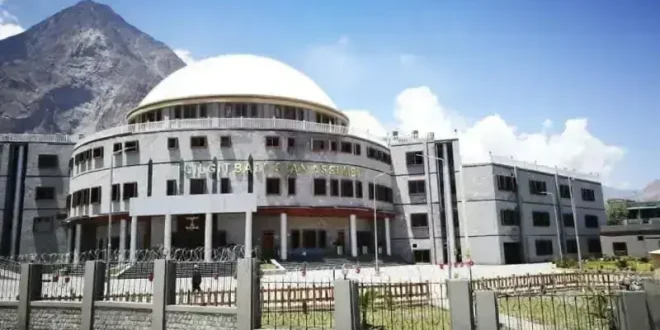
In a significant political development echoing the national political landscape, the Pakistan Peoples Party (PPP) has confirmed its intention to form the government in Gilgit-Baltistan (GB) with the crucial backing of the Pakistan Muslim League-Nawaz (PML-N). This announcement follows the June 7 elections, where the PPP emerged as the largest single party, securing 12 out of 24 seats in the Gilgit-Baltistan assembly. The collaborative decision, jointly declared by regional leaders from both parties, underscores a commitment to fostering “mutual trust, consensus, and consultation” aimed at ensuring political stability and advancing public welfare in this strategically vital northern region.
Under the terms of the agreed power-sharing formula, a PPP nominee will assume the role of Chief Minister for Gilgit-Baltistan. In a notable show of political accommodation, the PML-N will secure several key administrative and legislative positions, including the Governor of GB, the Leader of the Opposition, and the Deputy Speaker of the assembly. This arrangement is being hailed as a reflection of political harmony, designed to collectively address regional challenges and accelerate development efforts.
Background: Gilgit-Baltistan’s Unique Political Fabric and Federal Influence
Gilgit-Baltistan occupies a distinct and often sensitive position within Pakistan’s geopolitical framework. Nestled at the crossroads of South and Central Asia, it shares borders with China, Afghanistan, and India-occupied Kashmir, making it a region of immense strategic importance, particularly as a gateway for the China-Pakistan Economic Corridor (CPEC). The region’s constitutional status remains unique, and its governance often sees significant influence from the federal government in Islamabad.
Historically, elections in Gilgit-Baltistan have frequently seen the party holding power at the federal level gain a considerable advantage. This phenomenon is often attributed to the region’s administrative dependence and the flow of development funds and projects through federal channels. Therefore, the PPP’s success in emerging as the largest party in the recent elections, to some extent defying this pattern, is noteworthy, showcasing a dynamic shift in local political preferences. The subsequent decision by the PML-N, a dominant national party and a key coalition partner with the PPP at the federal level, to support the PPP in forming the GB government rather than engaging in a direct power struggle, signifies a strategic extension of their national alliance. This federal cohesion, often seen in the context of the current coalition government in Islamabad, aims to project a united front and ensure harmonious governance across different tiers.
Impact on Pakistan: Reinforcing Stability and Democratic Norms
The establishment of a PPP-led coalition in Gilgit-Baltistan with the active support of PML-N carries significant implications for Pakistan’s broader political landscape:
- Enhanced Political Stability: By extending the spirit of federal coalition to Gilgit-Baltistan, this agreement minimizes political friction in a region critical for national security and economic initiatives like CPEC. A stable local government is essential for uninterrupted focus on development and administrative efficiency, especially in an area facing unique geographical and security considerations.
- Strengthening Democratic Values: The mutual decision to honor the electoral mandate and form a consensus-based coalition government reflects a maturing democratic process. The PML-N’s pragmatic approach, accepting crucial roles while allowing the largest party to lead, sets a positive example for coalition politics in Pakistan, demonstrating that cooperation can prevail over intense political rivalry.
- Focus on Regional Development and Governance: With political uncertainty reduced, the new government can potentially fast-track development projects and address the long-standing socio-economic issues of Gilgit-Baltistan. These include constitutional reforms regarding the region’s status, resource allocation, infrastructure upgrades, and unlocking its vast tourism potential. A unified approach could also facilitate better advocacy for federal resources and more efficient project implementation.
- CPEC and Strategic Interests: The stability brought by this coalition is paramount for the smooth and secure progression of CPEC projects that traverse Gilgit-Baltistan. A harmonious political environment is crucial to prevent disruptions to these critical investments, thereby safeguarding Pakistan’s key economic partnership with China and its broader strategic interests.
- International Perception: Demonstrating robust democratic processes and stable governance in a region with a sensitive international profile could subtly enhance Pakistan’s image regarding its administrative capabilities and commitment to institutional strength and political maturity on the global stage.
Analysis: A Pragmatic Alliance for Governance and Growth
The power-sharing accord between the PPP and PML-N in Gilgit-Baltistan transcends a mere regional political maneuver; it represents a sophisticated and pragmatic strategy for governance, influenced by immediate political needs and long-term national objectives. The intricate formula—allocating the Chief Minister’s portfolio to the PPP while assigning the PML-N significant positions such as the Governorship, Leader of the Opposition, and Deputy Speaker—is a carefully negotiated settlement. This arrangement strategically ensures both parties have substantial influence and a vested interest in the region’s governance, all while upholding the democratic principle of the largest party assuming leadership.
For the Pakistan Peoples Party, this alliance is a considerable triumph. It not only allows them to lead a government in a region where they have historically maintained a presence but also strengthens their national political footprint. This opportunity provides a vital platform to implement their policy agenda, connect directly with the region’s diverse population, and potentially consolidate their support base beyond traditional strongholds.
Conversely, the Pakistan Muslim League-Nawaz’s decision, though appearing to cede the top executive post, is strategically astute. By securing the Governorship, the PML-N retains a critical federal link and maintains a significant oversight role in the region. The Leader of the Opposition role, even within a ruling coalition at the federal level, offers them a formal mechanism to hold the GB government accountable from within the system, ensuring their influence and voice are heard. This approach wisely avoids a potentially destabilizing confrontational opposition in GB, aligning instead with their cooperative stance at the federal level and reinforcing their commitment to democratic principles by respecting the local mandate.
However, this coalition is not without its inherent challenges. The delicate balance of power will necessitate continuous consultation, compromise, and effective management of potentially differing priorities and internal pressures from both party cadres. Successfully addressing Gilgit-Baltistan’s complex constitutional aspirations, its economic vulnerabilities, and the diverse needs of its populace will be the ultimate test of this “mutual trust and consensus.” The true success of this alliance will hinge on its ability to rise above partisan interests, delivering effective, stable, and people-centric governance for the greater good of GB. If successful, this model of cooperation could potentially serve as a template for future coalition governments in other provinces, advocating for collaborative governance over divisive politics across Pakistan’s intricate political landscape.
“`