Dost Pakistan Journeys Tours and safaris in the North & South Pakistsn
Related Articles


Judicial Scrutiny and Electoral Integrity: The Disqualification of a GB PPP Candidate
The News
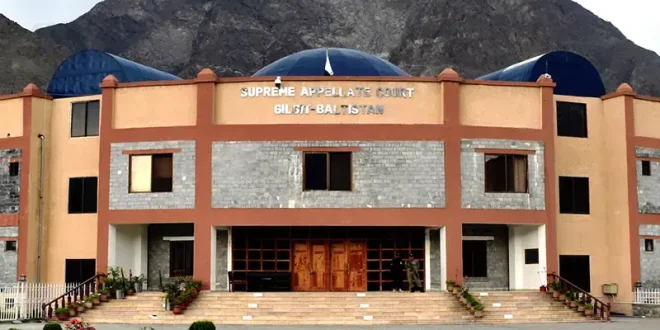
In a significant ruling, the Gilgit-Baltistan (GB) Supreme Appellate Court has disqualified Pakistan Peoples Party (PPP) candidate Fida Muhammad Nashad from constituency GBA-09 Skardu-III. The court found Nashad guilty of concealing assets in his nomination papers, a violation that nullifies his eligibility for public office. This decision overturns an earlier verdict by the GB Chief Court that had allowed Nashad to contest, thereby upholding the initial rejection by the returning officer (RO) and the subsequent ruling by the election tribunal. Notably, Nashad had already been declared the returned candidate following the recent June elections, making this judicial intervention a critical development for the political landscape of Gilgit-Baltistan. The verdict, issued by Chief Judge Justice Sardar Muhammad Shamim Khan, invoked Article 62(1)(f) of the Constitution of Pakistan, citing false statements and non-compliance with the Election Act.
Background
The political and legal framework surrounding elections in Gilgit-Baltistan, a self-governing region with a unique constitutional status, largely mirrors that of mainland Pakistan, especially concerning electoral integrity. The case of Fida Muhammad Nashad underscores the stringent checks and balances intended to ensure transparency in the electoral process. The journey of Nashad’s eligibility through various legal tiers—from the initial rejection by the RO, upheld by the election tribunal, then challenged successfully in the GB Chief Court, only to be ultimately overturned by the GB Supreme Appellate Court—illustrates the multi-layered judicial oversight built into Pakistan’s election system.
At the heart of this disqualification lies Article 62(1)(f) of the Constitution of Pakistan. This powerful clause stipulates that a person shall not be qualified to be elected or chosen as a member of Majlis-e-Shoora (Parliament) or a Provincial Assembly unless they are “sagacious, righteous and non-profligate, honest and ameen” (truthful and trustworthy). It also explicitly requires that they “have never been convicted for a crime involving moral turpitude” and “have not concealed anything from the court.” This article gained national prominence and controversy with its application in high-profile cases, including the disqualification of a former Prime Minister, establishing a formidable precedent for financial transparency and ethical conduct among public office holders. Its invocation here reaffirms the judiciary’s commitment to enforcing these moral and financial benchmarks for elected representatives, even in regional assemblies.
This development unfolds against the backdrop of the PPP emerging as the largest party in the June 7 GB elections, winning 12 seats in the 24-member assembly and subsequently forming a coalition government with the support of PML-N. The disqualification of one of its returned candidates, therefore, carries weight beyond a mere legal technicality, impacting the party’s representation and potentially its standing in the region.
Impact on Pakistan
While specific to Gilgit-Baltistan, the disqualification of Fida Muhammad Nashad resonates across the broader political and legal landscape of Pakistan, sending a clear message about electoral accountability and the rule of law. Such judicial interventions reinforce the principle that elected officials must meet rigorous ethical and financial disclosure standards, irrespective of their political affiliation or the region they represent. This decision adds to the growing jurisprudence on Article 62(1)(f), strengthening its application and underscoring the judiciary’s role as a guardian of electoral integrity.
The verdict serves as a critical reminder to all prospective candidates across Pakistan to meticulously declare their assets and adhere to election laws. It underscores the potential personal and political consequences of misrepresentation or concealment, fostering greater diligence in the nomination process. Furthermore, it contributes to public trust in the electoral system, demonstrating that judicial mechanisms exist to correct electoral malpractices and hold politicians accountable. In a country often grappling with allegations of corruption and lack of transparency, such judgments are vital for reinforcing democratic norms and promoting good governance practices nationwide.
Analysis
The Gilgit-Baltistan Supreme Appellate Court’s decision to disqualify Fida Muhammad Nashad is a powerful affirmation of the judiciary’s role in upholding electoral standards and enforcing the “sadiq and ameen” (truthful and trustworthy) criteria enshrined in Article 62(1)(f) of the Constitution. This case vividly illustrates the strict interpretation of asset declaration requirements, treating concealment not as a minor administrative oversight, but as a fundamental breach of trust and a disqualifying offense.
The reversal of the GB Chief Court’s decision by the apex court highlights the hierarchical nature of judicial review in Pakistan’s electoral dispute resolution mechanism. It signifies that the final arbiter prioritizes a strict adherence to constitutional and electoral provisions, even if lower courts might have taken a more lenient view. This judicial activism, while sometimes debated for its scope, undeniably plays a crucial role in maintaining accountability within the political class. It sends an unequivocal message that candidates for public office must exhibit impeccable honesty in their financial disclosures, an imperative for transparent governance.
For the PPP, this disqualification means the loss of a seat in the GB Assembly, necessitating a re-evaluation of its representation strategy in GBA-09 Skardu-III. More broadly, it serves as a cautionary tale for all political parties and their candidates to conduct thorough due diligence on their nominees. In an era where public scrutiny is heightened and digital footprints are increasingly scrutinized, meticulous adherence to legal requirements is paramount to avoid similar pitfalls.
Ultimately, this verdict strengthens the framework for electoral transparency and accountability in Gilgit-Baltistan and, by extension, in Pakistan. It reinforces the expectation that those aspiring to lead must first demonstrate honesty and integrity in their personal affairs, especially concerning their assets. Such judicial pronouncements are integral to evolving a political culture that values transparency and integrity, fostering greater confidence in democratic institutions.