Dost Pakistan Journeys Tours and safaris in the North & South Pakistsn
Related Articles
“`html
Navigating GSP+: Pakistan’s Crucial Commitment to Human Rights and EU Trade Ties
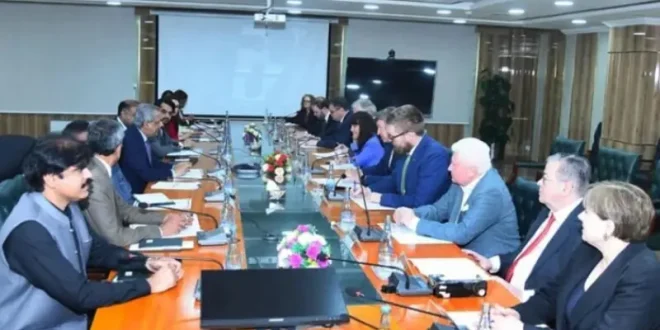
A recent high-stakes meeting between Pakistan’s Federal Minister for Law and Human Rights, Azam Nazeer Tarar, and a senior delegation from the European Union, led by Ambassador Raimundas Karoblis, has brought Pakistan’s commitment to the GSP+ framework firmly into the spotlight. The discussions, encompassing human rights, the rule of law, and counter-terrorism measures, underscore the delicate balance Pakistan must maintain to safeguard its vital economic interests with the EU.
The News: Assurances and Expectations
In a significant diplomatic engagement, Minister Tarar conveyed Pakistan’s unwavering dedication to fulfilling its obligations under the European Union’s GSP+ scheme. The EU delegation, comprising ambassadors and senior officials from several key European nations and Canada, engaged in comprehensive talks on the state of Pakistan-EU relations, the intricacies of the GSP+ framework, human rights advancements, and the rule of law.
Key points of discussion included Pakistan’s progress on human rights conventions. The visiting diplomats acknowledged recent positive strides, notably the establishment of the National Commission for Minorities and the enactment of the Protection of Journalists and Media Professionals Act. However, areas like the death penalty moratorium and broader human rights commitments remained on the agenda, indicating ongoing scrutiny.
Minister Tarar elaborated on the government’s ongoing legal and institutional reforms designed to strengthen fundamental rights, enhance access to justice, and reinforce democratic principles. He reiterated that while stringent counter-terrorism measures are imperative, their implementation is strictly aligned with constitutional and legal frameworks, ensuring human rights are not compromised. Both parties expressed satisfaction with the dialogue and pledged to deepen their cooperation, signaling a constructive path forward for future engagements.
Background: The GSP+ Framework and Its Significance
To fully grasp the weight of these discussions, it’s essential to understand the Generalised Scheme of Preferences Plus (GSP+). This unilateral trade instrument grants eligible developing countries duty-free access to the vast EU market for a significant portion of their exports. However, this preferential access is not unconditional.
What is GSP+? It’s a special incentive arrangement under the EU’s GSP, designed to support vulnerable developing countries in their efforts towards sustainable development and good governance. To qualify for GSP+, a country must ratify and effectively implement 27 core international conventions covering human rights, labor rights, environmental protection, and good governance principles.
Why is it crucial for Pakistan? Pakistan was granted GSP+ status in 2014, and since then, the EU has become its largest trading partner. The framework provides zero-duty access for over 66% of Pakistani products to the EU market. Sectors like textiles, garments, leather, and surgical instruments heavily rely on this access, making the GSP+ status directly responsible for billions of dollars in exports, countless jobs, and a significant portion of the country’s foreign exchange earnings. Losing this status would have a catastrophic impact on Pakistan’s economy, leading to a sharp decline in exports, job losses, and a potential balance of payments crisis.
The EU regularly reviews GSP+ beneficiary countries’ compliance with the 27 conventions through monitoring missions and dialogues. Pakistan has undergone several such reviews, consistently facing scrutiny over issues such as freedom of expression, minority rights, the use of the death penalty, and counter-terrorism legislation.
Impact on Pakistan: Economic Lifeline and Reform Driver
The GSP+ framework is far more than just a trade agreement for Pakistan; it’s a multi-faceted lever influencing the nation’s economic trajectory and internal policy reforms.
- Economic Stability: The preferential tariffs provide a crucial competitive edge for Pakistani goods in the EU, its largest export destination. Without it, Pakistani products would face higher tariffs, making them less competitive and likely leading to a significant drop in export volumes. This directly threatens the livelihoods of millions employed in export-oriented industries.
- International Reputation: Maintaining GSP+ status signals to the international community that Pakistan is committed to global human rights and governance standards. This enhances its standing on the world stage, potentially attracting more foreign direct investment and fostering stronger diplomatic ties beyond the EU. Conversely, a downgrade would tarnish its image.
- Catalyst for Reforms: While challenging, the GSP+ conditionalities act as a powerful incentive for internal reforms. The need to comply with international conventions encourages Pakistan to strengthen its legal framework, enhance human rights protections, and improve governance. Initiatives like the National Commission for Minorities and the Protection of Journalists Act, lauded by the EU delegation, are direct examples of such responses. This external pressure often provides the necessary impetus for difficult but vital internal changes.
- Balancing Act: Pakistan faces the complex task of balancing its national security imperatives, particularly in the context of counter-terrorism, with its international human rights obligations. The EU’s continued focus on issues like the death penalty and the strict implementation of human rights during counter-terrorism operations highlights this ongoing tension.
Analysis: A Diplomatic Tightrope Walk
The meeting between Minister Tarar and the EU delegation represents a critical diplomatic exercise for Pakistan. While assurances are a necessary first step, the EU’s GSP+ mechanism demands tangible, verifiable progress, not just promises.
The Nature of Commitment: Pakistan’s repeated reassurances underline the critical importance it places on maintaining GSP+ status. It’s a strategic imperative driven by economic realities. The question for observers, however, is the extent to which these commitments translate into sustained, on-the-ground improvements in human rights and rule of law, beyond specific legislative achievements.
Acknowledging Progress, Highlighting Gaps: The EU’s acknowledgement of the National Commission for Minorities and the Protection of Journalists Act indicates that Pakistan is indeed making efforts in certain areas. These are concrete steps that reflect a response to previous EU concerns. However, the continued discussion on the death penalty moratorium and broader human rights obligations suggests that significant areas of concern persist. The EU’s leverage lies in its ability to push for comprehensive reforms, and it will be looking for continued momentum across all 27 conventions.
The Role of Counter-Terrorism: Minister Tarar’s emphasis on safeguarding human rights “while ensuring that counter-terrorism measures were implemented strictly in accordance with the Constitution and the law” highlights a key area of contention and scrutiny. International bodies often express concern over the potential for anti-terrorism laws to be misused, impacting civil liberties and due process. Pakistan’s ability to demonstrate that its security apparatus operates within a robust human rights framework is paramount.
Future Outlook: This meeting serves as a prelude to future GSP+ reviews. While the expressed satisfaction by both sides is positive, the true test will be the consistent implementation of reforms and a demonstrable shift in the human rights landscape. The EU’s commitment to “regular engagement” suggests an ongoing dialogue, which, if utilized effectively by Pakistan, can lead to constructive collaboration rather than punitive measures. Civil society organizations within Pakistan will play a vital role in monitoring and advocating for the genuine implementation of these commitments.
In conclusion, Pakistan’s proactive engagement with the EU on GSP+ and human rights is a testament to the framework’s profound importance. While recent legislative achievements are commendable, the path forward demands sustained, verifiable progress across all conventions. The delicate dance between national interests and international obligations will define Pakistan’s continued access to the EU market and its evolving standing as a responsible member of the global community.
“`