 Dost Pakistan Journeys Tours and safaris in the North & South Pakistsn
Related Articles

“`html
Pakistan’s Cabinet Rejects Gas Utilities’ IFRS Exemption: A Stance on Transparency and SOE Reform
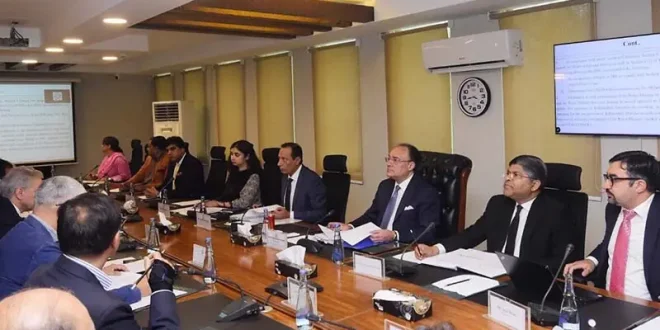
Islamabad, Pakistan – In a pivotal decision underscoring a commitment to fiscal transparency and corporate governance, Pakistan’s Cabinet Committee on State-Owned Enterprises (SOEs), chaired by Finance Minister Muhammad Aurangzeb, has rejected a request from two major gas utilities, Sui Southern Gas Company (SSGC) and Sui Northern Gas Pipelines Limited (SNGPL), for an exemption from international accounting and financial reporting standards.
The utilities, grappling with an overwhelming Rs3.44 trillion circular debt in the gas sector, sought to sidestep the stringent requirements of International Financial Reporting Standards (IFRS-14 and IFRS-9) to avoid being declared insolvent. This move by the Cabinet Committee signals a determined shift towards accountability, despite the immediate financial pressures faced by these critical state-owned entities.
The News: A Stand for Accountability
The Petroleum Division had advocated for the exemption, citing the regulated business model under which SSGC and SNGPL operate, proposing a continuation of older Generally Accepted Accounting Principles (GAAP). However, the Finance Minister reportedly emphasized that such an exemption was incompatible with the SOEs Act 2023, a legislative cornerstone designed to enhance governance and transparency within state-owned enterprises.
The committee, while rejecting the immediate exemption, directed the Petroleum Division to collaborate with the Finance and Law & Justice Divisions to formulate a revised proposal. This suggests a potential path forward that might address the utilities’ concerns within the framework of stricter reporting standards, rather than granting a blanket waiver.
The decision was strongly backed by the Finance Ministry’s Central Monitoring Unit (CMU), which oversees SOEs as part of Pakistan’s commitments to the International Monetary Fund (IMF). The CMU stressed the importance of applying IFRS to ensure transparency in financial reporting and to clearly outline how receivables, many entangled in the circular debt, would eventually be settled.
Beyond the IFRS matter, the Cabinet Committee also demonstrated its commitment to good governance by rejecting the appointments of two board members to Pakistan Petroleum Limited (PPL) and Sandak Metals Limited (SML) from the Petroleum Division, citing a deviation from governance principles outlined in the SOEs Act. However, it approved other board nominations and clarified that only one ex officio director from the sponsoring ministry/division is permissible on SOE boards.
In a related development, the committee approved the exclusion of the Small and Medium Enterprises Development Authority (SMEDA) from the list of SOEs, recognizing its statutory and non-commercial nature.
Background: Decoding IFRS, Circular Debt, and Reform
To fully grasp the significance of this decision, it’s crucial to understand the underlying concepts:
What are IFRS-9 and IFRS-14?
- International Financial Reporting Standards (IFRS) are a set of globally recognized accounting standards designed to provide a common language for business affairs, making financial statements comparable, transparent, and understandable across borders. They are crucial for attracting international investment and ensuring market integrity.
- IFRS-9: Financial Instruments: This standard dictates how entities classify and measure financial assets and liabilities, focusing on the “expected credit loss” (ECL) model for impairment. For entities like SSGC and SNGPL, with massive outstanding receivables (debts owed to them), IFRS-9 would necessitate rigorous provisioning for potential losses from these unrecoverable amounts, directly impacting their reported equity and profitability.
- IFRS-14: Regulatory Deferral Accounts: Specifically designed for regulated entities, this standard allows for the deferral of certain revenue or expenses that arise from the regulatory process. While it provides some flexibility, its application still requires a high degree of transparency in reporting these deferrals.
- Generally Accepted Accounting Principles (GAAP): In contrast to IFRS, GAAP (often country-specific, like US GAAP or Pakistan’s previous GAAP) can be less uniform and may allow more flexibility in how certain items are accounted for, potentially obscuring the true financial health of an entity, particularly when dealing with large, systemic debts.
Pakistan’s Circular Debt Crisis
The gas sector’s mammoth Rs3.44 trillion circular debt is a chronic ailment plaguing Pakistan’s energy sector. It arises when one entity in the supply chain (e.g., power producers, government departments, or even consumers) fails to pay its dues to another. This creates a domino effect: gas suppliers aren’t paid by power plants, which aren’t paid by distributors, and so on. This systemic non-payment cripples the liquidity of utilities like SSGC and SNGPL, leading to their inability to pay upstream suppliers or invest in infrastructure. The lack of transparent accounting often exacerbates the issue by obscuring the true extent and source of these liabilities.
The SOEs Act 2023 and IMF Influence
The State-Owned Enterprises (Ownership and Management) Act 2023 is a landmark legislative reform aimed at professionalizing, improving governance, and enhancing the financial performance of Pakistan’s vast network of SOEs. It mandates greater transparency, accountability, and commercial viability for these entities, many of which have historically been a significant drain on the national exchequer. The International Monetary Fund (IMF), a key lender to Pakistan, has consistently pushed for these structural reforms, including stringent SOE governance and financial reporting standards, as conditions for its loan programs. The Finance Ministry’s Central Monitoring Unit (CMU) plays a critical role in enforcing these requirements.
Impact on Pakistan: Transparency vs. Stability
This decision carries significant implications for Pakistan’s economy and its future trajectory:
- Enhanced Transparency and Credibility: Adherence to IFRS will provide a clearer, more realistic picture of the financial health of these utilities. While potentially revealing a dire situation, this transparency is crucial for restoring investor confidence, both domestic and international, by demonstrating a commitment to honest financial reporting.
- Alignment with IMF Reforms: By enforcing IFRS and SOE governance principles, Pakistan signals its seriousness in fulfilling commitments made under its current IMF program. This strengthens the country’s position in ongoing negotiations and future financial assistance.
- Accelerating SOE Reform: The explicit rejection based on the SOEs Act 2023 reinforces the government’s resolve to implement the new law. This momentum is vital for transforming SOEs from fiscal liabilities into engines of economic growth.
- Forcing a Confrontation with Circular Debt: Applying IFRS-9 means SSGC and SNGPL will have to explicitly provision for expected credit losses from their massive receivables. This will officially recognize the unrecoverable portions of the circular debt on their balance sheets, making it impossible to ignore. It will intensify pressure on the government to develop a concrete, long-term solution for this systemic issue.
- Potential for Immediate Financial Instability: Declaring utilities insolvent, even on paper, could create market jitters and potentially restrict their access to financing. However, the instruction for a “revised proposal” suggests the government is seeking a managed approach to mitigate these immediate shocks.
Analysis: A Calculated Risk for Long-Term Gain
The Cabinet Committee’s decision is a courageous and calculated move. It prioritizes long-term systemic health over short-term expediency, effectively removing the option of obscuring financial realities under less stringent accounting rules. This rejection is more than just an accounting directive; it’s a powerful political statement:
“The rejection of the IFRS exemption underscores a growing resolve within Pakistan’s government to confront economic challenges head-on, dismantle legacy issues, and build a foundation for sustainable growth based on transparency and accountability.”
Confronting the Elephant in the Room: For years, exemptions and less rigorous accounting standards have allowed the true extent of circular debt and the precarious financial state of SOEs to remain opaque. By mandating IFRS, the government is essentially saying, “We need to see the full picture, no matter how uncomfortable it is.” This transparency is the first step towards effective problem-solving.
Strengthening Governance and Trust: The Finance Minister’s insistence on upholding the SOEs Act 2023, coupled with the rejection of governance-violating board appointments, signals a genuine intent to professionalize SOE management. This will build trust among lenders, investors, and the public, crucial for unlocking much-needed capital and improving service delivery.
A Path to Sustainable Solutions: While the application of IFRS might lead to the immediate declaration of insolvency for the gas utilities, it also creates an urgent impetus for a comprehensive circular debt resolution plan. The “revised proposal” directive suggests that the government is open to structured solutions—perhaps involving phased provisioning, government guarantees, or specific debt retirement mechanisms—rather than simply allowing the utilities to continue operating under a veil of obscured finances.
A Signal to the Market: This decision sends a strong signal to local and international markets that Pakistan is serious about its reform agenda. In an era where global investors increasingly demand robust corporate governance and transparent financial reporting, this move positions Pakistan favorably, even if the immediate disclosures reveal deeper structural issues. It demonstrates maturity in economic management.
The road ahead for Pakistan’s energy sector and its SOEs remains challenging. Applying IFRS will illuminate the profound financial difficulties, potentially leading to tough decisions regarding tariffs, subsidies, and inter-entity payment mechanisms. However, by embracing transparency now, the government is laying the groundwork for a more resilient, accountable, and ultimately, more prosperous future for Pakistan’s economy.
“`

