Dost Pakistan Journeys Tours and safaris in the North & South Pakistsn
Related Articles
“`html
Pakistan’s Triple Threat: Bilawal’s Call for Unity Amidst Economic Strain and Political Turmoil
In a recent and pointed address, Pakistan Peoples Party (PPP) Chairman Bilawal Bhutto-Zardari issued a stark warning and a critical appeal to the federal government: prioritize national unity and public welfare over internecine political battles. His remarks underscore a nation grappling with a complex nexus of global economic pressures, profound domestic political fragmentation, and persistent security challenges.
The News: A Plea for Engagement Over Confrontation
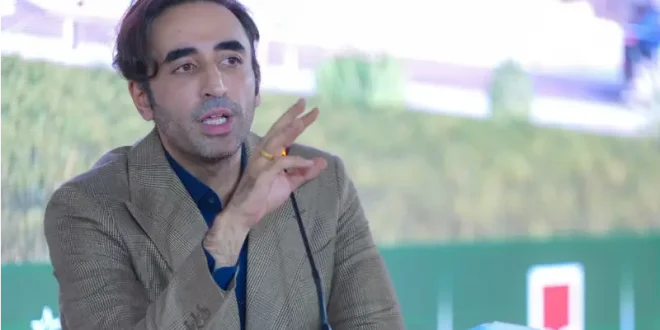
Speaking from Larkana, Bilawal Bhutto-Zardari urged the Pakistan Muslim League-Nawaz (PML-N)-led federal government to engage constructively with “all political and social stakeholders,” including provincial administrations. He specifically cautioned against the prevailing culture of “fighting everyone,” advocating instead for collaborative governance. The former foreign minister highlighted the severe “backbreaking burden” of global economic consequences stemming from geopolitical tensions in the Middle East, asserting that its impact on ordinary citizens is unprecedented and requires immediate, unified national attention.
His message extended to Pakistan’s internal political landscape, where he stressed that the coalition government’s focus must shift from “differences with each other” to addressing the mounting economic difficulties faced by the populace. Bilawal explicitly warned that continued internal strife, particularly with major opposition parties like Pakistan Tehreek-e-Insaf (PTI) and Jamiat Ulema-i-Islam-Fazl (JUI-F), alongside existing challenges from terrorism and regional disputes, would severely distract from the urgent task of economic stabilization and national progress.
Background: Pakistan at a Critical Juncture
Bilawal’s intervention comes at a deeply precarious time for Pakistan. Economically, the country has been navigating a protracted crisis marked by high inflation, currency depreciation, and significant external debt. The global landscape, particularly the heightened instability in the Middle East following the Israel-Hamas conflict and the related disruptions to maritime trade in the Red Sea, exacerbates these pre-existing vulnerabilities. While Bilawal’s specific mention of a “US-Israeli war on Iran” reflects the broader geopolitical anxieties and potential for regional escalation, it accurately captures the sentiment of profound uncertainty and its ripple effects on global energy prices, supply chains, and ultimately, consumer costs in import-dependent nations like Pakistan.
Domestically, the political environment remains highly charged and polarized. The current federal government is a diverse coalition, primarily led by PML-N with the PPP playing a significant role. However, its relationship with the largest opposition party, PTI, has been fraught with tension, particularly following the controversial general elections and ongoing allegations of rigging. Adding to this complexity are recent public spats between federal ministers and JUI-F chief Maulana Fazlur Rehman. Fazlur Rehman, a seasoned and influential political figure, has openly criticized the Centre for perceived slights, including being overlooked for the Khyber Pakhtunkhwa (KP) governorship and for alleged breaches of provincial rights and commitments, further straining inter-party relations.
A major point of contention highlighted by Bilawal is the imposition of emergency and governor’s rule in KP. This decision, taken on October 11 and subsequently endorsed by Parliament, was justified by the federal government citing the then-PTI-led provincial government’s “deliberate disengagement” from counter-terrorism efforts. PTI, in turn, has consistently viewed this as a politically motivated move to undermine its provincial mandate.
Impact on Pakistan: Economic Strain, Political Paralysis, and Security Threats
The convergence of these multifaceted factors creates a formidable challenge for Pakistan. Economically, global and regional instabilities translate directly into higher import bills, particularly for essential commodities like oil and gas. This strains the country’s already limited foreign exchange reserves and fuels inflationary pressures, directly impacting the common citizen by making daily life increasingly difficult and eroding purchasing power.
Politically, the ongoing infighting and chronic lack of consensus among major parties divert crucial governmental attention and resources away from urgent national issues. The constant bickering between the Centre and provincial stakeholders, and among political parties, undermines institutional stability and erodes public trust in democratic processes. Bilawal’s defense of the KP governor’s rule, while simultaneously advocating for dialogue with PTI on counter-terrorism, starkly reflects the deep divisions and differing priorities within the political establishment regarding national security.
From a security perspective, the resurgence of terrorism, particularly in Khyber Pakhtunkhwa, poses an existential threat. The region’s challenging proximity to Afghanistan and the intensified activities of groups like the Tehrik-i-Taliban Pakistan (TTP) have led to a significant increase in militant attacks. Bilawal’s assertion that the security situation has not been this dire since around 2007-2008, a period marked by intense militant activity, underscores the gravity of the challenge. A fragmented and combative political response only serves to empower extremist elements and further jeopardizes national security.
Analysis: A Pragmatic Path to Stability?
Bilawal Bhutto-Zardari’s impassioned plea for unity and dialogue represents a pragmatic assessment of Pakistan’s current predicament. By framing the discussion around the “backbreaking burden” on the common person, he attempts to shift the political discourse from personality clashes and petty grievances to substantive issues of national survival and public welfare. His emphasis on engaging “all political, social, and provincial stakeholders” suggests a recognition that no single party or institution can effectively tackle the nation’s complex, interlinked challenges in isolation.
His defense of the KP governor’s rule, while seemingly at odds with his call for democratic engagement, is notably qualified by an earnest invitation to PTI for dialogue on counter-terrorism. This suggests a nuanced position: acknowledging the severity of the security threat as a justification for extraordinary measures, while still upholding the principle of political reconciliation. However, the success of such an approach hinges critically on the willingness of all parties, especially PTI, to engage constructively, free from preconditions, and prioritize national security over political point-scoring.
The call for immediate action on electoral reforms through the proposed Parliamentary Committee on Electoral Reforms (PCER) is another critical component of Bilawal’s vision for stability. Given the pervasive allegations of rigging that have plagued recent elections and fueled widespread political unrest, transparently and inclusively addressing these grievances is paramount for restoring public faith in the democratic system. His direct challenge to PTI to participate “unconditionally” highlights the essential responsibility of the opposition in building a stronger, more accountable Parliament, rather than merely critiquing it from the sidelines.
In essence, Bilawal’s message is a three-pronged appeal: unify against external economic shocks, de-escalate internal political rivalries, and jointly confront national security threats. For Pakistan to effectively navigate its current “triple threat” – global economic fallout, domestic political paralysis, and a resurgent militant menace – a collective, non-partisan approach, as advocated by the PPP chairman, may be the only viable path towards achieving long-term stability, prosperity, and democratic resilience.
“`