Dost Pakistan Journeys Tours and safaris in the North & South Pakistsn
Related Articles
Pakistan’s Strategic Balancing Act in the Makkah Defence Alliance Amidst Middle East Flare-Up
In a volatile Middle Eastern security landscape, Pakistan is meticulously navigating its long-standing strategic alliance with Saudi Arabia. Recent pronouncements from Islamabad regarding its role in the Makkah Defence Alliance reveal a nuanced approach, balancing firm commitments to collective security with an evident caution against direct entanglement in a rapidly intensifying regional conflict.
The News: Pakistan’s Commitment to the Makkah Defence Alliance in Focus
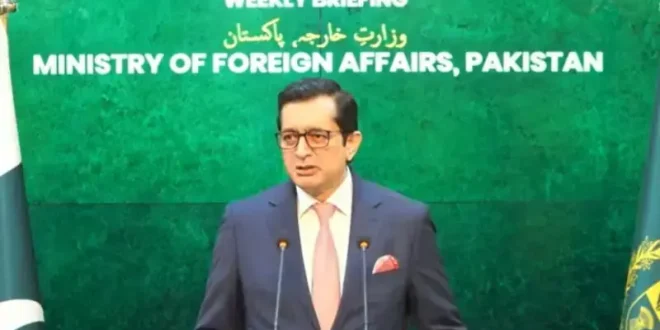
Foreign Office (FO) spokesperson Sajjad Haider Khan recently confirmed Pakistan’s significant military presence in Riyadh, stating that the nation already possesses a “substantial number of forces and resources” in the Saudi capital. These remarks came in response to inquiries about Pakistan’s “active support” for Saudi Arabia under the Makkah Defence Alliance, particularly amid escalating Houthi attacks from Yemen.
The spokesperson clarified that the tripartite Makkah Defence Alliance – comprising Pakistan, Saudi Arabia, and Turkiye, established on August 7 – operates on the principle of collective deterrence, treating an attack on one member as an attack on all. He reiterated the alliance’s joint statement affirming unity in safeguarding Saudi Arabia’s sovereignty and territorial integrity, and confirmed the decision to “contribute and mobilise resources rapidly.” However, Khan maintained that operational details, including how the situation would be handled, fell under the alliance’s purview to assess the threat perception.
This clarification follows a surge in tensions, with Yemen-based Houthis launching multiple attacks on King Khalid International Airport in Riyadh, resulting in fatalities and significant damage. These strikes have triggered retaliatory Saudi airstrikes on Houthi targets in Sanaa, amplifying a conflict the news reports suggest is part of a “wider regional conflagration triggered by the US and Israeli attack on Iran that started on February 28.”
Amidst this backdrop, Prime Minister Shehbaz Sharif condemned the Houthi attacks, reaffirming Pakistan’s commitment to Saudi Arabia’s “sovereignty, territorial integrity and security” through the Makkah Defence Alliance. Simultaneously, the Ministry of Information vehemently dismissed reports claiming Pakistani Air Force aircraft involvement or the deployment of 30,000-40,000 troops in Saudi Arabia as “fake and fabricated,” underscoring Pakistan’s careful management of public perception and its defined role. An emergency meeting of the alliance in Riyadh indeed saw members agree to the rapid deployment of military forces and capabilities, further solidifying the pact’s operational readiness, yet Defence Minister Khawaja Asif noted that while Pakistan and Turkiye have a “presence in theatre,” only Saudi troops were currently involved in combat operations.
Background: Unpacking the Makkah Defence Alliance and Regional Instability
The Makkah Defence Alliance represents a significant development in regional security architecture. Unlike broader Islamic coalitions, this tripartite pact focuses specifically on the immediate defence of Saudi Arabia. Its establishment underscores Saudi Arabia’s growing need for robust security assurances amidst persistent threats, particularly from the Iran-aligned Houthi rebels in Yemen. For Pakistan, joining this alliance reaffirms a decades-old security relationship with the Kingdom, which has historically included military training, advisory roles, and limited troop deployments. Turkiye’s inclusion adds another layer, reflecting Ankara’s own ambitions for greater regional influence and its complex relationship with both Saudi Arabia and other powers.
The escalating conflict in Yemen, now described as the “fiercest front in a wider regional conflagration,” provides crucial context. The civil war pits the internationally recognised Yemeni government, supported by a Saudi-led coalition, against the Houthi movement. The Houthis, backed by Iran, have demonstrated increasing sophistication in drone and missile technology, capable of striking deep into Saudi territory, threatening critical infrastructure and international shipping lanes. The explicit mention of the conflict’s connection to “the US and Israeli attack on Iran” suggests an interpretation of the Houthi escalation as a potential proxy response or an extension of broader geopolitical tensions simmering across the Middle East. This frames the Houthi attacks not merely as an isolated civil war spillover, but as an integral part of a region-wide confrontation, amplifying the stakes for all involved in the Makkah Defence Alliance.
Impact on Pakistan: Navigating a Tightrope Walk
Pakistan’s engagement in the Makkah Defence Alliance carries multi-faceted implications. Economically, strong ties with Saudi Arabia are vital, including significant remittances from Pakistani expatriates, direct investments, and crucial oil supplies. Alienating the Kingdom could have severe financial repercussions. Strategically, Pakistan has historically positioned itself as a key security partner for Saudi Arabia, contributing to military training and advisory roles. This alliance deepens that bond, potentially offering avenues for advanced defense cooperation and technology transfer.
However, the commitment also poses a delicate balancing act for Islamabad. Pakistan has a long-standing foreign policy of avoiding direct involvement in intra-Muslim conflicts, particularly those with sectarian undertones. Previous parliamentary resolutions have called for neutrality in the Yemen conflict. Being part of an alliance with a “collective defence” clause, amidst an actively escalating war, risks drawing Pakistan into a direct combat role, which could have significant domestic repercussions. Public opinion in Pakistan is often sensitive to military deployments abroad, especially in religiously charged conflicts, potentially leading to political backlash or even radicalization.
The swift denials by the Ministry of Information regarding claims of Pakistani military aircraft or large troop deployments highlight this domestic and international sensitivity. Islamabad is clearly keen to manage the narrative, reassuring its populace while still affirming its commitment to its strategic ally. This reflects a conscious effort to project solidarity and deterrence without implying an immediate, full-scale combat deployment that could complicate Pakistan’s broader foreign policy objectives and internal stability.
Analysis: Strategic Ambiguity and Regional Realities
Pakistan’s approach within the Makkah Defence Alliance can be characterized as one of strategic ambiguity, a carefully calibrated stance designed to fulfill alliance commitments while preserving national interests. The FO spokesperson’s statement about “substantial forces” already in Riyadh, coupled with the deferral of operational decisions to the alliance, allows Pakistan to project strength and commitment without specifying immediate, direct combat roles. The Defence Minister’s distinction between “presence in theatre” and direct combat operations further reinforces this nuanced position. This flexibility is crucial for Pakistan, enabling it to adapt to evolving threats and alliance mandates without being prematurely locked into a potentially costly or controversial engagement.
The “rapid deployment” agreement signals a tangible shift from purely rhetorical support to a more concrete readiness within the Makkah Defence Alliance. This suggests the alliance is evolving from a mere deterrent posture to one prepared for active response, necessitated by the increasing audacity and capability of Houthi attacks. For Saudi Arabia, the alliance represents a vital security blanket, diversifying its military partnerships beyond traditional Western allies. For Turkiye, participation aligns with its aspirations for greater influence in the Islamic world and its security interests in the wider Middle East.
The connection drawn between the Yemen conflict’s escalation and broader regional tensions involving the US, Israel, and Iran elevates the significance of the Makkah Defence Alliance. It places Pakistan’s involvement within a much larger geopolitical chessboard, where any misstep could have far-reaching consequences. Pakistan’s challenge is to contribute to regional stability and protect its ally without becoming a direct party to a proxy war that could destabilize its own security or alienate other regional players.
Beyond the Makkah Defence Alliance, Pakistan’s foreign policy is also tackling other significant challenges, as evidenced by the FO’s comments on the Moscow Format meeting regarding Afghanistan and the rejection of India’s new map. The Moscow Format discussions underscored Pakistan’s persistent concerns about terrorism emanating from Afghan soil, a critical security issue that impacts its western borders. Simultaneously, Pakistan’s firm rejection of India’s “cartographic aggression” over Jammu and Kashmir highlights its consistent stance on core territorial disputes. These diverse engagements illustrate Pakistan’s multifaceted diplomatic efforts to secure its interests across various strategic fronts, making its carefully managed role in the Makkah Defence Alliance a testament to its broader, intricate foreign policy calculus in a perpetually turbulent region.