Dost Pakistan Journeys Tours and safaris in the North & South Pakistsn
Related Articles
“`html
Pakistan Motorway Reopens: A Temporary Calm Amidst Political Storm
The News: Easing Traffic, Not Tensions
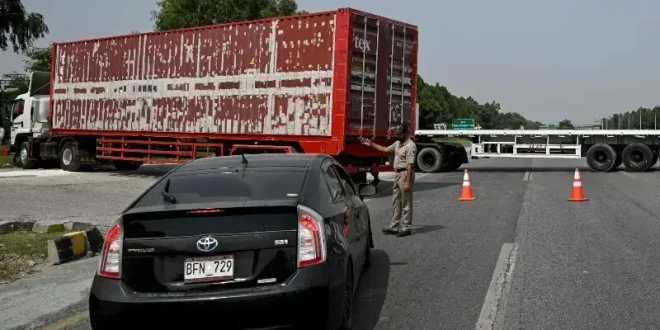
In a significant development for Pakistani commuters and businesses, the M-1 Motorway, connecting the capital Islamabad to Peshawar, has been fully reopened to traffic in both directions. This follows an “indefinite” closure that saw major arteries, including sections of the M-14 (Islamabad-Dera Ismail Khan Motorway) and the Grand Trunk Road (N-5), blocked last week. While restoration efforts continue on some parts of M-14, the general resumption of traffic flow offers a temporary sigh of relief across the region.
The closures were a direct governmental response to the planned “long march” by Pakistan Tehreek-e-Insaf (PTI), a major opposition party, initially slated for September 27th but now rescheduled to October 4th. This demonstration aims to press for the release of PTI founder and former Prime Minister Imran Khan, currently incarcerated in Adiala jail. The reopening of these vital transportation links, therefore, signals a tactical de-escalation of the situation, allowing for routine activity to resume as the nation braces for the delayed political showdown.
Background: A Nation Gripped by Political Turmoil
The recent closure and subsequent reopening of Pakistan’s motorways are symptoms of a deeper, pervasive political crisis that has gripped the nation for over a year. The period following the ouster of Imran Khan from power in April 2022 has been characterized by escalating tensions, mass protests, and a significant crackdown on dissent. Khan’s arrest on various charges, which he claims are politically motivated, has galvanized his supporters and intensified calls for his release and immediate general elections.
The government, in response, has consistently employed stringent measures to preempt and control PTI-led protests. These tactics are not new to Pakistan’s political landscape but have been particularly pronounced recently. The “indefinite” closure of key motorways, the strategic placement of containers and sandbags at critical junctures like Attock Khurd, and the intensification of security arrangements are classic state maneuvers designed to physically impede large-scale public gatherings heading towards the capital. Furthermore, the imposition of Section 144 – a colonial-era law prohibiting public assembly – across Punjab and Islamabad, alongside requests for mobile and internet service downgrades, underscores the administration’s resolve to maintain public order and curb the spread of protest-related information, even at the cost of civil liberties. The deployment of paramilitary Rangers in sensitive areas further highlights the state’s readiness to confront any perceived security threats from political demonstrations.
Impact on Pakistan: Beyond the Barricades
The ramifications of such widespread road closures and political instability extend far beyond the immediate inconvenience, touching various facets of Pakistani society and economy:
- Economic Disruption: Pakistan’s fragile economy, already grappling with inflation and debt, suffers immensely from such disruptions. Major motorways are the lifelines of trade, facilitating the movement of goods, agricultural produce, and raw materials. Closures lead to significant delays in supply chains, perishable goods spoiling, increased transportation costs, and a general slowdown in economic activity. Businesses, from small vendors to large industries, face losses, impacting livelihoods and investor confidence. The cumulative effect can exacerbate the country’s economic woes.
- Social Inconvenience and Fear: Daily life for millions of Pakistanis is severely affected. Commuters face long detours, delays, and increased fuel costs. Access to essential services, including healthcare and education, can be hindered. The pervasive presence of security forces, the constant threat of confrontation, and the uncertainty surrounding basic travel create an atmosphere of fear and anxiety, eroding public trust in the state’s ability to ensure normal functioning.
- Erosion of Democratic Norms: The government’s preemptive actions, including restrictions on freedom of movement, assembly, and expression (via internet shutdowns or Section 144), raise serious concerns about the health of democracy in Pakistan. While maintaining law and order is crucial, the disproportionate use of force or administrative blocks can be seen as stifling legitimate political dissent, thereby undermining fundamental rights enshrined in the constitution. This further polarizes the political landscape and fosters a sense of injustice among segments of the population.
Analysis: A Cycle of Confrontation and the Need for Dialogue
The reopening of the M-1 Motorway, while welcome, represents a pause, not a resolution, in Pakistan’s ongoing political saga. It suggests a tactical withdrawal by the authorities, possibly to alleviate public and economic pressure, or perhaps to reassess strategy ahead of the rescheduled PTI march. However, the core issues remain unaddressed: the fate of Imran Khan, the demand for early elections, and the deeply entrenched political polarization.
This event underscores a dangerous cycle in Pakistani politics where genuine grievances and political demands are often met with administrative crackdowns rather than constructive dialogue. Both the government and the opposition contribute to this cycle; the government by resorting to restrictive measures, and the opposition by often opting for confrontational street power. This approach only serves to deepen divisions, making consensus-building increasingly difficult.
For Pakistan to break free from this pattern, a fundamental shift towards political maturity and dialogue is imperative. The state must find a balance between maintaining order and safeguarding citizens’ constitutional rights to peaceful protest and assembly. Similarly, political parties, including the PTI, must explore avenues for negotiation and compromise, even while pursuing their political objectives. The current trajectory risks further destabilizing the nation, diverting focus from critical economic and social challenges, and potentially causing irreparable damage to democratic institutions.
As October 4th approaches, the temporary calm on the motorways serves as a stark reminder that true peace and stability in Pakistan will only come through political reconciliation, respect for constitutionalism, and a genuine commitment to democratic principles by all stakeholders.
“`