Dost Pakistan Journeys Tours and safaris in the North & South Pakistsn
Related Articles
“`html
Pakistan on Edge: Analyzing KP Police’s Emergency Preparedness Amidst Looming Unrest
An in-depth look at Khyber Pakhtunkhwa’s readiness for potential political upheaval.
The News: KP Police Brace for Unrest
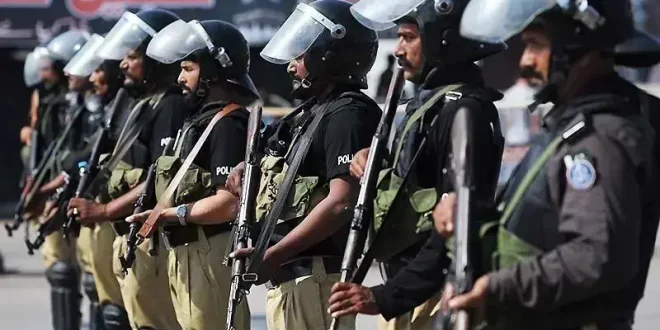
In a significant move reflecting heightened political tensions, Khyber Pakhtunkhwa (KP) Inspector General of Police (IGP) Zulfiqar Hameed has issued a province-wide alert, directing district police to prepare for potential violent protests and acts of sabotage. The alert comes amid fears of the federal government imposing an emergency in the province. The IGP’s directive, released via an official notification, outlines comprehensive guidelines for managing demonstrations, with a strong emphasis on maintaining order while exercising caution in the use of force.
Key instructions include the deployment of anti-riot squads, unarmed personnel for identifying troublemakers, and plainclothes officers to pinpoint saboteurs. The directive specifies legal frameworks under the KP Police Act, 2017, for regulating assemblies, declaring them unlawful if conditions are violated, and using force as a last resort. Crucially, it mandates a graduated approach to force, starting with warnings and negotiations, before escalating to tear gas, rubber bullets, batons, and, in extreme cases, aerial firing. Protection of vulnerable locations like government buildings, police stations, and major highways is also prioritized, alongside a requirement for video recording all protests and extensive coordination with other law enforcement agencies and district administration.
Background: A Nation on the Brink?
The IGP’s alert is not an isolated event but a stark indicator of Pakistan’s deeply volatile political landscape. For years, the country has grappled with persistent political instability, marked by frequent changes in government, deep-seated rivalries between major political parties, and a struggling economy. Khyber Pakhtunkhwa, a strategically vital province bordering Afghanistan, has often been at the heart of these political currents, frequently serving as a stronghold for opposition movements and a site of contestation between provincial and federal authorities.
The mention of a potential “federal emergency” casts a long shadow, evoking memories of Pakistan’s past periods of direct federal intervention in provincial affairs or broader martial law, which often curtailed civil liberties and deepened public resentment. Such a move would typically be justified by a breakdown of constitutional machinery or a severe threat to national security, but is frequently perceived by critics as a tool for political maneuvering. The current climate is further charged by ongoing economic woes, high inflation, and a polarized media environment, all of which contribute to public frustration and a greater propensity for street protests. The guidelines issued by the KP police can be seen as a direct response to this simmering discontent, aiming to preemptively manage potential widespread civil unrest that could erupt if political tensions boil over into a direct confrontation between the federal government and elements within the province.
Impact on Pakistan: Navigating a Precarious Path
The implications of this heightened alert and the prospect of a federal emergency are profound for Pakistan’s already fragile stability:
- Exacerbated Political Instability: An emergency declaration, especially against a provincial government, would severely strain federal-provincial relations, potentially triggering a constitutional crisis and further polarizing the political landscape. This could ignite nationwide protests, not just in KP, by various political factions.
- Economic Uncertainty: Political turmoil is a major deterrent for both local and foreign investment. Heightened instability, protests, and the specter of an emergency would undoubtedly worsen Pakistan’s already challenging economic situation, impacting currency value, market confidence, and crucial international aid negotiations.
- Human Rights and Civil Liberties: While the IGP’s directive emphasizes caution and a graduated use of force, the very context of an impending emergency and the deployment of armed personnel raise significant concerns about civil liberties. The line between managing legitimate protest and suppressing dissent can become blurred under such circumstances, potentially leading to accusations of human rights violations if force is misapplied.
- Public Trust in Institutions: The manner in which the police and other law enforcement agencies handle potential protests will significantly impact public trust. Adherence to legal guidelines and restraint can bolster confidence, while excessive force or perceived political bias could erode it further, making future governance more challenging.
- Rule of Law: The explicit referencing of the KP Police Act, 2017, and the Pakistan Penal Code suggests an intent to operate within legal bounds. However, the application of these laws in a high-pressure, politically charged environment will be closely scrutinized, testing the resilience of Pakistan’s legal and judicial systems.
Analysis: A Measured Response in an Unstable Environment?
The KP IGP’s notification presents a nuanced strategy, attempting to walk a tightrope between maintaining law and order and adhering to principles of minimal force. On one hand, the detailed guidelines, stressing negotiations, graduated force, and accountability measures like video recording, suggest a professional and measured approach to crowd control. This could be seen as an effort to prevent the kind of uncontrolled escalation that has sometimes characterized protest management in Pakistan’s past, leading to casualties and widespread condemnation.
The emphasis on identifying “miscreants” and “anti-state elements” also reflects a common narrative used by authorities to differentiate between legitimate protesters and those intending to incite violence or engage in sabotage. However, this distinction can be a double-edged sword, as it can also be used to discredit or suppress peaceful dissent under the guise of national security. The delegation of authority to the “senior-most officer” on the scene to determine the type and extent of force is crucial, centralizing decision-making but also placing immense responsibility on individuals operating under extreme pressure.
From a political optics perspective, the alert itself sends a strong message. It signals that the provincial administration is aware of the potential for severe unrest and is preparing for it, possibly to assert its preparedness or to deter federal overreach. The explicit mention of a federal emergency, coming from a provincial police chief, highlights the deep mistrust and tension between different tiers of government in Pakistan. This proactive stance, while potentially averting chaos, simultaneously underscores the fragile state of democracy and the constant threat of extra-constitutional measures.
In essence, while the guidelines offer a framework for disciplined law enforcement, their true effectiveness and impact will depend entirely on their implementation. In a nation where political divides run deep and the stakes are incredibly high, the exercise of these powers during a period of intense public anger or federal-provincial confrontation will be a definitive test of Pakistan’s institutions and its commitment to democratic norms. The balance between state security and citizens’ right to protest remains a critical challenge, and KP’s preparedness for the “looming” emergency reflects this ongoing struggle.
“`