Dost Pakistan Journeys Tours and safaris in the North & South Pakistsn
Related Articles
“`html
Pakistan’s Political Fault Lines: Maryam Nawaz’s Salvo and the Deepening Coalition Rift
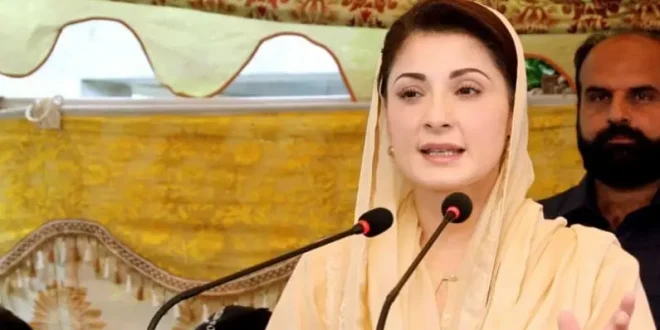
In a significant escalation of political rhetoric, Punjab Chief Minister Maryam Nawaz has launched a scathing attack on both the coalition partner Pakistan Peoples Party (PPP) and the primary opposition, Pakistan Tehreek-i-Insaf (PTI). Her remarks, delivered during the inauguration of a cardiac transplant centre, highlight the growing internal tensions within Pakistan’s ruling alliance and the persistent shadow of electoral controversy.
The Latest Salvo: Defining the Divide
Chief Minister Maryam Nawaz, a prominent figure in the Pakistan Muslim League-Nawaz (PML-N), explicitly drew battle lines, accusing the PPP of being “involved in corruption” and the PTI of fostering “anarchy.” This direct indictment marks a hardening of PML-N’s stance, particularly against the PPP, which despite being a federal ally, has increasingly critiqued the PML-N-led governments over their mandate and alleged electoral irregularities, notably concerning the ‘Form-47’ issue in Azad Kashmir elections. Maryam’s statement wasn’t just a critique; it was a warning, asserting her government’s commitment to public service and rejecting what she perceives as politically motivated attacks on its performance.
The timing of her remarks, made at a development project inauguration, seems strategically chosen to juxtapose PML-N’s focus on governance and progress against the perceived negativism and obstructionism of its political rivals. This confrontation signals a shift from the subtle digs exchanged by cabinet members to a direct challenge from the provincial chief executive herself.
Background: An Uneasy Alliance Under Scrutiny
To understand the depth of this political friction, one must consider the landscape established by the February 8, 2024 general elections. The outcome saw the formation of a coalition government at the federal level, with PML-N leading and PPP providing crucial support. However, this alliance was born amidst widespread allegations of electoral manipulation, particularly surrounding the mysterious delays in results and the infamous ‘Form-47’ controversy, which suggested a discrepancy between initial tallies and final outcomes. This narrative, vociferously propagated by the PTI, has been adopted by other parties, including the PPP, to question the legitimacy of the PML-N’s mandate.
The PML-N and PPP, while historical rivals, found common ground in forming a government, largely to prevent PTI from returning to power. Yet, their alliance has always been one of convenience, not ideological alignment. At the provincial level, especially in Punjab and Sindh, they remain fierce competitors. The PPP, dominant in Sindh, seeks to expand its footprint and appeal nationally, necessitating a critical distance from the PML-N to maintain its unique political identity and appeal to its own voter base. The recent Azad Kashmir elections, where Form-47 allegations resurfaced, provided a fresh opportunity for the PPP to echo the “fake mandate” narrative, directly challenging PML-N’s legitimacy.
PML-N, on the other hand, is striving to solidify its mandate through visible development projects and governance, attempting to shift the public discourse away from the election controversy. However, the constant barrage of “Form-47” allegations from both the PPP and PTI makes this an uphill battle, forcing PML-N to defend its legitimacy even as it tries to govern.
Impact on Pakistan: Stability, Economy, and Democracy
The escalating rhetoric between key political players, particularly within the ruling coalition, carries significant implications for Pakistan:
- Government Stability: While a complete collapse of the federal coalition might not be imminent, these public spats create an environment of instability. It diverts focus from crucial policy-making to political infighting, potentially paralyzing governance at a critical juncture for the nation.
- Economic Repercussions: Political uncertainty is a major deterrent for both domestic and foreign investment. As Pakistan navigates complex economic challenges, including securing further IMF support, such public displays of discord can erode confidence in the government’s ability to provide a stable policy environment.
- Erosion of Public Trust: When ruling partners openly accuse each other of corruption and question electoral legitimacy, it deeply erodes public trust in democratic institutions, electoral processes, and the political class as a whole. This can further disengage citizens from the political process.
- Deepening Polarization: The already polarized political landscape risks becoming even more fragmented. Consensus-building on national issues becomes exceedingly difficult when parties are locked in continuous verbal warfare, prioritizing political point-scoring over national interest.
- Challenges to Democratic Health: The persistent “Form-47” narrative, whether true or perceived, undermines the very foundation of parliamentary democracy by casting doubt on the sanctity of the electoral process. This makes it challenging for any government to claim a strong mandate and govern effectively.
Analysis: A Strategic Standoff with Far-Reaching Consequences
Maryam Nawaz’s recent “salvo” appears to be a calculated move by the PML-N to reassert its political narrative and define its position amidst the ongoing challenges. By directly accusing the PPP of corruption and PTI of anarchy, PML-N aims to paint itself as the sole party committed to “public service” and “development.” This strategy is crucial for Maryam Nawaz as she seeks to establish her leadership credentials and legitimize her government in Punjab, especially given the persistent questions surrounding its mandate.
The PPP, on the other hand, finds itself performing a delicate balancing act. It needs to remain part of the federal coalition for strategic reasons – to maintain political influence and potentially prevent a more hostile government – while simultaneously demonstrating its independence and critical stance to its own voters. Critiquing PML-N, especially on the ‘Form-47’ issue, allows PPP to resonate with public grievances and position itself as a credible opposition-within-the-government, protecting its political space for future elections.
The ‘Form-47’ controversy remains the elephant in the room, a persistent delegitimizing factor for the current government. Until this narrative is addressed decisively, either through robust judicial review or a demonstrable commitment to electoral reform, it will continue to fuel political instability and be a potent weapon for the opposition. PML-N’s challenge is not just to perform but to convince the public of the legitimacy of its power.
Looking ahead, this escalating rhetoric suggests that while the federal alliance may hold out of necessity, the provincial rivalries, particularly between PML-N and PPP in Punjab and Sindh, will only intensify. This dynamic sets the stage for a highly charged political environment, potentially leading to a more fractured political landscape in the run-up to the next general elections. The focus on political attacks rather than collaborative governance could ultimately hinder Pakistan’s progress and further strain its democratic institutions.
“`