Dost Pakistan Journeys Tours and safaris in the North & South Pakistsn
Related Articles


“`html
PML-N’s AJK Development Push: Political Strategy or Genuine Progress?
Analyzing the ruling party’s ambitious 100-day plan for Azad Jammu and Kashmir amidst national political and economic challenges.
The News: A Renewed Focus on AJK
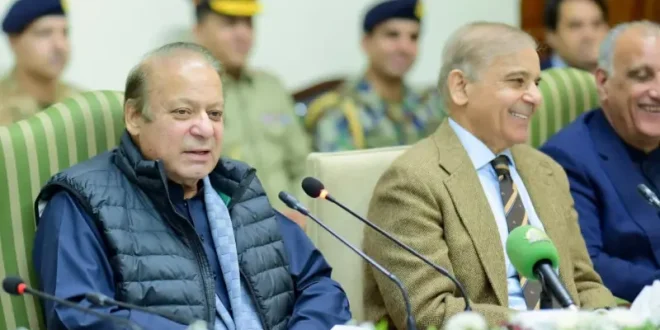
Recent high-level deliberations by the Pakistan Muslim League-Nawaz (PML-N) leadership, including supremo Nawaz Sharif, Prime Minister Shehbaz Sharif, and Punjab Chief Minister Maryam Nawaz, have placed Azad Jammu and Kashmir (AJK) firmly at the forefront of the party’s agenda. Convening with AJK’s President and Premier (both affiliated with PML-N), the meetings centered on a comprehensive 100-day development program for the region. Nawaz Sharif notably lauded the “seriousness” and “enthusiasm” within the party’s ranks for AJK’s uplift, drawing a stark contrast with past administrations he characterized as negligent.
The discussions highlighted a range of proposed initiatives: critical infrastructure projects such as the long-envisioned Muzaffarabad-Mirpur motorway, the expansion of green bus services, establishment of “clinics on wheels,” provision of laptops, creation of Daanish schools, and skills development programs. Both the federal and Punjab governments publicly affirmed their commitment to providing the necessary financial and logistical backing. The emphasis extended beyond mere project announcements, with Maryam Nawaz notably advocating for robust monitoring mechanisms, essential law and order reforms, and ensuring public accessibility for the AJK administration.
A tangible outcome of this renewed focus was the inauguration of the reconstructed Rathoa Haryam Bridge, symbolizing the immediate steps being taken to improve regional connectivity and economic activities.
Background: Political Context and Historical Echoes
The PML-N’s intensified engagement with AJK’s developmental trajectory is deeply rooted in recent political events and historical precedents. The party secured an electoral victory in AJK in August, a campaign actively spearheaded by Nawaz Sharif, who had made significant commitments for regional advancement and improved governance. His earlier pledge to routinely monitor progress in AJK underscores a strategic intent to maintain influence and ensure accountability post-election.
AJK has historically been a crucial territory for Pakistani political entities to demonstrate their dedication to the broader Kashmir cause and to regional prosperity. While development promises have been a recurring theme, their consistent implementation has often been challenging. Nawaz Sharif’s detailed recounting of his previous premierships – citing periods of robust economic growth (7.5% GDP), minimal inflation, a stable rupee, and substantial foreign exchange reserves, alongside infrastructure milestones like the Gwadar-Quetta highway, Gilgit-Skardu motorway, and the completion of the Lowari Tunnel – serves to construct a narrative of effective, development-centric governance under PML-N leadership. This self-appraisal is strategically juxtaposed with direct criticisms of the Pakistan Tehreek-e-Insaf (PTI) government, particularly concerning economic management during its tenure and its reliance on IMF programs, which Nawaz argued caused a significant decline in national prosperity.
The renewed prioritization of projects like the Muzaffarabad-Mirpur motorway, initially conceived during Nawaz’s earlier tenures but never realized, acts as a potent symbol of addressing long-standing regional aspirations and a fresh opportunity for the current administration to fulfill past commitments.
Impact on Pakistan: Beyond AJK’s Borders
The PML-N’s demonstrably proactive approach to AJK’s development carries significant implications for Pakistan’s national political landscape, its economic stability, and its broader foreign policy objectives:
- Strengthening the Political Narrative: By showcasing tangible progress and effective governance in AJK, the PML-N aims to bolster its image as a competent, development-focused party nationwide. This narrative is crucial for consolidating public support, particularly in the face of ongoing economic challenges and intense political opposition.
- Economic Stimulation and National Growth: Successful execution of AJK’s development blueprint, especially its infrastructure components, promises to catalyze local economies, generate employment opportunities, and potentially attract further investment. This localized economic uplift, if sustained, will contribute positively to Pakistan’s overarching national economic recovery and stabilization efforts.
- Enhanced Regional Connectivity: Key projects like the Muzaffarabad-Mirpur motorway are not merely internal AJK improvements. They are vital for enhancing regional connectivity, potentially streamlining the movement of goods and people within Pakistan and its bordering territories, thereby fostering greater economic integration and trade.
- Kashmir Solidarity and Diplomatic Leverage: Pakistan’s steadfast political and moral support for the people of Indian-Occupied Kashmir is a cornerstone of its foreign policy. Demonstrating robust development, stability, and good governance in AJK sends a powerful message of commitment and capability, aiming to bolster Pakistan’s moral and diplomatic standing on the Kashmir issue globally. Prime Minister Shehbaz Sharif’s poignant tribute to the “martyrs of occupied Kashmir” reinforces this core national objective.
- Fostering Inter-Provincial Cooperation: The prominent involvement and commitment from Punjab Chief Minister Maryam Nawaz signify a robust model of inter-provincial collaboration between Punjab and AJK. This collaborative framework, if effectively replicated, could establish a precedent for future federal-provincial partnerships on crucial development initiatives across various regions of Pakistan.
Analysis: Political Pragmatism Meets Developmental Ambition
The PML-N’s highly visible and renewed emphasis on AJK’s development is a multifaceted strategy, skillfully intertwining genuine developmental aspirations with astute political pragmatism.
1. Political Consolidation and Image Reinforcement:
Having recently secured political power in AJK, the PML-N is acutely focused on consolidating its gains and delivering immediate, tangible results of its governance. The “100-day plan” provides a clear, measurable framework for demonstrating early successes. Nawaz Sharif’s direct participation and endorsements, complemented by the active roles of Shehbaz Sharif and Maryam Nawaz, project an image of a cohesive and results-oriented party leadership dedicated to AJK’s welfare. This also serves as a broader message to the national electorate, contrasting their perceived competence with the alleged failures of previous administrations.
Nawaz Sharif’s detailed recounting of past economic successes and infrastructure achievements during his premiership is more than just nostalgic; it’s a deliberate effort to rebuild public trust and confidence in the PML-N’s economic stewardship, particularly relevant during a period of national economic uncertainty. The direct criticisms leveled at PTI’s performance, especially concerning economic policies and handling of IMF programs, represent a calculated attempt to delineate a clear ideological and performance-based difference between the two dominant political forces.
2. Strategic Development for Socio-Economic Uplift:
Beyond political considerations, the proposed projects – spanning improved transport (green buses, motorway), healthcare (clinics on wheels), education (Daanish schools, scholarships), and skill development – directly address the fundamental needs of AJK’s populace. If implemented with the efficacy and stringent monitoring advocated by Maryam Nawaz, these initiatives have the potential to significantly enhance the quality of life, stimulate local economies, and empower youth. The focus on tourism and urban beautification also indicates a strategic vision to leverage AJK’s natural assets for sustainable economic growth.
The emphasis on “accessibility” and consistent public engagement, as advised by CM Maryam Nawaz, reflects an understanding that mere project delivery is insufficient; fostering public trust and ensuring governance is perceived as responsive are equally critical for long-term sustainability and public approval.
3. The “Kashmir Card” and National Narrative:
While the immediate focus is on AJK’s internal development, the broader geopolitical context of Kashmir remains a constant backdrop. Significant investment in AJK’s prosperity and stability subtly reinforces Pakistan’s principled stance on the Kashmir dispute. A developed and well-governed AJK strengthens Pakistan’s narrative against India’s claims on the region and potentially serves as a model of “self-determination” in the eyes of the international community. The tributes paid to “martyrs of occupied Kashmir” explicitly connect the developmental efforts to this overarching national and foreign policy objective.
The critical challenge, however, lies in translating these ambitious plans into tangible realities. Pakistan’s history of large-scale infrastructure projects is often marked by delays, cost overruns, and instances where political expediency overshadows sustainable development. Effective financial management, transparent procurement processes, and a consistent political will, regardless of future electoral shifts, will be paramount to the successful realization of the PML-N’s development vision for AJK. The “seriousness” and “enthusiasm” noted by Nawaz Sharif must manifest beyond rhetoric and translate into concrete, sustained action to genuinely transform AJK and uphold the trust placed in the ruling party.
“`