Dost Pakistan Journeys Tours and safaris in the North & South Pakistsn
Related Articles

UNSC Renews Yemen Sanctions: Pakistan’s Stance Amidst Escalating Houthi Attacks on Saudi Arabia
The Latest: UN Sanctions Renewed as Houthi Attacks Persist
In a significant move to address the protracted Yemen conflict, the United Nations Security Council (UNSC) recently adopted a resolution to renew targeted sanctions against individuals and entities undermining peace and stability. Crucially, the resolution specifically aims to curb the Houthi movement’s ability to acquire and manufacture drones and missiles, condemning their ongoing military escalation within Yemen and relentless cross-border attacks against Saudi Arabia.
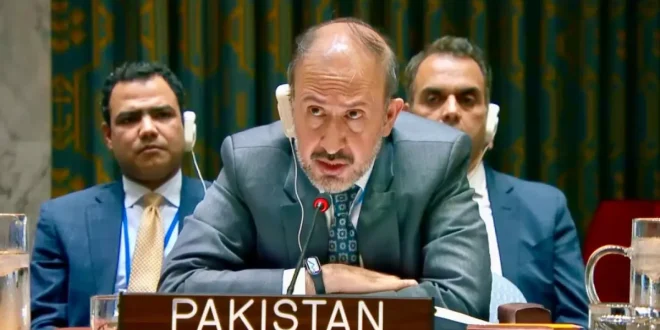
Pakistan, through its Permanent Representative to the UN Ambassador Syed Haider Shah, voiced strong support for the resolution, condemning “in the strongest terms” the Houthi attacks on the Kingdom of Saudi Arabia. Ambassador Shah reaffirmed Pakistan’s “unwavering solidarity” with Riyadh, asserting its “resolute support” for Saudi Arabia’s sovereignty, territorial integrity, security, and its legitimate right to self-defense. Pakistan called for an “immediate and unconditional cessation” of these reprehensible actions.
The UNSC resolution extends asset freezes and travel bans on designated individuals until November 2027 and renews the mandate of the Panel of Experts monitoring these sanctions. It also introduces measures to prevent the Houthis from acquiring dual-use components and chemicals for their weapons production, tasks the expert panel with examining Houthi revenues, and reaffirms that arbitrary detentions of UN and humanitarian personnel could lead to further sanctions – a point underscored by the recent death of a UN employee in Houthi custody.
Despite eventual consensus, negotiations for the resolution exposed divisions. Efforts by Britain and Bahrain, backed by the United States, to reinstate language labeling the Houthis as a “terrorist group” were dropped due to objections from Russia and China, who cited concerns about hindering political negotiations. Yemen’s Ambassador to the UN, Abdullah Al-Saadi, expressed regret over the softened language, arguing it failed to hold the group’s supporters fully accountable.
This diplomatic action comes amidst a renewed surge in hostilities, with the Houthis launching ballistic missiles and drones at Saudi airports, ports, and oil installations. This escalation reignites fears for the stability of the strategic Bab el-Mandeb Strait, a critical global shipping route connecting the Red Sea and the Gulf of Aden.
Background: A Decade of Conflict and Regional Geopolitics
The Yemen conflict, now approaching its tenth year, is widely regarded as one of the world’s worst humanitarian crises. It fundamentally began in 2014 when the Houthis, an Iran-aligned Zaidi Shia group, seized the capital Sanaa, prompting the internationally recognized government to flee. In response, a Saudi-led coalition intervened militarily in March 2015, aiming to restore the legitimate government and counter what Riyadh perceives as Iranian expansionism in its backyard.
The conflict has since devolved into a complex proxy war, drawing in regional powers with differing agendas. The Houthis, despite facing overwhelming military might from the Saudi-led coalition and a stringent arms embargo (reaffirmed by the 2015 Resolution 2216), have demonstrated remarkable resilience. UN monitors have consistently reported on the Houthis’ increasing capability to manufacture weapons locally, leveraging commercially available components and precursor chemicals, thereby reducing their reliance on external supplies – a key challenge the latest UNSC resolution attempts to address.
A UN-brokered truce in 2022 offered a glimmer of hope, significantly reducing hostilities for several months. However, negotiations for a permanent ceasefire ultimately stalled, leading to the current resurgence of fighting. The Houthi strategy of launching missile and drone attacks deep into Saudi territory serves multiple purposes: it aims to exert pressure on Riyadh, demonstrate their military reach, and potentially force concessions at the negotiating table. These attacks not only threaten Saudi infrastructure and lives but also jeopardize global energy supplies and maritime security in the vital Bab el-Mandeb Strait.
The diplomatic wrangling within the UNSC, particularly over the “terrorist group” designation, underscores the broader geopolitical fissures influencing the conflict. Western powers, along with regional allies like Bahrain and Saudi Arabia, advocate for a tougher stance, viewing the Houthis as an aggressive, destabilizing force backed by Iran. Conversely, Russia and China often prioritize the potential impact of such designations on political negotiations and humanitarian aid access, reflecting their broader strategic interests and cautious approach to unilateral labeling of non-state actors.
Impact on Pakistan: Strategic Alliances and Regional Stability
Pakistan’s unequivocal condemnation of Houthi attacks and its strong reaffirmation of solidarity with Saudi Arabia are deeply rooted in historical, religious, and strategic alliances. Saudi Arabia is a vital ally for Pakistan, a key source of oil, and host to millions of Pakistani expatriates whose remittances are crucial for Pakistan’s economy. The stability and security of the Kingdom are therefore paramount to Pakistan’s own national interests.
As a responsible member of the international community and a frequent participant in UN peacekeeping missions, Pakistan consistently advocates for adherence to international law and the principles of national sovereignty and territorial integrity. Its stance at the UNSC aligns perfectly with its long-standing foreign policy of supporting Gulf security and upholding the legitimate defense rights of sovereign states.
However, Pakistan’s position is also nuanced. While backing stronger international action against the Houthis, Ambassador Shah simultaneously emphasized the necessity of a political settlement that respects Yemen’s sovereignty, independence, unity, and territorial integrity. This dual approach reflects Pakistan’s understanding that military solutions alone are often insufficient to resolve complex conflicts. Its call for an “inclusive political process that is Yemeni-owned and Yemeni-led under UN leadership” underscores a belief in multilateralism and a sustainable, internally-driven peace process, rather than imposed solutions.
Maintaining a delicate balance, Pakistan’s involvement also highlights its role as a mediating influence in a volatile region. By appreciating Britain’s constructive role while also stressing impartiality and professionalism for the Panel of Experts, Pakistan projects an image of a principled actor dedicated to strengthening the credibility and effectiveness of UN mechanisms. Instability in the Middle East directly impacts Pakistan’s energy security and economic prosperity, making its active diplomatic engagement in resolving conflicts like Yemen’s a matter of direct national concern.
Analysis: The Evolving Dynamics of Sanctions and Conflict Resolution
The renewed UNSC resolution on Yemen underscores the international community’s ongoing struggle to manage a deeply entrenched conflict with complex regional and global ramifications. While sanctions are a critical tool, their effectiveness against resilient non-state actors like the Houthis remains a perennial challenge. The Houthis’ demonstrated capability for local weapon manufacturing and control over significant economic sectors in Yemen suggest a high degree of self-sufficiency, potentially blunting the impact of external pressure.
The diplomatic divisions within the Security Council regarding the “terrorist group” designation reflect a deeper philosophical split on how to approach such conflicts. While some argue that a tougher stance is necessary to delegitimize and isolate groups like the Houthis, others caution that such labels can impede humanitarian access, complicate future political negotiations, and inadvertently strengthen hardliners. This internal UN dynamic often leads to resolutions that are compromises, strong enough to signal condemnation but flexible enough to maintain channels for dialogue.
Pakistan’s articulated position offers a pragmatic perspective on this dilemma. Its call for accountability for those threatening peace, alongside a robust demand for a Yemeni-owned, Yemeni-led political process, represents a balanced strategy. It recognizes that while coercive measures may be necessary to de-escalate immediate threats, a lasting solution must be political, inclusive, and emerge from within Yemen itself. The emphasis on professionalism and impartiality for the Panel of Experts is also crucial, as the credibility of monitoring bodies directly impacts the legitimacy and enforcement of sanctions.
The escalating attacks on Saudi Arabia and the threat to the Bab el-Mandeb Strait highlight the urgent need for renewed diplomatic efforts. The Red Sea is a global artery, and any significant disruption there would have far-reaching economic consequences. Therefore, de-escalation in Yemen is not merely a regional concern but a global imperative. The latest UNSC resolution, while a step, is likely insufficient on its own to alter the Houthis’ trajectory. It must be complemented by sustained, intensive diplomatic engagement from all stakeholders to steer the conflict towards a comprehensive and equitable political settlement, alleviating the immense humanitarian suffering that continues unabated.