Dost Pakistan Journeys Tours and safaris in the North & South Pakistsn
Related Articles
“`html
Pakistan’s Dual Challenge: Economic Stability vs. Political Turmoil in KP
The Latest Developments
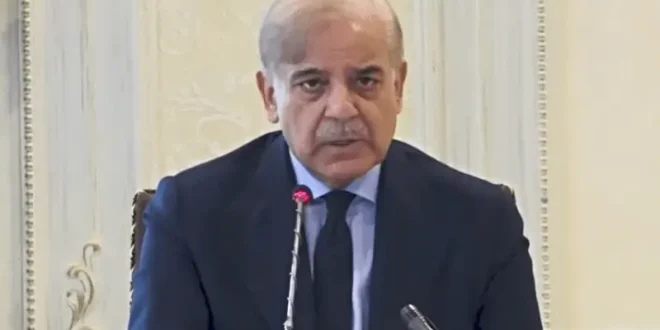
Prime Minister Shehbaz Sharif recently convened an urgent federal cabinet meeting on a Sunday – an unusual occurrence underscoring the gravity of the agenda. During the session, the Prime Minister highlighted positive developments on the economic front, specifically the progress made in securing a crucial staff-level agreement with the International Monetary Fund (IMF), expressing optimism about unlocking a $1.2 billion tranche. He also praised the collaborative efforts of both political and military leadership in steering Pakistan towards fiscal discipline.
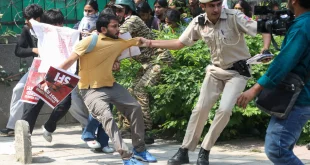
However, the cabinet’s primary focus quickly shifted to the escalating political and security crisis in Khyber Pakhtunkhwa (KP). Amidst heightened tensions between the federal coalition government and the PTI-led provincial administration, discussions reportedly centered on potentially invoking constitutional provisions for a state of emergency or governor’s rule in KP. This consideration follows persistent disagreements over counterterrorism policy and a recent protest march by PTI, which the federal government had cautioned against, citing pressing security challenges in the province.
Underlying Tensions and Context
The current situation in Pakistan is a complex tapestry woven from economic fragility, deep-seated political rivalries, and a resurgence of security threats. The IMF agreement, a beacon of hope for Pakistan’s beleaguered economy, is critical for shoring up foreign exchange reserves and preventing a sovereign default. The journey to this agreement has been arduous, marked by strict fiscal reforms and tough negotiations, making the government’s efforts to secure the tranche a significant achievement.
Simultaneously, the country grapples with intense political polarization. The Pakistan Tehreek-e-Insaf (PTI), led by former Prime Minister Imran Khan, has been locked in a bitter struggle with the current ruling coalition since Khan’s ouster from power. This animosity has spilled over into inter-provincial relations, particularly concerning KP, where PTI holds a dominant position. A core contention revolves around counterterrorism efforts. KP, bordering Afghanistan, has seen a worrying resurgence of militancy, largely attributed to the Tehrik-i-Taliban Pakistan (TTP) following the Taliban’s takeover in Afghanistan. The federal government criticizes KP’s handling of the security situation and its perceived leniency towards dialogue with the Afghan Taliban, while PTI argues it is being sidelined in crucial security decisions and calls for a revised national counterterrorism strategy.
The discussion around Articles 232 (proclamation of emergency) and 234 (governor’s rule due to failure of constitutional machinery) signals a potential constitutional crisis. These provisions are powerful tools, intended for extreme circumstances, allowing the federal government to assume direct control over a province. Their contemplation highlights the perceived breakdown of trust and effective governance between Islamabad and Peshawar.
Potential Ramifications for Pakistan
The decisions made in the coming days will have profound implications for Pakistan’s future stability. Economically, while the IMF deal offers a temporary reprieve, persistent political instability could undermine investor confidence and the long-term effectiveness of economic reforms. Global financial institutions look for political certainty, and a deepening crisis could deter crucial foreign direct investment.
Politically, imposing governor’s rule or an emergency in KP would undoubtedly escalate tensions, potentially triggering widespread protests and further entrenching the current political deadlock. It would be viewed by many, especially PTI supporters, as an authoritarian move, further polarizing an already fractured society. Such a move also risks undermining the principles of federalism, where provinces are meant to have significant autonomy, leading to questions about the health of Pakistan’s democratic institutions.
From a security perspective, while the federal government might believe direct control would enhance counterterrorism efforts, it could also alienate the local population and provincial administration, potentially complicating intelligence gathering and on-the-ground operations. A cohesive national strategy, ideally with provincial buy-in, is critical to effectively combatting the militant threat that endangers both national and regional stability.
Navigating the Dual Challenge
Prime Minister Shehbaz Sharif’s cabinet meeting perfectly encapsulates the dual, often conflicting, challenges facing Pakistan today: the imperative of economic stabilization and the quagmire of political instability. On one hand, the government celebrates a crucial step towards economic recovery, acknowledging the collaborative efforts of various state institutions. This signals a concerted attempt to project stability and capability on the economic front.
On the other hand, the contemplation of constitutional extraordinary measures in KP reveals a deeply fractured political landscape. The federal government’s concerns about KP’s security management and its independent foreign policy stance (particularly concerning the Afghan Taliban) appear to have reached a tipping point. However, the move to potentially bypass an elected provincial government, even with constitutional backing, carries significant political risk. It can be interpreted as a heavy-handed tactic aimed at politically neutralizing PTI, rather than a purely administrative necessity. The reference to a “cocktail of articles” suggests a comprehensive approach to assert federal authority, but it raises questions about the spirit of constitutionalism and provincial autonomy.
Ultimately, Pakistan finds itself at a critical juncture. The path forward requires not just economic prudence but also political sagacity. A durable solution to the security challenges in KP, and indeed across Pakistan, demands national consensus and genuine collaboration between the Centre and provinces, irrespective of political affiliations. Relying solely on constitutional provisions to override political differences, without sincere dialogue and compromise, risks further destabilizing the fragile democratic order and diverting attention from the urgent need for economic recovery and internal security. The balance between maintaining national unity, ensuring security, and upholding democratic principles will define Pakistan’s trajectory in the coming months.
“`