 Dost Pakistan Journeys Tours and safaris in the North & South Pakistsn
Related Articles
Disclaimer: This article provides an independent analysis based on available news reports and does not endorse any political party or viewpoint.
Pakistan’s Political Chess Match: Decoding PTI’s Long March Postponement
Pakistan finds itself once again at a critical political juncture as the Pakistan Tehreek-e-Insaf (PTI) announced a strategic postponement of its highly anticipated long march towards Islamabad. Originally slated for September 27, the protest will now commence on October 4 from Peshawar, a decision that speaks volumes about the intricate political maneuvering unfolding in the country. This development, far from being a simple schedule change, highlights the deep-seated tensions, the government’s pre-emptive crackdown, and the ongoing struggle for democratic freedoms in Pakistan.
The News: A Tactical Pause Amidst Mounting Pressure
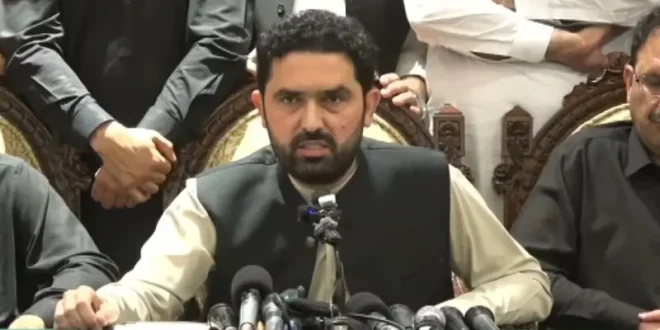
The announcement came from Khyber Pakhtunkhwa (KP) Chief Minister Sohail Afridi during a press conference in Peshawar. He stated that the PTI’s political committee had “unanimously agreed” to shift the long march’s start date to October 4, reiterating its core demands: the supremacy of the Constitution, restoration of an independent judiciary, media freedom, and “Haqiqi Azadi” (true freedom) as championed by incarcerated former Prime Minister Imran Khan. The march aims to press for Khan’s release and access to proper medical care, with Afridi asserting that justice would see Khan free almost immediately.
This postponement follows a period of intense preparations and an equally stringent government response. Authorities in Rawalpindi and Islamabad had mobilized extensive security measures, including the imposition of Section 144 – banning public gatherings – across Punjab and the federal capital for varying durations. Reports of mobile and internet service restrictions, along with the deployment of Rangers with directives to respond to violent activities, underscored the government’s resolve to prevent the march. Concurrently, a wave of arrests and detentions targeting PTI leaders and workers, including Imran Khan’s sisters, drew sharp condemnation from the Human Rights Commission of Pakistan (HRCP), which urged de-escalation and upholding the right to peaceful assembly.
Adding another layer to the political narrative, Information Minister Attaullah Tarar launched a scathing attack on the KP government, accusing it of failing to maintain law and order and even “facilitating terrorism.” Tarar labeled the KP government as the “TTP’s B-team” and the “TTA’s C-team,” alleging a “political terror-crime nexus” funding terrorists. He challenged PTI’s resolve, asserting that their “running away” from protests indicated a lack of preparedness, a stark contrast to PTI’s narrative of strategic maneuvering.
Background: A Familiar Playbook in a Volatile Landscape
To fully grasp the significance of this postponement, it’s crucial to contextualize it within Pakistan’s turbulent political history. The Pakistan Tehreek-e-Insaf (PTI), led by charismatic cricketer-turned-politician Imran Khan, rose to prominence on an anti-corruption platform, eventually forming a government in 2018. Khan’s tenure ended abruptly in April 2022 through a no-confidence vote, which he maintains was part of a foreign-backed conspiracy.
Since his ouster, Khan has been at loggerheads with the ruling coalition, demanding early elections and railing against what he perceives as a subversion of democracy. His call for “Haqiqi Azadi” resonates deeply with his support base, symbolizing a struggle for national sovereignty against perceived external and internal subjugation. This narrative fuels his repeated calls for protests and long marches, tactics PTI has successfully employed in the past, most notably with the 2014 “Azadi March” that paralyzed Islamabad for months.
Imran Khan’s current incarceration in Rawalpindi’s Adiala jail stems from a multitude of legal cases initiated against him following his removal from power. His arrest in May 2023 triggered widespread protests, some of which turned violent, leading to further crackdowns on his party. The current march, therefore, is not an isolated event but a continuation of PTI’s sustained campaign for his release and a return to what it considers a level playing field.
The government’s heavy-handed response, including Section 144, mass arrests, and internet restrictions, also echoes past patterns of state reaction to opposition movements. This interplay of aggressive protest and suppressive counter-measures has become a defining characteristic of Pakistan’s fractured political landscape, exacerbating an already fragile economic situation and challenging the very tenets of democratic governance.
Impact on Pakistan: A Society Under Strain
The continuous cycle of political confrontation has profound and debilitating impacts on Pakistan, a nation already grappling with severe economic headwinds and a delicate security situation.
- Exacerbated Political Instability: The constant threat of protests and government crackdowns fuels an environment of perpetual uncertainty. This polarization divides society, hinders consensus-building on critical national issues, and erodes the public’s faith in political processes and institutions.
- Economic Ramifications: Mass protests invariably lead to economic disruption. Road closures, security alerts, and the general atmosphere of instability deter foreign investment, disrupt supply chains, and negatively impact daily commerce. In a country struggling with high inflation, a depreciating rupee, and a massive debt burden, such instability further complicates economic recovery efforts and makes it harder to secure crucial international aid.
- Erosion of Human Rights and Democratic Norms: The pre-emptive arrests of political workers, the blanket imposition of Section 144, and restrictions on fundamental freedoms like assembly and speech, as highlighted by HRCP, represent a significant erosion of democratic principles. This creates a chilling effect on legitimate political dissent and raises serious questions about the state’s commitment to upholding constitutional rights.
- Heightened Security Concerns: The political turmoil often overshadows other critical challenges, including counter-terrorism efforts. Information Minister Tarar’s accusations linking the KP government to terrorist facilitation, while politically charged, underscore the severe security threats Pakistan faces. A preoccupied and divided political leadership struggles to effectively address these multifaceted challenges, potentially creating vulnerabilities.
- Judicial System Under Scrutiny: The PTI’s demands for an independent judiciary and adherence to court orders (regarding Imran Khan’s treatment and meetings) place Pakistan’s judicial system under intense public scrutiny. The perception of a compromised or ineffective judiciary can undermine the rule of law and further destabilize the state.
Analysis: The Unfolding “Test Match” of Pakistani Politics
The PTI’s decision to postpone its long march is a multi-layered strategic move, reflecting both the challenges it faces and its calculated efforts to gain leverage in a high-stakes political contest. The analogy of a “Test match,” as coined by a PTI leader, aptly describes the nuanced approach the party is adopting.
PTI’s Strategic Calculus: A Tactical Retreat or a Masterstroke?
PTI leaders claim the postponement has already “achieved what it wanted” by forcing the government to expend significant resources on security and shut down the capital. This suggests a strategy of *exhaustion*. By signaling an impending march and then delaying it, PTI forces the government to remain on high alert, tying up law enforcement agencies and imposing economic costs, thereby showcasing the government’s perceived overreaction to legitimate political dissent. This approach aims to build public sympathy for PTI while exposing what they portray as the government’s draconian tactics.
Furthermore, the delay could serve as a period for *regrouping and galvanizing*. Given the mass arrests and detentions of its workers and leaders, the party might need time to reorganize its ranks, strategize new routes, and reinforce its messaging. This “Test match” mentality implies a long-term game plan, rather than a single, decisive confrontation. It also keeps the government guessing, creating psychological pressure and diverting resources.
The earlier hint by a PTI leader about conditions for postponing the march (early elections, Khan’s release, inquiry into crackdowns) suggests that despite official denials, a door for *negotiation* might be a latent part of PTI’s strategy. By demonstrating its capacity to mobilize and then exercising a degree of flexibility, PTI might be signaling a willingness to engage, albeit from a position of perceived strength.
Government’s Response: Security Imperative or Democratic Overreach?
The government’s vigorous pre-emptive measures – Section 144, internet jamming requests, and extensive security deployments – reflect a deep-seated fear of a repeat of the May 9 violence. For the government, maintaining law and order and protecting state institutions is paramount. However, the scale and scope of these measures have drawn criticism from human rights bodies, who question their proportionality and impact on fundamental freedoms.
Information Minister Tarar’s allegations against the KP government for “facilitating terrorism” introduce a dangerous new dimension to the political discourse. By framing PTI as soft on terror, or worse, complicit, the government attempts to discredit the party and potentially justify its crackdown. This narrative, while potentially aimed at eroding PTI’s legitimacy, also risks politicizing national security issues and further deepening the ideological chasm between the ruling coalition and the opposition.
The Path Forward: Dialogue or Escalation?
The current political stalemate in Pakistan is unsustainable. The “Test match” between PTI and the government carries significant risks, potentially pushing the country further into instability. The HRCP’s call for de-escalation and purposeful dialogue is a crucial reminder that a democratic solution requires communication, compromise, and a respect for constitutional rights from all sides.
For Pakistan to navigate this precarious period, both the government and the opposition must prioritize national interest over partisan politics. The PTI needs to ensure its protests remain peaceful and within legal bounds, while the government must uphold fundamental rights and explore avenues for genuine political dialogue, rather than relying solely on coercive measures. The future of Pakistan’s democratic trajectory hinges on its political actors’ ability to move beyond confrontation and embrace a path of constitutionalism and reconciliation.