Dost Pakistan Journeys Tours and safaris in the North & South Pakistsn
Related Articles

Pakistan’s New Foreign Media Curbs: A Blow to Press Freedom and Global Image
In a move that has drawn widespread condemnation from international and local human rights organizations, Pakistan has introduced new “Foreign Media Facilitation Guidelines, 2026.” These regulations significantly tighten controls on foreign media operations and, crucially, extend restrictions to Pakistani citizens working for these outlets, sparking fears of a severe rollback on press freedom within the nation.
The News: Restrictive Guidelines Spark Outcry
The recently circulated “Foreign Media Facilitation Guidelines, 2026” mark a dramatic shift in how foreign media and their local associates can operate in Pakistan. Previously, travel and reporting restrictions outside major cities like Islamabad, Lahore, and Karachi primarily applied to foreign journalists. Under the new rules, Pakistani journalists, fixers, and support staff affiliated with international media houses now require explicit government permission for travel and reporting outside these metropolitan areas. Furthermore, they are mandated to register with the government, a requirement that even extends to personal leisure travel.
This unprecedented expansion of control has been met with immediate and fierce criticism. Global watchdogs, including Human Rights Watch, Amnesty International, and the Committee to Protect Journalists (CPJ), have unanimously denounced the guidelines as a blatant “attack on press freedom” and an “alarming step.” Locally, the Human Rights Commission of Pakistan and the Pakistan Federal Union of Journalists have joined the chorus of disapproval, urging the authorities to revoke these “draconian new guidelines.” Major international news organizations like the BBC, Reuters, and the Financial Times have also voiced their serious concerns, emphasizing the fundamental importance of journalists’ ability to report freely and independently.
Background: A History of Media Pressure and Narrative Control
The introduction of these new guidelines doesn’t occur in a vacuum but against a backdrop of increasing pressure on media freedom in Pakistan. The nation’s ranking of 153rd out of 180 countries in Reporters Without Borders’ Press Freedom Index already highlights a challenging environment for journalists. Over the years, both local and international media have faced various forms of censorship, intimidation, and indirect pressure, particularly when reporting on sensitive political or security matters.
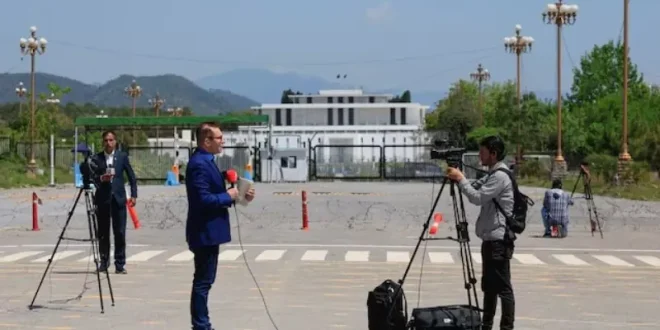
The timing of these new restrictions is particularly telling. The CPJ noted that the guidelines surfaced just days after the Pakistani government publicly criticized international reporting on recent elections and protests in Azad Kashmir. This criticism included allegations of “yellow journalism” against Al Jazeera and culminated in the expulsion of foreign media representatives from the region earlier this week. Such incidents underscore a clear governmental intent to manage narratives, especially concerning regions or events perceived as politically delicate. The critical role of local fixers and journalists, who often provide indispensable access, cultural context, and logistical support to foreign correspondents, makes their inclusion in these new restrictions a particularly effective method of limiting independent reporting.
Impact on Pakistan: Eroding Credibility and Global Standing
The “Foreign Media Facilitation Guidelines, 2026” threaten to have far-reaching negative consequences for Pakistan, both domestically and on the international stage.
- Damaged International Image: By tightening its grip on media, Pakistan risks further tarnishing its global reputation regarding human rights and democratic values. The unanimous condemnation from leading international bodies signals a clear message that such actions are seen as a regression, potentially impacting diplomatic relations, foreign investment, and tourism.
- Compromised Credibility of Information: Restricting independent reporting creates an information vacuum. When foreign media are curtailed, the world relies on less diverse sources, potentially leading to a skewed understanding of events within Pakistan. This, paradoxically, makes it harder for Pakistan to present its own narrative credibly, as the absence of independent verification raises suspicions.
- Chilling Effect on Local Journalism: The extension of these rules to Pakistani citizens working for foreign outlets is particularly insidious. It creates a two-tiered system where local journalists face heightened risks of administrative retaliation, surveillance, and harassment, simply for doing their jobs. This can lead to increased self-censorship, deterring critical reporting and ultimately stifling the voices that are crucial for democratic accountability.
- Reduced Public Access to Diverse News: While ostensibly aimed at foreign media, these restrictions indirectly limit the diversity of news and perspectives available to the Pakistani public. A free press, including robust foreign coverage, helps citizens form well-informed opinions by offering varied viewpoints that might be absent from state-controlled or self-censored domestic media.
Analysis: Fear of Truth vs. Claim of Facilitation
The nomenclature “Foreign Media Facilitation Guidelines” rings hollow in the face of the restrictive measures they impose. As Amnesty International pointedly asked, “Why is the government afraid of truth?” The measures appear less about “facilitation” and more about an overt attempt to control the flow of information and manage public perception, both domestically and internationally. This move aligns with a broader trend observed globally where governments facing internal dissent or international scrutiny seek to tighten their grip on information.
The government’s apparent motive is likely to shape the narrative surrounding sensitive issues, particularly those that might cast the state in an unfavorable light, such as human rights abuses, political instability, or disputed territories like Kashmir. By restricting access to certain areas and controlling who reports from them, authorities can limit the scope and nature of coverage.
However, such restrictive policies often backfire. Instead of controlling the narrative, they frequently draw more negative attention, leading to accusations of censorship and authoritarianism. In an age of digital information, outright suppression is increasingly difficult and often counterproductive. What these guidelines truly underscore is a fundamental distrust of an unfettered press and an unwillingness to engage with critical reporting. For a nation aspiring to democratic ideals and global standing, fostering a free and independent media is not a luxury but a fundamental necessity. The international community’s unified call for reversal highlights that the world is watching, and Pakistan’s commitment to freedom of expression will be judged by its actions on this critical front.