Dost Pakistan Journeys Tours and safaris in the North & South Pakistsn
Related Articles


China’s C919 Spreads Its Wings: A New Era for Global Aviation and Beijing’s Ambitions
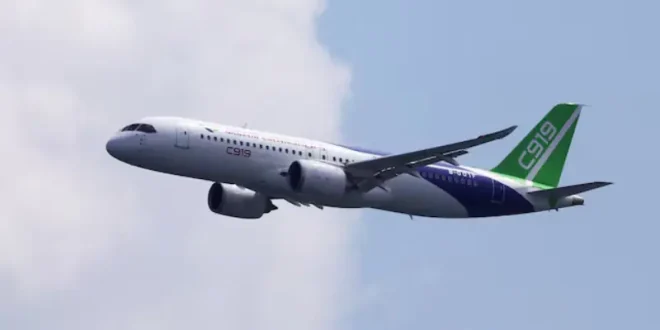
The global aviation industry, long dominated by a Western duopoly, is witnessing a quiet but determined challenger emerge from the East. China’s homegrown Comac C919 narrow-body jetliner recently completed its second international commercial passenger flight, traversing from Beijing to Ulaanbaatar, Mongolia. This milestone, coming hot on the heels of its inaugural international journey a day prior, is more than just a routine flight; it represents a significant stride in Beijing’s ambitious drive for technological self-reliance and its aspiration to reshape the global aerospace landscape.
The News: C919 Takes Flight on the International Stage
On Thursday, the Comac C919, operated by Air China, successfully landed in Ulaanbaatar, Mongolia, completing its second international commercial flight in under 48 hours. This achievement followed its maiden scheduled international commercial passenger flight on Wednesday, marking a critical step after its initial domestic commercial service began in May 2023. Flight-tracking data from Flightradar24 indicated that the C919 is slated to replace the Boeing 737 MAX on the Beijing-Ulaanbaatar route in the coming weeks, underscoring growing confidence in the Chinese aircraft.
Chinese state media, including Xinhua, lauded the event as a pivotal moment, affirming that the C919 has now met “bilateral international civil aviation operating standards,” officially qualifying it for regular international commercial passenger operations. Analysts cited by Xinhua view this as a “starting point” for the C919 to gain global recognition, praising its demonstrated safety, reliability, and cost-effectiveness. The aircraft, touted as China’s first self-developed trunk jetliner adhering to international airworthiness standards and possessing independent intellectual property rights, has already built a robust track record on numerous domestic routes, handling over 7.5 million passenger trips across 57 routes and 25 cities.
With major Chinese carriers like Air China, China Eastern Airlines, and China Southern Airlines already incorporating the C919 into their fleets, and developer Comac aiming for an annual production capacity of 200 aircraft by 2029, the stage is set for an accelerated expansion of its operational footprint, both domestically and internationally.
Background: China’s Grand Aviation Ambition
The C919 project is a cornerstone of China’s broader “Made in China 2025” strategy, which seeks to elevate the country’s manufacturing capabilities in high-tech sectors, including aerospace, and reduce its reliance on foreign technology. Conceived in the mid-2000s, the development of the C919 was a monumental undertaking, culminating in its first flight in 2017 and its commercial debut in 2023. This narrow-body jet is designed to directly compete with the dominant Boeing 737 and Airbus A320 families, offering similar passenger capacity and range.
While the C919 is proudly marketed as “homegrown” and possesses independent intellectual property, it’s crucial to acknowledge that many of its critical components, such as its LEAP-1C engines (from CFM International, a joint venture of General Electric and Safran) and sophisticated avionics (from Honeywell), are supplied by Western companies. This arrangement highlights a complex reality: while China has mastered the integration and assembly, achieving true indigenousness across the entire supply chain remains a long-term goal. Nevertheless, the successful certification by China’s Civil Aviation Administration of China (CAAC) and its growing operational hours are vital steps in building credibility.
The domestic market for the C919 is immense, driven by China’s rapidly expanding air travel sector. Furthermore, the aircraft is strategically positioned to serve nations participating in China’s Belt and Road Initiative (BRI), offering a potential avenue for global penetration even before securing certifications from Western regulators like the FAA (U.S.) or EASA (Europe), which would unlock access to broader international markets.
Potential Impact on Pakistan: Diversification and Strategic Alignment
For nations like Pakistan, which historically rely heavily on Western aircraft manufacturers for their national carriers and burgeoning private airlines, the emergence of the C919 presents a compelling alternative and several potential opportunities:
- Fleet Diversification: Pakistan’s aviation sector, including the struggling Pakistan International Airlines (PIA) and newer private entrants like SereneAir and AirSial, primarily operates fleets comprising Boeing and Airbus aircraft. Introducing C919s could diversify Pakistan’s fleet, reducing sole dependence on Western suppliers and potentially offering more competitive procurement or leasing terms, possibly backed by favorable financing from China.
- Economic Viability: Given the C919’s positioning as a cost-effective alternative, it could offer Pakistani airlines a viable option for fleet modernization and expansion, especially if maintenance, spare parts, and operational costs prove to be competitive. This could be particularly attractive for routes within the region.
- Strategic Alignment: Acquiring Chinese aircraft would further deepen the already strong strategic and economic ties between Pakistan and China, complementing the extensive China-Pakistan Economic Corridor (CPEC) initiatives. Aviation could become another pillar of this strategic partnership, with potential for joint ventures in maintenance, repair, and overhaul (MRO) facilities.
- Technical Support and Training: A crucial factor would be Comac’s ability to provide robust after-sales support, spare parts availability, and comprehensive pilot and ground crew training in Pakistan. China’s increasing investment in its aerospace industry suggests a growing capability in this area.
- Passenger Perception: Initially, there might be a degree of skepticism among passengers accustomed to established Western brands. However, consistent safe operations and a comfortable cabin experience, as lauded by Chinese domestic users, could gradually build trust and acceptance.
As Pakistan looks to revitalize its aviation industry and explore avenues for growth, the C919 could represent a strategic opportunity to modernize its air transport infrastructure while strengthening its relationship with a key ally.
Analysis: Shifting Currents in Global Aerospace
The C919’s venture into international commercial flights, even if initially limited to friendly nations, signifies a profound shift in the global aerospace industry. It’s a clear declaration of intent from China to become a major player, not just a consumer, in the highly competitive commercial aircraft market.
Challenging the Duopoly
While the C919 is still a long way from truly breaking the Boeing-Airbus duopoly, its sustained development and increasing operational scope introduce a much-needed third alternative for airlines worldwide. This could foster greater competition, potentially leading to better deals and more innovation across the board.
Geopolitical and Economic Implications
Beyond commerce, the C919 is a potent symbol of China’s technological prowess and soft power. Its success bolsters Beijing’s narrative of indigenous innovation and can be leveraged to strengthen economic and political ties with partner nations. For countries seeking to diversify their strategic suppliers, especially in the context of geopolitical tensions, the C919 offers a compelling non-Western option.
The Path to Global Trust and Certification
The ultimate test for the C919’s global ambition lies in securing certification from stringent Western regulators like the FAA and EASA. These certifications are not merely technical hurdles; they represent a stamp of universal safety and reliability that is critical for widespread adoption by airlines operating in diverse regulatory environments. Building global trust will also require demonstrating impeccable safety records over many years, along with robust global maintenance and support networks.
“Made in China” vs. “Assembled in China” Revisited
The reliance on international components, while practical for accelerating development, underscores the ongoing challenge for China to achieve complete indigenous control over its aerospace supply chain. As production scales up and China seeks to export more C919s, increasing the domestic content will be a strategic imperative to enhance resilience against potential supply chain disruptions or technology transfer restrictions.
Future Outlook
Comac’s ambitious target of 200 aircraft per year by 2029 suggests a strong push for mass production and market penetration. The C919 is likely to first consolidate its presence within China and among BRI countries, leveraging strong diplomatic and economic ties. Its success will pave the way for future Chinese aircraft designs, potentially extending to wide-body jets. The C919 is not just an aircraft; it’s a long-term strategic investment by China in shaping the future of global air travel and its own standing as a technological superpower.