 Dost Pakistan Journeys Tours and safaris in the North & South Pakistsn
“`html
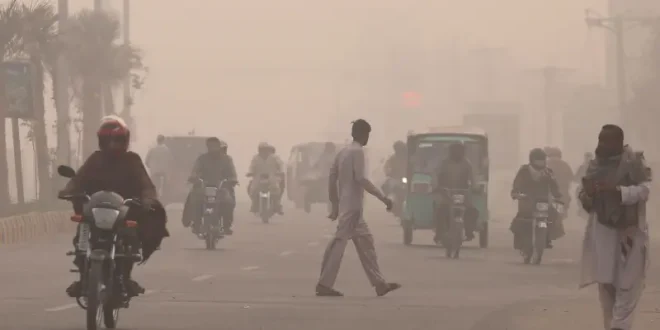
Pakistan’s Smog Crisis Deepens: Gujranwala & Multan Overtake Lahore in Hazardous Air Pollution
Pakistan is grappling with an intensifying air pollution crisis, traditionally epitomized by Lahore’s notorious smog. However, recent data reveals a troubling shift, with other major cities like Gujranwala and Multan now experiencing even more severe levels of hazardous air quality. This development underscores the widespread nature of the problem across Punjab and raises critical questions about the effectiveness of current environmental policies.
The News: A Worsening Regional Crisis
Real-time air quality data for Friday presented a grim picture across Punjab. While Lahore, long considered the epicenter of Pakistan’s air pollution, registered a hazardous Air Quality Index (AQI) of 465, other cities soared to even more alarming levels. Gujranwala topped the list with an unprecedented AQI of 661, closely followed by Multan at 641. These figures not only classify the air as extremely polluted but also signal serious, immediate health risks for residents.
Beyond these major hubs, other cities in Punjab also reported dangerously elevated pollution. Sargodha recorded an AQI of 289, Sialkot 232, Rahim Yar Khan 228, and Bahawalpur 198. These numbers consistently place air quality in the “hazardous” or “very unhealthy” categories, indicating a widespread environmental emergency that transcends individual city boundaries. The readings primarily reflect high concentrations of fine particulate matter (PM2.5), known for its ability to penetrate deep into the lungs and bloodstream.
Background: A Familiar Yet Escalating Threat
The seasonal smog that engulfs Punjab during the cooler months has become an unfortunately predictable public health challenge. This phenomenon is a complex interplay of various factors:
- Brick Kilns: A primary contributor, particularly in the agricultural belt. Many kilns utilize outdated, inefficient technologies that burn low-quality fuel like coal, tires, and waste, emitting massive amounts of black carbon and particulate matter.
- Vehicular Emissions: Rapid urbanization and an increasing number of vehicles, often poorly maintained and lacking modern emission controls, contribute significantly to urban air pollution. The reliance on older, less fuel-efficient transport exacerbates the problem.
- Industrial Emissions: Unregulated or poorly regulated industrial units, from small-scale factories to larger manufacturing plants, release a cocktail of pollutants into the atmosphere.
- Crop Residue Burning: A pervasive agricultural practice where farmers burn leftover crop stubble to clear fields for the next planting cycle. This practice creates vast plumes of smoke and particulate matter that can travel long distances.
- Meteorological Conditions: During winter, specific weather patterns, such as temperature inversions, trap cold air and pollutants close to the ground, preventing dispersion and intensifying smog.
Pakistan’s average PM2.5 concentration in 2025 was a staggering 67.3 micrograms per cubic metre, nearly 14 times the World Health Organization’s (WHO) annual guideline of 5 micrograms per cubic metre. This places Pakistan among the world’s most polluted nations, highlighting a persistent failure to meet international air quality standards.
Impact on Pakistan: A Multifaceted Crisis
The severe air pollution in Pakistan has profound and far-reaching consequences:
Public Health Catastrophe
Hazardous AQI levels pose severe health risks, particularly to vulnerable populations such as children, the elderly, and individuals with pre-existing respiratory and cardiovascular conditions. Prolonged exposure to PM2.5 can lead to:
- Acute respiratory infections, asthma attacks, and bronchitis.
- Increased risk of heart attacks, strokes, and other cardiovascular diseases.
- Development of chronic lung diseases and even lung cancer.
- Neurological impacts and developmental issues in children.
The health burden translates into higher healthcare costs, lost productivity, and a diminished quality of life for millions.
Economic Strain
Smog significantly impacts Pakistan’s economy. Agricultural output can suffer due to reduced sunlight penetration and direct damage to crops. Reduced visibility disrupts transportation and commerce. Industries face challenges due to health-related absenteeism and increased operational costs for pollution control. The periodic imposition of “smog holidays” for schools and businesses, while necessary for public safety, also incurs economic losses.
Environmental Degradation
Beyond immediate health impacts, consistent air pollution contributes to broader environmental degradation. It exacerbates climate change through the release of black carbon and other greenhouse gases. Acid rain, caused by sulfur dioxide and nitrogen oxides from emissions, can damage ecosystems, infrastructure, and agricultural land over time.
Analysis: The Shifting Sands of Pollution and the Limits of Enforcement
The news that Gujranwala and Multan have surpassed Lahore in air pollution marks a critical turning point. It suggests a decentralization of the smog crisis, indicating that the problem is not confined to one mega-city but is a regional issue deeply embedded in Punjab’s development model.
Why the Shift?
- Industrial Proliferation: Gujranwala is a significant industrial hub, known for its textile, ceramics, and engineering sectors. Multan is also an industrial and agricultural center. It’s possible that as Lahore’s urban core becomes more regulated (or perceived to be), polluting industries are increasingly relocating to or expanding in these secondary cities, where enforcement might be less stringent or resources more stretched.
- Urban Sprawl and Infrastructure: Rapid, often unplanned, urban expansion in these cities can lead to increased vehicular traffic, construction dust, and greater energy demands met by polluting sources.
- Localized Meteorological Factors: While general winter inversion layers affect the whole province, specific microclimates or localized wind patterns might trap pollutants more effectively in certain areas.
The Paradox of Enforcement
The Punjab Environment Protection and Climate Change Department has reported extensive enforcement operations. Between January and November, nearly 85,000 inspections of brick kilns were conducted, resulting in the demolition of 1,429 units, sealing of 968, and over 1,200 FIRs (First Information Reports) filed, alongside substantial fines. During the critical smog period, these efforts intensified, with hundreds of kilns demolished or sealed. Despite these seemingly robust actions, pollution levels have reached hazardous new peaks. This raises a fundamental question:
If enforcement is so active, why is air quality worsening?
Several factors could explain this paradox:
- Scale of the Problem: The sheer number of polluting sources might simply overwhelm enforcement capacity. For every kiln demolished, others might continue operating, or new ones might emerge.
- “Whack-a-Mole” Syndrome: Polluting units, especially brick kilns, can be dismantled and then quickly re-established or simply move locations to evade monitoring. The news mentions “repeated inspections” to counter this, but it highlights the persistent challenge.
- Lack of Sustainable Alternatives: Enforcement without offering viable, economically feasible cleaner technologies (e.g., zig-zag kilns that reduce emissions by 60-70%) can lead to a cat-and-mouse game. Many operators may lack the capital or knowledge to transition to cleaner methods.
- Multiplicity of Sources: While brick kilns are a major focus, other significant contributors like vehicular emissions, industrial discharge (beyond kilns), and crop burning might not be receiving equally aggressive and comprehensive interventions. The actions against smoke-emitting vehicles, though a step in the right direction, represent only a fraction of the necessary effort.
- Underlying Governance Issues: Factors like corruption, inadequate staffing, or insufficient training within regulatory bodies can undermine even well-intentioned enforcement efforts.
The Way Forward: A Holistic and Integrated Approach
Addressing Pakistan’s deepening smog crisis requires moving beyond seasonal, reactive measures to a sustained, multi-pronged strategy:
- Integrated Policy Framework: Develop a comprehensive air quality management plan that targets all major sources simultaneously – industrial, vehicular, agricultural, and domestic. This means coordinating efforts across various government departments.
- Technological Transition and Incentives: Actively promote and incentivize cleaner technologies, such as zig-zag kilns, electric vehicles, and industrial emission control systems. This could involve subsidies, low-interest loans, and technical assistance.
- Robust Monitoring and Data Utilization: Expand the network of air quality monitors and use real-time data to identify pollution hotspots, track trends, and assess the effectiveness of interventions more precisely.
- Public Awareness and Participation: Empower citizens with information and tools (like the Green Punjab App and dedicated helplines) to report violations and advocate for cleaner air. Educate the public on personal protective measures and the long-term health impacts of pollution.
- Strengthening Enforcement and Accountability: Ensure consistent, transparent, and corruption-free enforcement. Penalties should be substantial enough to deter violations, and mechanisms for operators to adopt compliant practices should be readily available.
- Regional Cooperation: Recognize that air pollution transcends administrative boundaries. Engaging in regional dialogues with neighboring provinces and countries could help address transboundary pollution.
The shift in pollution’s epicenter serves as a stark warning: the problem is not contained but spreading. Without a profound and systemic shift in policy and practice, the health and economic well-being of millions across Punjab will remain under the shadow of hazardous air.
Residents are urged to stay informed and report environmental violations through the Green Punjab App or by calling 1373, or 1071 for smoke-emitting vehicles.
Published in Dawn, November 21st, 2026 (Analysis based on reported data)
“`
