Dost Pakistan Journeys Tours and safaris in the North & South Pakistsn
Related Articles

“`html
Gaza Under Fire: Targeted Strikes Amidst Escalating Genocide Warnings
Key Takeaways:
- Israeli airstrikes kill senior Hamas security officials, including Mohammad Abuelouf and his family, escalating tensions in Gaza.
- Amnesty International accuses Israel of “preventing births” in Gaza and calls for an ICC investigation into possible “genocide.”
- UN Human Rights Chief Volker Turk warns of a “widening risk of further atrocity crimes” by Israel against Palestinians.
- The conflict raises serious questions about international humanitarian law, civilian protection, and regional stability.
The News: Intensified Strikes and Grave Accusations
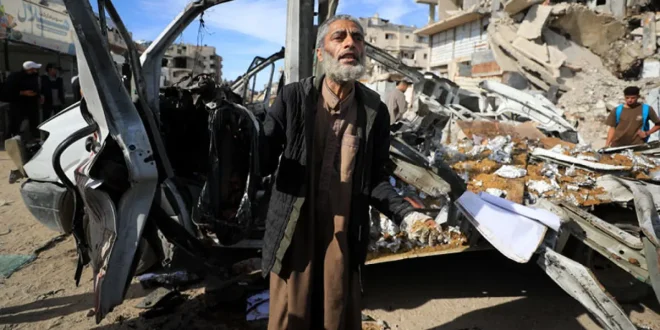
The already volatile situation in the Gaza Strip has seen a sharp escalation following recent Israeli military operations targeting high-ranking Hamas security officials. In a strike described as particularly devastating, Mohammad Abuelouf, a Hamas colonel overseeing internal security in northern Gaza, was killed along with his wife and two daughters in their Gaza City apartment. This incident followed closely on the heels of another strike that killed Naeem Abu Nahel, the overall head of internal security for Gaza, prompting Israeli Prime Minister Benjamin Netanyahu to assert his country’s “long reach” against Hamas.
Hamas, for its part, has condemned these actions, asserting that Israel aims to sow chaos by eliminating officials responsible for maintaining civil order within the besieged enclave. The Israeli Defence Forces (IDF) confirmed Abuelouf’s killing, characterizing him as a significant figure who impeded their counterterrorism efforts.
Beyond the immediate military engagement, international human rights organizations have sounded alarms of unprecedented gravity. Amnesty International released a scathing report coinciding with the International Day for the Elimination of Violence against Women, detailing how Israeli actions have severely impacted women’s reproductive health in Gaza, including “preventing births” and contributing to high rates of miscarriage and stillbirth. The organization’s Secretary General, Agnes Callamard, urged the International Criminal Court (ICC) to investigate the possible “commission of genocide.” Concurrently, UN Human Rights Chief Volker Turk issued a stark warning to the global community, highlighting a “widening risk of further atrocity crimes” by Israel against Palestinians in both the occupied West Bank and Gaza Strip, calling for immediate preventative action from all states.
Background: A Deep-Rooted Conflict and International Law
The latest events unfold against a backdrop of decades-long conflict between Israelis and Palestinians, characterized by cycles of violence, occupation, and resistance. Gaza, a densely populated coastal strip, has been under an Israeli and Egyptian blockade since 2007, following Hamas’s takeover. This blockade has severely restricted the movement of goods and people, contributing to a humanitarian crisis and stifling economic development.
Hamas, designated a terrorist organization by several Western nations, functions as the de facto governing authority in Gaza, maintaining various administrative and security structures, including the internal security service targeted in these recent strikes. This service is crucial for Hamas’s control, gathering intelligence on Israeli plans and countering suspected collaboration.
The international community’s response to the conflict is often framed by international humanitarian law (IHL) and international human rights law. IHL mandates principles of distinction (targeting only combatants and military objectives), proportionality (avoiding excessive civilian harm relative to military advantage), and precaution. The allegations made by Amnesty and the UN invoke the most serious categories of international crimes: war crimes, crimes against humanity, and potentially genocide. Genocide, as defined by the 1948 Genocide Convention, involves acts committed with intent to destroy, in whole or in part, a national, ethnical, racial, or religious group. The calls for an ICC investigation underscore the profound legal and moral implications of the current conflict.
Impact on Pakistan: A Resonant Echo
While geographically distant, the Israeli-Palestinian conflict has consistently resonated deeply within Pakistan, influencing its foreign policy, public sentiment, and internal discourse. Pakistan has historically maintained unwavering diplomatic and moral support for the Palestinian cause, recognizing a shared religious and humanitarian bond.
- Diplomatic Stance: Pakistan has been a vocal critic of Israeli actions in international forums, including the United Nations and the Organization of Islamic Cooperation (OIC), consistently advocating for a just resolution based on a two-state solution with East Jerusalem as the capital of an independent Palestinian state. The current escalation only reinforces this steadfast position, leading to stronger condemnations and calls for international accountability.
- Public Sentiment: The plight of Palestinians evokes widespread public sympathy and solidarity across Pakistan. News of civilian casualties, particularly women and children, often sparks widespread protests, rallies, and social media campaigns, urging the government and international bodies to take more decisive action. This public pressure can influence the government’s diplomatic posturing.
- Regional Stability and Geopolitics: The ongoing conflict contributes to broader instability in the Middle East, a region critical for Pakistan’s energy security and trade routes. Escalations can impact global oil prices and create ripples across the Islamic world, potentially affecting Pakistan’s strategic alliances and regional influence.
- Humanitarian Engagement: Pakistan frequently participates in international efforts to provide humanitarian aid to Gaza, channeling assistance through UN agencies and other relief organizations. The deteriorating conditions amplify calls within Pakistan for increased aid contributions.
- Internal Discourse: The conflict often becomes a significant topic in Pakistan’s political and religious discourse, shaping narratives about global justice, Muslim solidarity, and the role of international institutions.
Analysis: Escalation, Accountability, and the Human Cost
The recent Israeli strikes mark a significant escalation, both militarily and politically. Targeting senior Hamas internal security officials aims to disrupt their operational capabilities and intelligence networks, aligning with Israel’s stated objective of dismantling Hamas. Prime Minister Netanyahu’s “long reach” declaration signals a continued aggressive posture, potentially extending to any Hamas operatives perceived as a threat.
However, these targeted killings carry profound implications. The civilian casualties, especially the wives and daughters of officials, raise serious questions about adherence to international humanitarian law, particularly the principle of proportionality. While Israel asserts it targets military assets, the execution of strikes in densely populated residential areas inevitably places civilians at immense risk. From Hamas’s perspective, such strikes are likely to be viewed as deliberate provocations, potentially fueling further resistance and cycles of retaliation rather than de-escalation.
The grave accusations from Amnesty International and the UN rights chief amplify the international scrutiny on Israel’s conduct. The call for an ICC investigation into “genocide” is a legal and moral challenge of immense magnitude. While demonstrating intent for genocide is a high legal bar, the specific details highlighted by Amnesty regarding the denial of access to fertility treatment, increased miscarriages, and deaths of women in maternity wards paint a harrowing picture of a humanitarian catastrophe disproportionately affecting women and children. This, coupled with the UN’s warning of “atrocity crimes,” indicates a growing international consensus that the scale of suffering and potential violations demands immediate, impartial investigation and accountability.
The implications for international law and global governance are substantial. If such severe allegations are not thoroughly investigated by credible international bodies, it risks undermining the very foundations of international humanitarian and human rights law, potentially setting dangerous precedents for future conflicts. The perceived double standards by powerful nations in their response to the conflict further erode trust in the global justice system.
Ultimately, beyond the strategic calculations and legal debates, lies the devastating human cost. The people of Gaza, trapped in an unrelenting cycle of violence and deprivation, continue to bear the brunt of the conflict. The reports of deliberate actions impacting reproductive health highlight a particularly cruel dimension of the humanitarian crisis, threatening the very fabric of future generations in Gaza. The world watches, increasingly alarmed, as the conflict deepens, pushing the boundaries of what is permissible in warfare and challenging the conscience of humanity.
“`