Dost Pakistan Journeys Tours and safaris in the North & South Pakistsn
Related Articles
“`html
Pakistan’s Political Tensions: The Lahore High Court’s Scrutiny of Maulana Fazlur Rehman’s Alleged Confinement
The News: Judiciary Intervenes in Alleged Political Restriction
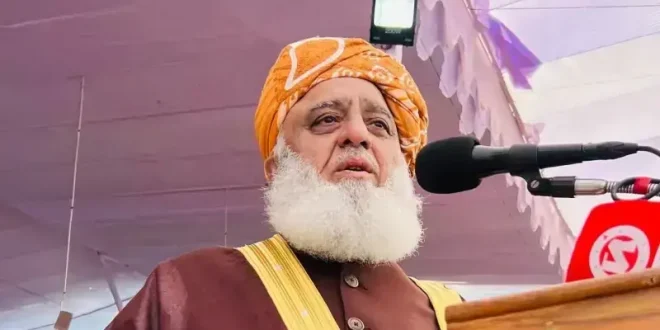
In a move underscoring the judiciary’s critical oversight, the Lahore High Court (LHC) has initiated proceedings into the alleged confinement of Jamiat Ulema-i-Islam (JUI-F) chief Maulana Fazlur Rehman. Justice Ali Zia Bajwa, presiding over a petition filed by Advocate Chaudhry Abrar Hussain from JUI-F’s legal team, has demanded a comprehensive report from the Capital City Police Officer (CCPO) of Lahore regarding the circumstances of Maulana Fazl’s restriction to his temporary residence.
The petitioner asserted that despite repeated requests, Maulana Fazl remains illegally confined and barred from leaving his Lahore residence, effectively preventing him from participating in critical political engagements, including a multiparty conference hosted by the Lahore High Court Bar Association. The judge’s remarks highlighted the gravity of the situation, warning of severe consequences should the JUI-F chief’s detention be proven unlawful. This judicial scrutiny brings into sharp focus the balance between state authority and fundamental individual liberties.
Background: A Leader’s History Amidst Pakistan’s Volatile Politics
Maulana Fazlur Rehman is a towering figure in Pakistan’s political landscape, leading the Jamiat Ulema-i-Islam-Fazl (JUI-F), a significant religious-political party with a considerable voter base, particularly in the Khyber Pakhtunkhwa and Balochistan provinces. Historically, the JUI-F has played a pivotal role in alliances, often aligning with or opposing mainstream parties. Maulana Fazl himself is renowned for his astute political maneuvering and his ability to mobilize large public gatherings, notably leading the ‘Azadi March’ sit-in in Islamabad in 2019 against the then-government.
His alleged confinement surfaces during a period of heightened political sensitivity in Pakistan. The nation frequently experiences cycles of intense political rivalry, often marked by accusations of state overreach and suppression of dissent. Such restrictions on political leaders, particularly those critical of the establishment or government, are not unprecedented in Pakistan’s history. They typically occur ahead of significant political events, such as elections, or during times when opposition voices are perceived as particularly potent. The multiparty conference Maulana Fazl was slated to attend suggests a concerted effort by various political factions, likely to consolidate opposition against prevailing policies or political dynamics, making his absence a strategically significant one.
Impact on Pakistan: Eroding Trust and Democratic Principles
The alleged house arrest of a prominent political leader carries substantial implications for Pakistan’s fragile democratic framework and its societal fabric:
- Undermining Democratic Freedoms: This incident directly challenges fundamental democratic rights, including freedom of movement, assembly, and speech. If confirmed as an illegal detention, it signals a shrinking space for political dissent and can foster an environment of fear among opposition figures.
- Erosion of Rule of Law: The judiciary’s involvement underscores concerns about the rule of law. Any executive action that bypasses legal procedures for detention directly undermines the constitutional guarantees afforded to citizens. The court’s stern stance serves as a crucial check on arbitrary state power.
- Escalation of Political Tensions: Such actions invariably inflame political tensions, especially among opposition parties. It fuels narratives of political victimization and state-orchestrated crackdowns, potentially leading to widespread protests, boycotts, and further political instability.
- Public Perception and Trust: Incidents like these can severely damage public trust in state institutions, including law enforcement agencies and potentially the interim government (if applicable). It reinforces perceptions of political engineering and a lack of level playing field, particularly as the nation heads towards or navigates through electoral processes.
- International Scrutiny: Reports of political detentions often draw the attention of international human rights organizations and democratic watchdogs, potentially impacting Pakistan’s global image and its standing on human rights and democratic practices.
Analysis: A Test of Democratic Resilience
The unfolding situation surrounding Maulana Fazlur Rehman represents a critical juncture for Pakistan’s political landscape. The alleged confinement, preventing him from attending a multiparty conference, strongly suggests an attempt to neutralize a potent political voice and disrupt opposition unity. Such preemptive measures, often justified by authorities under the pretext of maintaining law and order or preventing unrest, are frequently perceived by political opponents as outright suppression of legitimate political activity.
The Lahore High Court’s decisive intervention is particularly noteworthy. By demanding an immediate and detailed report, the judiciary is asserting its constitutional role as the guardian of fundamental rights and a check on executive overreach. The judge’s unambiguous warning of “consequences” for unlawful action sends a clear message that due process and legal justification are paramount, regardless of the political stature of the individual involved. This judicial assertiveness is vital for upholding the rule of law and preventing arbitrary actions from becoming normalized.
Looking ahead, the outcome of this case will set an important precedent. Should the alleged detention be proven illegal, it would not only vindicate Maulana Fazl but also empower other political actors to challenge similar restrictions. Conversely, if the authorities manage to provide sufficient legal grounds (which would be scrutinized intensely), it could redefine the boundaries of permissible political activity. This entire episode is a stark reminder of the delicate balance between national security, public order, and the essential freedoms that define a functioning democracy, highlighting Pakistan’s ongoing struggle to cement its democratic institutions amidst persistent political volatility.
“`