 Dost Pakistan Journeys Tours and safaris in the North & South Pakistsn
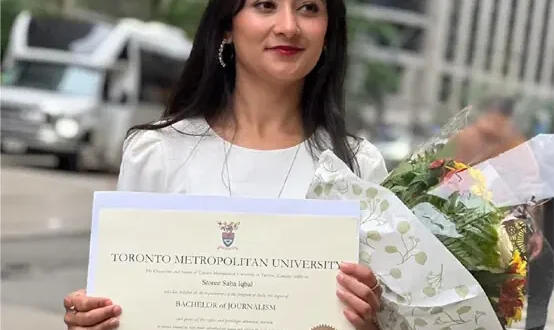
Saba Iqbal’s Graduation: A Triumph of Resilience Against Blasphemy Accusations and Extremism in Pakistan
The recent graduation of Storee Saba Iqbal from Toronto Metropolitan University in journalism is far more than a personal academic achievement; it is a profound testament to resilience, a powerful symbol of hope, and a defiant echo against the forces of extremism and injustice that once threatened to silence her family forever. As the sister of the late Mashal Khan, whose brutal lynching in 2017 shocked Pakistan and the world, Saba’s success illuminates a path forward, demonstrating how profound grief can be transformed into an unwavering pursuit of knowledge and truth.
The News: A Beacon of Hope Amidst Lingering Shadows
On June 19, Storee Saba Iqbal, daughter of Iqbal Khan and sister of the late Mashal Khan, proudly completed her journalism degree from a prestigious Canadian institution, Toronto Metropolitan University. This milestone has resonated deeply, particularly within Pakistan, where the memory of her brother’s tragic death remains a raw wound. Her father, Iqbal Khan, articulated the family’s immense pride, describing Saba’s accomplishment as turning “grief into strength.” He highlighted her success as a landmark achievement, particularly inspiring for crisis-ridden girls across Pashtun regions in Pakistan and Afghanistan, where access to education, especially for women, faces significant challenges.
Social media has erupted in celebration, recognizing Saba’s tenacity and intellectual prowess. Her decision to pursue journalism, following in her brother’s footsteps, is a deliberate and poignant choice. As she herself stated, she chose this path to “tell the truth” and ensure no other innocent person suffers Mashal’s fate. Her immediate plan to visit Mashal’s mausoleum upon her return underscores the emotional weight and profound significance of her achievement, not just for herself, but as a continuation of her brother’s unfinished journey.
Background: The Tragic Echo of Mashal Khan’s Story
To fully grasp the magnitude of Saba Iqbal’s achievement, one must recall the harrowing events of April 13, 2017. Mashal Khan, a 23-year-old journalism student at Abdul Wali Khan University Mardan, was falsely accused of blasphemy. What followed was a horrific act of mob violence, fueled by misinformation and religious fervor. He was dragged from his hostel room, beaten to death, and his body mutilated by a frenzied crowd of fellow students. The brutality of the incident, captured on video, sent shockwaves globally, exposing the perilous intersection of religious extremism, mob justice, and the misuse of Pakistan’s controversial blasphemy laws.
Pakistan’s blasphemy laws, which carry a mandatory death penalty for defiling the name of the Prophet Muhammad, have frequently been exploited to settle personal scores or target minorities. While intended to protect religious sentiments, their vague definitions and the lack of robust legal safeguards have often led to extrajudicial killings and severe human rights abuses, as seen in Mashal Khan’s case. His murder was not just a personal tragedy but a stark reminder of the fragility of academic freedom and intellectual discourse in an environment susceptible to extremist narratives.
In the aftermath, Mashal’s family endured unimaginable trauma and threats. They were ostracized, forced to flee their home, and even compelled to temporarily abandon their education. This period of immense hardship underscores the sheer courage required for Saba to not only resume her studies but to excel at an international level, pursuing the very field her brother passionately embraced.
Impact on Pakistan: Inspiring Resilience and Challenging Dogma
Saba Iqbal’s graduation resonates with deep significance for Pakistan on multiple fronts. Firstly, it stands as a potent symbol of resilience against the forces that sought to silence Mashal Khan and intimidate his family. Her success offers a powerful counter-narrative to extremism, asserting the triumph of education and intellectual pursuit over ignorance and violence. It demonstrates that while individuals can be destroyed, ideas and the spirit of inquiry cannot be extinguished.
Secondly, her achievement carries immense inspirational weight for girls’ education, particularly in the conservative Pashtun regions of Pakistan and Afghanistan, where educational opportunities for women are often curtailed or outright denied. In a climate where the Taliban continue to deprive girls of contemporary education, Saba’s story serves as a beacon, championing the transformative power of learning and demonstrating that geographical and societal barriers can be overcome through determination and family support.
Thirdly, Saba’s choice of journalism is critically important for Pakistan’s evolving media landscape and civil society. By dedicating herself to truth-telling, she reinforces the vital role of ethical journalism in holding power accountable and preventing future injustices. Her desire to ensure “another innocent does not become victim like my brother” speaks to a commitment to community service and advocacy, using her voice to safeguard others.
Finally, her success, celebrated widely on social media, reignites crucial conversations within Pakistan about academic freedom, the rule of law, and the perils of mob violence. While her graduation does not bring direct justice for Mashal, it provides a unique form of vindication for his ideals and his family’s enduring pursuit of knowledge. It subtly challenges the systemic failures that led to his death and encourages a re-evaluation of societal values, emphasizing tolerance, critical thinking, and the protection of fundamental human rights.
Analysis: A Triumph of Spirit and the Unfinished Quest for Justice
Saba Iqbal’s journey from the shadow of unspeakable tragedy to the bright stage of a Canadian university graduation is a compelling narrative of human triumph. It beautifully encapsulates several profound themes:
- Transforming Grief into Strength: Her father’s words perfectly summarize a remarkable psychological and emotional feat. The family, particularly Saba, channeled unimaginable sorrow and trauma into a fierce determination to honor Mashal’s memory by fulfilling his aspirations. This is a testament to the indomitable human spirit that refuses to be defined by suffering alone.
- The Enduring Power of Education: Despite facing grave threats that forced them to abandon their education temporarily, the Iqbal family’s unwavering belief in the “power of knowledge” propelled Saba forward. Her international degree provides not just academic credentials but a global platform, a fortified voice, and a tangible symbol of intellectual resilience against ignorance and hatred. It proves that education, even in the face of violent opposition, remains the most potent tool for empowerment and change.
- Legacy and Defiance: Saba’s academic path is deeply intertwined with her brother’s interrupted legacy. By pursuing journalism, she is not merely completing her own education but actively continuing Mashal’s mission to speak truth to power. Her success is a defiant act against those who sought to silence Mashal and erase his presence; it declares that his ideas and dreams, far from being shattered, are now carried forward with renewed vigor and purpose.
- Community Service and Advocacy: Her choice of journalism is not accidental. It stems from a profound sense of civic responsibility, a desire to prevent others from falling victim to similar injustices. This commitment to community service, born from personal tragedy, elevates her achievement beyond individual success, positioning her as a potential agent of positive change and an advocate for a more just society.
- A Reminder of Unfinished Business: While celebrating Saba’s remarkable individual triumph, it is crucial not to lose sight of the systemic issues that Mashal Khan’s case brutally exposed. Her success, while inspiring, also serves as a poignant reminder that the quest for justice, academic freedom, and a truly tolerant society in Pakistan remains an ongoing and often challenging endeavor. The lingering threats faced by her family underscore the persistent dangers of extremism and the critical need for robust legal and social safeguards against mob rule.
Saba Iqbal’s graduation is a testament to extraordinary courage, intellectual fortitude, and the enduring hope that even from the darkest of shadows, a new light can emerge. Her story is a powerful narrative for Pakistan and beyond—a celebration of personal achievement, a tribute to a brother’s memory, and an urgent call to uphold the values of knowledge, truth, and human dignity.
